Unlock Abundant Harvests: The Power of Native Bees for Your UK Garden
When I first traded my IT desk for a trowel five years ago, diving headfirst into gardening here in the UK Midlands, I was brimming with enthusiasm. My 800 sq ft backyard, packed with raised beds and a greenhouse, quickly became my obsession. I dreamt of bumper harvests of everything from 'Crown Prince' squash to luscious 'Malling Centenary' strawberries. But, like many new gardeners, I quickly hit a snag. My squash plants would bloom beautifully, yet so many of those gorgeous yellow flowers would just shrivel up, never forming fruit. My berry bushes, too, seemed a bit… underwhelming. I’d dutifully watered, fed, and mulched, but the yields just weren't matching my efforts.
I learned the hard way that gardening isn't just about soil and sun; it's about a whole ecosystem. And one of the biggest lessons I’ve taken to heart, especially here in our often-unpredictable British climate, is the absolute power of pollinators. We often think of honeybees, and they're fantastic, of course. But what I've discovered in my own garden experiments is that our native UK bees – those unsung heroes – are often the secret weapon for truly abundant fruit and vegetable set.
In this article, I want to share what I've learned, often through trial and error (and a fair few disappointments!), about strategically planting and creating habitats to welcome these incredible native bees into your UK garden. From my greenhouse heirloom tomatoes to my outdoor berry patches and sprawling squash vines, I've seen firsthand the difference a thriving native bee population makes. Let's dig in and discover how to invite these busy little workers to boost your harvests, just like they have mine here in the Midlands.
Beyond the Honeybee: Why UK Native Bees are Your Garden's Best Pollinators
When I first started to look into why my squash weren't setting fruit, my mind immediately went to honeybees. I'd occasionally see them flitting around, but the results just weren't there. It was a common misconception I had, and one I often hear from other UK gardeners over a cuppa. We tend to lump all bees into one 'honeybee' basket, but that's a huge oversight, especially for us here in Britain.
What I've learned over my five years of intensive gardening, experimenting with everything from 'Sungold' tomatoes in the greenhouse to 'Elsanta' strawberries outdoors, is that our UK native bees are often the unsung, and frankly, superior pollinators for many of our favourite fruits and vegetables. They're tougher, more adaptable, and often more efficient for specific crops than their domesticated cousins.
For instance, last year, during one of our notoriously damp and cooler British summers, I noticed my bumblebees were still out there, diligently working my 'Crown Prince' squash flowers even when it was a bit chilly and overcast – conditions that often send honeybees back to their hive. And for crops like my greenhouse tomatoes, which need a specific 'buzz pollination' (sonication) to release their pollen, it's the bumblebees, not honeybees, that are the real MVPs. I literally tap my tomato plants every morning to help, but the buzz of a bumblebee is far more effective!
Native bees also don't have a specific colony they're returning to with all their gathered pollen, so they tend to spread it around more effectively between different plants. This means better cross-pollination for your squash, courgettes, and even fruit trees. They're just built for what we throw at them here in the UK.
To give you a clearer picture, here’s how our key UK pollinators stack up:
| Feature | European Honeybee (Apis mellifera) | UK Native Solitary Bees (e.g., Mason, Leafcutter) | UK Native Bumblebees (e.g., Buff-tailed, Common Carder) |
|---|---|---|---|
| Sociality | Highly social, large colonies (thousands) | Solitary, individual nests | Social, smaller colonies (dozens to hundreds) |
| Foraging Range | Can fly several miles from hive | Shorter range (hundreds of metres) | Moderate range (up to 1-2 km) |
| Flight Conditions | Prefer warm, sunny, dry weather | More tolerant of cooler, overcast, damp conditions | Very tolerant of cooler, overcast, damp, windier conditions |
| Pollination Method | Collects pollen externally, generalist | Collects pollen internally or externally, specialist | Buzz pollination (sonication) for specific crops, generalist |
| Key UK Crops Benefited | Generalist, good for many flowers | Fruit trees, berries, legumes, some veg | Tomatoes (greenhouse & outdoor), squash, courgettes, berries, fruit trees |
| Efficiency for Specific Crops | Good, but less effective for buzz-pollinated | Highly efficient for certain fruit trees | Extremely efficient for buzz-pollinated & large flowers |
| Habitat Needs | Hives (managed or wild) | Hollow stems, bee hotels, bare soil, soft wood | Underground nests (old rodent burrows), dense grass |
| Temperament | Generally docile, can sting if provoked | Very docile, rarely sting (females can) | Docile, rarely sting (females can) |
Meet Your Pollinator Partners: Key UK Native Bees for Fruit & Veg
Now that we know why native bees are so important, let's get to know some of the key players you'll likely encounter in your UK garden and how they can specifically help your fruit and veg. In my 800 sq ft Midlands plot, I've spent countless hours observing these incredible insects, learning their habits, and figuring out what makes them tick. It’s been a fascinating journey, and honestly, seeing them buzz around my 'Pattypan' squash or 'Elsanta' strawberries is one of the most rewarding parts of my gardening year.
Here are a few of my absolute favourite native bee species that are tireless workers for our UK crops:
Solitary Bees: The Unsung Heroes
These are often overlooked, but they are incredibly efficient. Unlike honeybees or bumblebees, solitary bees don't live in colonies; each female builds and provisions her own nest. They're super docile and rarely sting, making them perfect garden guests.
- Red Mason Bees (Osmia bicornis): These are perhaps my personal favourites for early spring fruit tree pollination. I often see them buzzing around my young 'Conference' pear tree and 'Victoria' plum in late April and May, diligently working the blossoms. They're reddish-brown, about 8-12mm long, and you'll often spot them nesting in bee hotels I've put up or even in hollow stems. They’re fantastic generalists, but especially good for apples, pears, and berries.
- Leafcutter Bees (Megachile spp.): I love watching these! You'll see them cutting neat, semi-circular pieces from leaves (often roses or lilac – don't worry, it rarely harms the plant) to line their nests. They're a bit stockier than honeybees, often dark-bodied with pale stripes. I've found them to be excellent pollinators for my bush beans and even some of my later-flowering berries like 'Autumn Bliss' raspberries. They nest in hollow stems or soft wood.
- Mining Bees (Andrena spp.): There are so many species of mining bees, but you'll often see them in early spring. They're usually smaller, furry, and often nest in bare soil. I've got patches of bare soil that I purposefully leave undisturbed near my herb beds, and it's always a treat to see their little 'volcanoes' of excavated soil. They’re generalist pollinators, great for a huge range of early flowers, including my early spring brassicas that bolt.
Bumblebees: The Fuzzy Powerhouses
Bumblebees are the heavy-lifters, especially for those crops needing a good 'buzz'. Their larger, furry bodies are fantastic for picking up and transferring pollen, and their ability to fly in cooler, wetter weather is a massive advantage here in the UK.
- Buff-tailed Bumblebee (Bombus terrestris): This is one of the most common bumblebees I see in my garden, and they're absolute workhorses. Distinctive with a buff-coloured tail (the males have a yellow face, females don't), they're out from early spring right through to autumn. They are phenomenal for my squash and courgettes, really getting into those big flowers. I've also watched them tirelessly working my 'Chandler' strawberries.
- Common Carder Bee (Bombus pascuorum): These are lovely, all-ginger-brown bumblebees, often found on taller flowers. I see them particularly on my 'Blackcurrant Ben Nevis' bushes and on my greenhouse tomatoes (when I put them outside for a bit of sun!). They're brilliant for deeper flowers and are very adaptable.
- Garden Bumblebee (Bombus hortorum): Recognizable by its very long face and triple yellow bands, this bumblebee has an exceptionally long tongue, making it perfect for delving into deep, tubular flowers. I've noticed them particularly on my runner beans and borage, which both require a bit more reach.
Understanding which bees visit which plants has been a game-changer for me. It’s helped me tailor my planting to support them, and in return, they've boosted my harvests dramatically.
Here’s a quick overview of some of these fantastic native pollinators:
| UK Native Bee Species | Appearance & Key ID Notes | Typical Flight Period | Preferred UK Crops/Flowers for Pollination | Preferred Nesting Habitat |
|---|---|---|---|---|
| Red Mason Bee | Reddish-brown, slightly iridescent, 8-12mm | March - June | Apples, Pears, Plums, Cherries, Berries, Legumes | Hollow stems, pre-drilled wood blocks, bee hotels |
| Leafcutter Bee | Dark, often pale stripes, stocky, 8-15mm | June - August | Beans, Peas, Berries, Roses, Lavender | Hollow stems, soft decaying wood, bee hotels (lined with leaf pieces) |
| Mining Bees | Variable, often small, furry, ground-nesters | March - June (species dependent) | Broad range of early spring flowers, Dandelions, Fruit blossoms | Bare soil, sandy banks, lawns |
| Buff-tailed Bumblebee | Large, black body, buff tail (females no yellow face, males do) | Feb - Nov (common all year) | Squash, Courgettes, Tomatoes (buzz), Berries, Fruit trees | Old rodent burrows, dense grass, compost heaps |
| Common Carder Bee | All ginger-brown, medium-sized, furry | March - Oct | Blackcurrants, Raspberries, Tomatoes, Foxgloves | Dense grass tussocks, moss, surface nests |
| Garden Bumblebee | Long face, three yellow bands, long tongue | April - Sept | Runner Beans, Borage, Foxgloves, Comfrey | Old rodent burrows, long grass |
Feast for Bees: Year-Round Planting Strategies for Pollinator Attractants
So, we know who our pollinator pals are. Now, how do we get them to set up shop in our gardens and become regular visitors to our precious fruit and veg? It all comes down to creating an irresistible buffet, not just for a week or two, but throughout their entire active season here in the UK. One of the biggest mistakes I made when I first started was planting a few pretty flowers and thinking that was enough. It
Home Sweet Home: Building & Maintaining Native Bee Habitats
So, you’ve got the flowers blooming, the water dripping, and your garden is starting to buzz with life. But where do these amazing native bees actually live? Unlike honeybees, most of our UK native bees are solitary, meaning they don't live in big colonies with a queen. Instead, they need cosy nooks and crannies to lay their eggs. That’s where building and maintaining native bee habitats comes in – and it’s something I’ve really enjoyed experimenting with in my 800 sq ft Midlands garden.
When I first started, I bought a fancy 'bug hotel' from a garden centre. It looked great, but honestly, it was mostly just for show. I soon learned that for it to be truly effective for bees, it needed specific features. My biggest breakthrough came when I realised how much more successful a DIY approach could be.
Crafting Cosy Bee Homes for Solitary Species
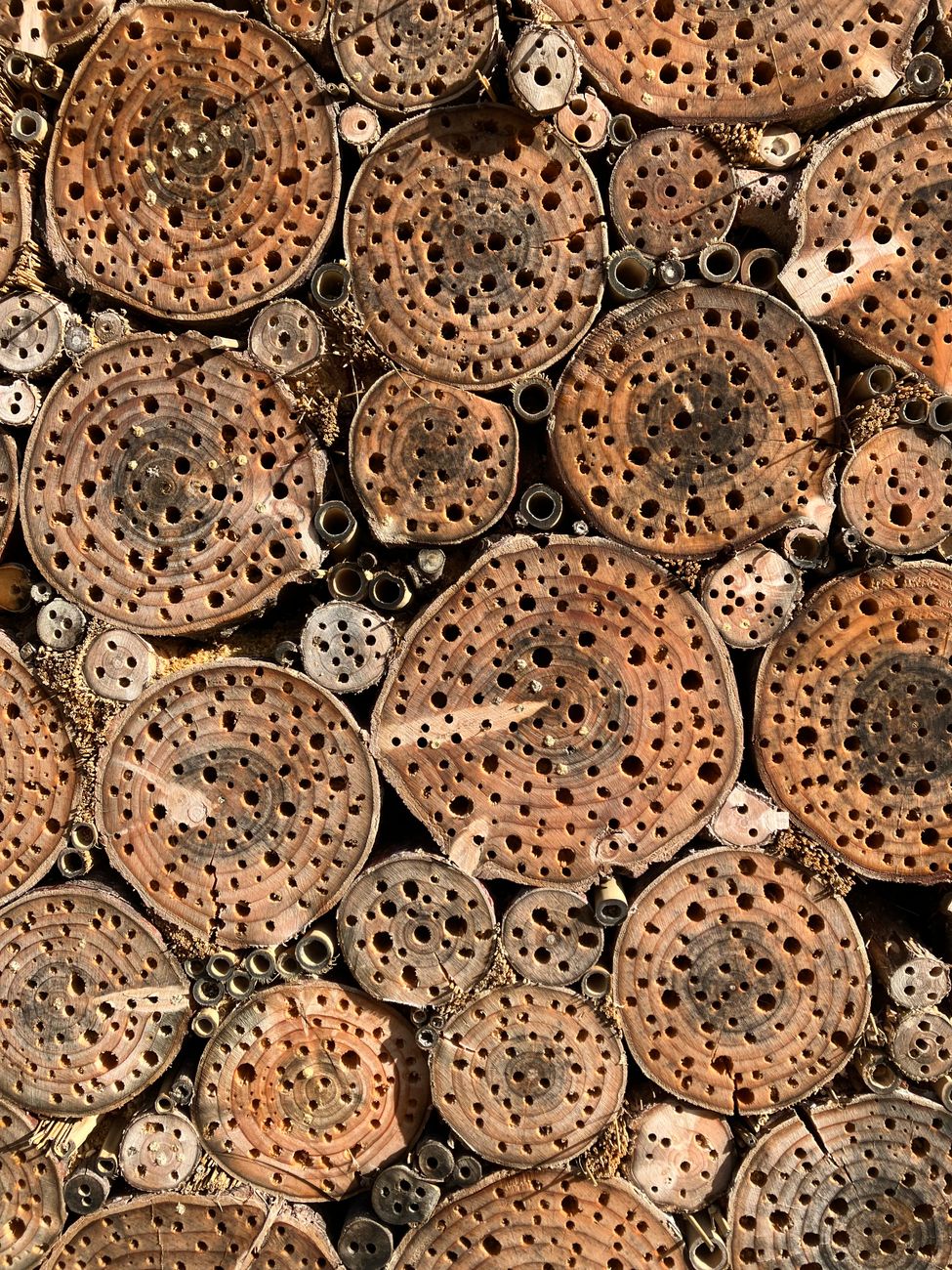
For cavity-nesting bees like the Red Mason Bee or Leafcutter Bees – two absolute superstars I’ve seen making a huge difference to my squash and raspberry yields – simple bee hotels are incredibly effective. I’ve built a few over the years, learning from each attempt.
Here’s what I’ve found works best here in Britain:
- Drilled Wood Blocks: My most successful bee hotel is simply a sturdy block of untreated timber (about 15-20cm deep) from a reclaimed pallet, drilled with holes of varying diameters. I use drill bits from 4mm to 10mm – this caters to different species. The key is to drill horizontally, making sure the holes don’t go all the way through, leaving a closed back end. I’ve hung one of these under the eaves of my greenhouse and another on a south-facing fence panel, sheltered from the prevailing wind and rain we often get here in the Midlands.
- Bamboo Canes & Hollow Stems: Another fantastic option is to bundle together hollow stems or bamboo canes. I cut them into lengths of about 15-20cm, making sure one end is naturally closed by a node or I plug it with mud. I collect dried hogweed stems, old raspberry canes, and even use small bamboo offcuts. Tying them tightly into bundles and placing them inside an old plastic bottle cut in half (to protect them from rain) or a dedicated wooden box works a treat.
- Location, Location, Location: This is critical, especially with our unpredictable British weather. I always position my bee hotels facing south or south-east. This ensures they get plenty of morning sun to warm the bees up, but they're also sheltered from the harshest afternoon sun and, crucially, from the damp, driving westerly rain that can make nests mouldy. I learned this the hard way when I placed my first hotel facing west; it got waterlogged and was completely ignored by the bees. Now, they're always under an overhang or in a spot with good overhead protection.

Maintaining Your Bee Retreats
It’s not just about building them; maintenance is important too. While many solitary bee species are pretty resilient, offering them a clean, safe space increases their chances of survival.
- Annual Checks: I tend to do a quick check in late autumn once nesting activity has finished. I'll gently remove any old, mouldy, or damaged tubes/canes and replace them. For my drilled wood blocks, if a hole looks particularly grubby after a few seasons, I might try to clean it gently with a pipe cleaner, but usually, the bees keep them quite tidy themselves.
- Keeping it Dry: My biggest concern here in the UK is always damp. Ensure your bee hotels are protected from direct rain. If they get persistently wet, mould can grow, which is detrimental to developing bee larvae. A simple roof or placing them under a shed overhang makes a huge difference.
Beyond these constructed habitats, don’t forget that some native bees, like Mining Bees, prefer to nest in the ground. Leaving a patch of undisturbed, well-drained soil – maybe a sunny bank or a bit of lawn you don't mow too short – can provide excellent natural nesting sites. In my garden, I have a small, slightly raised bank near my raspberry patch where I’ve noticed tiny holes appearing each spring – a sure sign of busy Mining Bees doing their thing!
Gardening Responsibly: Protecting Pollinators from Pests & Pesticides
Now, this is a topic I feel very strongly about. As gardeners, we all face the challenge of pests. Slugs, aphids, whitefly – they're an inevitable part of growing food here in the UK. But how we deal with them can have a profound impact on the very pollinators we're trying to attract. For me, protecting the bees and beneficial insects is paramount, so my approach to pest control is strictly organic and always has our buzzing friends in mind.
When I first started, I admit, I was tempted by the quick fix. A spray here, a granule there. But I quickly realised the devastating consequences. Spraying something to kill aphids could also kill the ladybirds that eat them, or worse, the bees foraging on nearby flowers. It just wasn't worth it. My philosophy now is simple: prevention, observation, and last-resort, bee-friendly solutions.
My UK Garden's Bee-Safe Pest Management Strategy:
- Embrace Biodiversity (Again!): This goes back to what we talked about with planting. The more diverse your garden, the more beneficial insects you’ll attract – ladybirds, hoverflies, lacewings. These are nature's pest controllers, and they're completely bee-safe. I've seen countless times how a healthy population of ladybirds can decimate an aphid infestation on my broad beans in a matter of days.
- Companion Planting: This is a fantastic preventative measure. I always plant marigolds (Tagetes) near my greenhouse tomatoes and brassicas to deter whitefly and other pests. Nasturtiums are brilliant sacrificial plants – the blackfly often prefer them to my runner beans, and then I can just pick off the nasturtium leaves.
- Physical Barriers: For things like cabbage white butterflies, there's no substitute for physical netting. I use fine insect mesh over my brassica beds from spring right through autumn. It's a bit of a faff to set up, but it saves my kale and broccoli from being completely shredded, all without harming a single bee.
- Hand-Picking & Squishing: It might sound a bit gruesome, but for slugs, snails, and larger caterpillars, good old hand-picking is incredibly effective. Every evening after dinner, I do a quick patrol around my raised beds with a headtorch and a bucket of salty water. It's surprising how many you can collect, especially after a damp spell, which we get plenty of here in the Midlands!
- Targeted, Bee-Safe Sprays (Last Resort!): If an infestation is truly getting out of hand – say, a heavy aphid attack on my young courgette plants – I might use an organic insecticidal soap or a diluted neem oil solution. Crucially, I only ever apply these in the late evening, once the bees have finished foraging for the day. This minimises any risk of direct contact. I also make sure I only spray the affected plant parts, not indiscriminately. Always, always read the label to ensure it's safe for beneficial insects. If it's not explicitly stated, avoid it.
One year, early on, I had a nasty bout of powdery mildew on my greenhouse squash. I used a chemical fungicide without thinking about the wider impact. While it saved the squash, I noticed a definite drop in bee activity on those particular plants for a few days. It was a harsh lesson that everything we introduce into our garden ecosystem has a ripple effect. Now, I use a diluted milk spray for powdery mildew – it's effective and completely harmless to pollinators.
Remember, a healthy garden is a balanced one. Don't panic at the first sign of a pest. Give nature a chance to do its job. Often, the ecosystem will self-correct, and your native bee friends will thank you for it with bountiful harvests.
Your Bountiful Garden Awaits: Embracing a Pollinator-Friendly Future
Phew! We've covered a lot, haven't we? From the unsung heroes of our gardens – the incredible UK native bees – to planting strategies, providing water, building homes, and protecting them from harm. I really hope I've managed to convey just how passionate I am about this, and how much of a difference it can make to your own gardening success here in Britain.
For me, after five years of intense experimentation in my 800 sq ft Midlands garden, embracing native bees hasn't just been about being 'eco-friendly'. It's been a game-changer for my harvests. My squash plants yield more consistently, my raspberries are bursting with fruit, and my greenhouse tomatoes (even though many are self-pollinating, the buzz of a few bumblebees doesn't hurt!) seem happier and healthier. It’s a truly symbiotic relationship: we provide for them, and they, in turn, provide for us.
Key Takeaways for a Thriving UK Pollinator Garden:
- Diversity is Key: Plant a wide variety of native and non-native bee-friendly flowers for year-round forage. Think single-petalled, open flowers that are easy for bees to access.
- Water is Life: Provide shallow water sources with landing spots. A simple bird bath with pebbles or marbles can make all the difference, especially during dry spells.
- Home Sweet Home: Build simple, effective bee hotels for solitary species, or leave undisturbed patches of soil for ground-nesting bees. Site them carefully to protect from our British weather.
- Go Pesticide-Free: Commit to organic pest control. Embrace beneficial insects, use physical barriers, and only ever use bee-safe, targeted solutions as a last resort, applied in the evening.
- Observe and Learn: Spend time in your garden, watching the bees. You’ll quickly learn what works and what doesn't, and you'll gain a deeper appreciation for these tiny powerhouses.
Starting this journey might feel like a big undertaking, but honestly, even small changes make a huge difference. You don't need a huge plot; my packed backyard is proof of that! Just one pot of lavender, a small bee hotel, or consciously choosing not to spray can kickstart a healthier, more productive ecosystem.
My hope for you, fellow UK gardener, is that you'll embrace this pollinator-friendly future. Imagine your squash flowers perfectly pollinated, your apple trees laden with fruit, and your berry bushes groaning under the weight of a juicy harvest – all thanks to the tireless work of our native bees. It's a truly rewarding feeling, knowing you've played a part in supporting these vital creatures while simultaneously boosting your own homegrown bounty.
So, go on, get out there. Plant a flower, build a home, and watch your garden truly come alive. Your future self, laden with delicious homegrown produce, will absolutely thank you for it. Happy gardening!