
Introduction: Understanding the Silent Threats to Your Permanent Vegetable Beds
There's nothing quite like the satisfaction of watching your favourite vegetables thrive, is there? For me, here in my 800 sq ft Midlands garden, it’s seeing those 'Cherokee Purple' tomatoes ripening in the greenhouse or a bed of vibrant 'Scarlet Nantes' carrots pushing up through the soil. But after five years of intensive growing, cramming as much as possible into my raised beds and countless containers, I started noticing a subtle shift. My once-bountiful beds weren't quite as productive, and some of my long-term container plants looked a bit… lacklustre. It wasn't about watering or feeding; it felt deeper, almost as if the soil itself was tired.
This quiet decline, this feeling of exhaustion in the very foundation of our growing space, is what we’re talking about today. It's often down to two silent but significant threats: soil fatigue and allelopathy. I learned about these the hard way, through a few seasons of slightly disappointing yields and a lot of head-scratching. Coming from an IT background, I love understanding the 'why' behind things, and gardening is no different. I've spent countless hours experimenting in my own UK garden, trying to figure out how to keep those permanent beds and long-term containers bursting with life, season after season, despite our often-unpredictable British weather.
In this article, I want to share what I've discovered and the strategies I’ve put into practice to revitalise my growing spaces. We'll talk about how to spot these problems, how to recruit an "invisible army" of microbes to do the heavy lifting, and how to smartly cycle crops even in the smallest of spaces. My goal is to help you keep your vegetable patch – whether it’s a sprawling plot or a collection of pots – thriving for years to come, just as I'm striving to do here in my own little corner of the UK.
Diagnosing the Problem: Identifying Soil Fatigue & Allelopathy in Your Garden
When your plants aren't performing their best, it's easy to jump to conclusions: "Is it a pest? Is it a disease? Did I forget to feed them?" And often, those are indeed the culprits. But sometimes, especially in established beds or containers that have seen years of continuous use, the problem lies beneath the surface, deep within the soil itself. This is where understanding soil fatigue and allelopathy comes in. I've learned to recognise the signs, often after a season or two of plants just not quite living up to their potential.
Soil Fatigue: When Your Beds Get Tired
Think of soil fatigue like a person running a marathon without proper rest or nutrition. Eventually, they're going to hit a wall. In gardening terms, it happens when you grow the same or similar crops in the same spot, year after year. Each plant family has specific nutrient requirements, and they can deplete particular nutrients from the soil. Furthermore, they can attract specific pests and diseases, which then build up in that area, waiting for their favourite host plant to return.
In my own greenhouse, I noticed this vividly with my heirloom tomatoes. After three glorious years of 'Moneymaker' and 'Gardener's Delight' in the same raised bed, the fourth year saw smaller fruits, fewer trusses, and a general lack of vigour, even with regular feeding. The plants just looked… tired. The soil felt a bit lifeless, too, almost compacted despite my usual care. This is classic soil fatigue at play. The beneficial microbes that thrive on a diverse range of plants dwindle, and the soil structure itself can suffer.
Allelopathy: The Plant Warfare You Can't See
Allelopathy is a much more subtle, almost stealthy, form of plant interaction. It's when one plant releases biochemicals into the soil that inhibit the growth of other plants, or even subsequent generations of itself. It’s like plants having a territorial dispute, but instead of shouting, they're subtly poisoning the well. Some plants are notorious for this, like black walnuts, but many common vegetables can exhibit allelopathic effects, particularly on themselves or closely related species.
I once tried to follow my brassica bed with another round of 'Cavolo Nero' after only a short break, thinking I was being clever by getting a second crop in. The subsequent plants were stunted, yellowed, and generally unhappy, despite the bed having fresh compost. It was a clear sign that the previous brassicas had left behind something that wasn't welcoming to their relatives. It's not just about nutrient depletion; it's about active chemical interference. This is why you might see patches in your garden where nothing seems to thrive after a particular crop has been there for a while.
To help you get a clearer picture of what you might be facing in your UK garden, here's a comparison of the two:
| Feature | Soil Fatigue | Allelopathy |
|---|---|---|
| Primary Cause | Depletion of specific nutrients, buildup of pests/diseases, breakdown of soil structure due to continuous monoculture. | Release of biochemicals (allelochemicals) by one plant that inhibit the growth of others. |
| Symptoms | General decline in plant vigour, reduced yields, smaller fruits, increased susceptibility to common pests/diseases, poor germination, compact soil. | Stunted growth, yellowing, wilting, poor germination, reduced root development, specific patches where certain crops struggle after a predecessor. |
| Affected Plants | Usually the same plant species or closely related plant families grown repeatedly. | Can affect a wide range of plants, or be highly specific to certain species/families following a particular predecessor. |
| Onset | Gradual, over several seasons of continuous cropping. | Can be more immediate, impacting the very next crop in the sequence. |
| Solution Focus | Restoring overall soil health, nutrient balance, beneficial microbial populations, breaking pest/disease cycles. | Breaking down allelochemicals, diversifying plant types, encouraging a healthy soil microbiome. |
| Randy's Example | My greenhouse tomatoes after 3 years in the same spot showing reduced vigour and yields. | Stunted 'Cavolo Nero' following a previous brassica crop in the same bed. |
The Invisible Army: Boosting Soil Life with Strategic Microbial Inoculants & Amendments
Once you've diagnosed that feeling of 'tired' soil or struggling plants, the good news is that you don't have to start from scratch. My journey from an IT desk to digging in the dirt taught me that the most powerful tools in our gardening arsenal are often invisible to the naked eye. We're talking about the incredible world of soil microbes – bacteria, fungi, protozoa, nematodes – a bustling, microscopic ecosystem that is the true engine of healthy soil. When your soil is fatigued or struggling with allelopathy, it often means this invisible army needs reinforcements.
I used to think that adding compost was enough, and while good quality compost is absolutely fundamental, I've learned that sometimes your soil needs a specific targeted boost. Especially here in the UK, where our soils can vary wildly and our weather can throw curveballs, giving your microbes a helping hand can make all the difference.
My 'aha!' moment came a few years back when I was struggling with some 'Sungold' tomatoes in a container that had been used for peppers the previous season. They just weren't thriving, despite fresh compost. On a whim, I tried a mycorrhizal fungi inoculant when transplanting. Mycorrhizal fungi form a symbiotic relationship with plant roots, extending their reach for water and nutrients, and in return, the plant provides sugars. Within a few weeks, those 'Sungold' plants took off! It was a clear demonstration of how specific microbes can unlock a plant's potential.
I now regularly use a few different strategies to boost this invisible army:
- Mycorrhizal Fungi Inoculants: These are a staple for me, especially for heavy feeders like tomatoes, peppers, and even beans. I apply them directly to the roots when transplanting. It’s like giving your plants a super-efficient underground internet network to access nutrients. I've found this particularly beneficial for my greenhouse tomatoes, helping them cope with the intensive growing in the same beds.
- Beneficial Bacteria Mixes: There are various products available that contain strains of beneficial bacteria (like Bacillus subtilis) which can help with nutrient cycling, disease suppression, and even breaking down harmful compounds – potentially even some allelochemicals. I've experimented with a few UK-available brands and often incorporate them into my watering schedule for established plants, especially those in containers.
- Worm Castings: This is pure gold for soil. My worm bin is one of the hardest-working parts of my garden. Worm castings are packed with beneficial microbes, enzymes, and a balanced range of nutrients. I top-dress my raised beds and containers with a layer of castings a couple of times a season. It’s like a slow-release microbial power-up.
- Compost Tea: While I haven't invested in a fancy brewer, I've experimented with simple aerated compost teas. It's essentially brewing a liquid extract from good quality compost to multiply the beneficial microbes. I use it as a foliar spray or a soil drench. It’s a fantastic way to quickly introduce a diverse range of microbes to your soil or directly to your plants.
- Diverse Organic Matter: Ultimately, the best way to sustain your microbial army is to feed them. Regularly incorporating a variety of organic matter – homemade compost, leaf mould, well-rotted manure (from a trusted source!), and chopped-and-dropped plant material – provides a buffet for microbes. This diversity encourages a robust and resilient soil food web, which is your ultimate defence against soil fatigue.

Smart Moves in Small Spaces: Implementing Crop Cycling & Rotation in Permanent Beds & Containers
Now, I know what you might be thinking: "Crop rotation? In my tiny 800 sq ft Midlands garden? With all my permanent raised beds and overflowing containers? Randy, are you mad?" And believe me, I've asked myself the same question! Traditional crop rotation, where you divide your garden into four or five distinct areas and move entire plant families around, can feel utterly impossible in a small, intensive UK garden like mine. But that doesn't mean we throw the baby out with the bathwater. We just need to get clever with crop cycling and micro-rotation.
The principle remains the same: avoid growing the same plant family in the exact same spot year after year to prevent nutrient depletion, pest/disease build-up, and allelopathic effects. The trick is adapting it for our reality of raised beds, long-term containers, and often, a desire to grow a lot of something specific, like my heirloom tomatoes in the greenhouse.
In my raised beds, which are mostly 4ft x 8ft, I can't do a grand four-year rotation. Instead, I focus on cycling plant families within the same bed over a shorter period, or making sure the 'rest' period between repeat crops is significant. For example, if I've grown a bed full of brassicas ('Brussels Sprout 'Crispus'' and 'Romanesco Broccoli') one year, I'll follow that with a nitrogen-fixing crop like peas or broad beans the next spring, then perhaps root vegetables ('Amsterdam Forcing' carrots or 'Charlotte' potatoes) after that. I try to ensure that a heavy feeder or a 'challenging' family isn't followed immediately by itself or another member of its family. It's a more fluid, intuitive rotation.
For my long-term containers, it's even more about vigilance and strategic replanting. My tomato pots in the greenhouse, for instance, are permanent fixtures for the season. But once the tomatoes are done, I don't just put new tomatoes in the same compost next year. I either completely refresh the compost (which can be a big job for large pots) or, more practically, I’ll plant something completely different – perhaps a quick crop of 'Salad Bowl' lettuce, or even overwintering garlic or spring onions. The key is breaking that continuous cycle for the primary crop.
Here's how I approach crop cycling and micro-rotation in my small UK garden:
| Strategy Aspect | Permanent Raised Beds (e.g., 4ft x 8ft) | Long-Term Containers (e.g., 20L tomato pots) |
|---|---|---|
| Family Grouping | Aim to move main plant families (Brassicas, Solanaceae, Legumes, Root Vegetables) around different beds each year. If impossible, cycle within a bed. | Focus on changing the primary crop family each season. |
| Nitrogen Fixers | Crucial for resting and replenishing beds. I follow hungry crops with 'Feltham First' broad beans or 'Oregon Sugar Pod' peas. | After a hungry crop, plant quick-growing legumes like dwarf French beans, or even a 'green manure' if the container is large enough to sustain it for a few months. |
| Soil Refresh | Top-dress annually with 2-4 inches of good quality compost, leaf mould, and worm castings. Incorporate spent plant material. | Replace at least the top 6-12 inches of compost annually, or completely refresh every 2-3 years. Use high-quality, peat-free compost. |
| 'Rest' Periods | After a particularly demanding crop (like sweetcorn or potatoes), I might plant a cover crop ('Crimson Clover' or 'Phacelia') for a few months, or simply leave the bed fallow for a winter. | If a container crop finishes early (e.g., early potatoes), I'll plant a fast-growing salad mix or herbs to utilise the space, rather than leaving it empty. |
| Companion Planting | While not a substitute for rotation, smart companion planting can help mitigate pest issues and improve soil health in static beds. I always have calendula and marigolds around. | Interplant with herbs like basil (with tomatoes) or marigolds to deter pests and potentially offer some soil benefits. |
| Randy's Example | Bed 1: Brassicas -> Legumes -> Root Veggies -> Alliums. | Tomato pot Year 1: 'Sungold' Tomato. Year 2: 'Mohawk' French Beans. Year 3: 'Ailsa Craig' Onions or a quick salad mix. |
The key is intentionality. Each season, before I start planting out my precious seedlings, I stand in my garden (often with a cuppa, gazing at the rain, because, Britain) and think about what was where last year, and what the soil might need. It’s a dance between what I want to grow and what the soil can realistically support. By being mindful of these strategies, even in my relatively small UK garden, I've seen a noticeable improvement in the health and productivity of my permanent beds and cherished containers. It truly is about working with nature, not against it, to ensure sustained yields for years to come.
Beyond Rotation: Harnessing Companion Planting & Green Manures for Sustained Soil Health
While strategic crop cycling is a cornerstone of revitalising permanent beds, it’s by no means the only arrow in our quiver. In my 800 sq ft Midlands garden, I've found that weaving in other traditional, yet incredibly effective, practices can further boost soil health and resilience against those sneaky issues like soil fatigue and allelopathy. We're talking about companion planting and green manures – two techniques I've come to rely on heavily, especially in my densely packed raised beds and greenhouse.
The Power of Good Neighbours: Companion Planting in My UK Garden
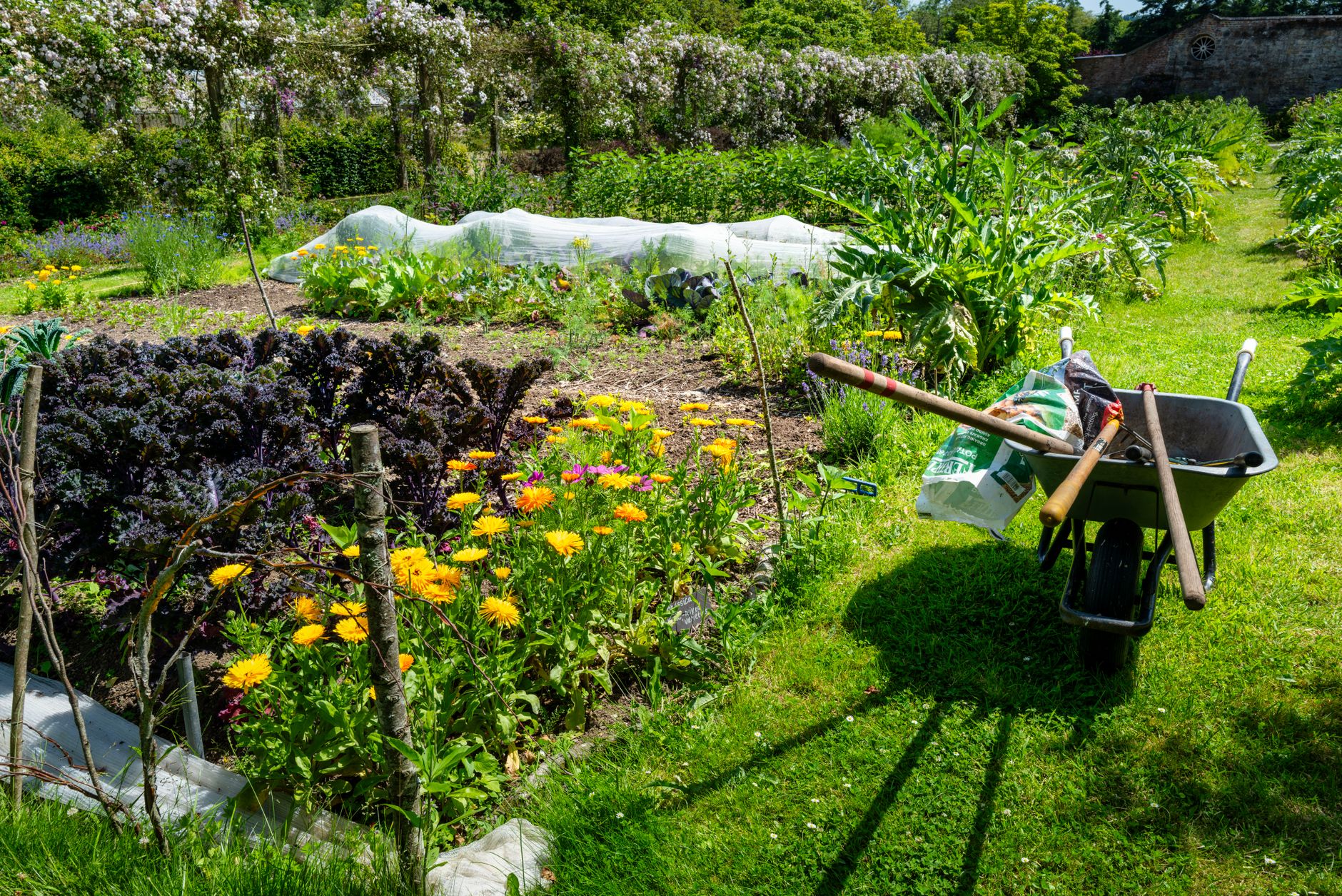
Companion planting isn't just about pretty flowers next to your veg; it's a science-backed strategy for creating a mini-ecosystem that benefits everyone involved. I've experimented with countless combinations over my five years, often learning through trial and error, especially with our unpredictable British weather. For instance, in my greenhouse, where I grow my beloved heirloom tomatoes like 'Marmande' and 'Cherokee Purple', I always interplant French marigolds ('Tagetes patula'). Their roots are thought to deter root-knot nematodes, which can be a real nuisance, especially in repeated greenhouse plantings. Last year, I even noticed fewer whiteflies than usual, which I put down to the marigolds masking the tomato scent.
Out in the raised beds, I've had great success planting carrots alongside rosemary. The strong scent of the rosemary seems to confuse the carrot root fly, a pest that can decimate a crop here in the UK. Another one of my go-to pairings is nasturtiums as a 'trap crop' for aphids. Instead of landing on my precious broad beans or kale, the aphids seem to prefer the nasturtiums, leaving my main crop relatively untouched. It's a bit of a sacrifice, but it saves my more valuable edibles. This kind of careful placement helps break pest and disease cycles that can build up in permanent beds, taking pressure off the soil and its microbial communities.
Green Manures: Giving Your Soil a Well-Deserved Rest
Now, let's talk about green manures. If crop cycling is like giving your soil different tasks, green manures are like sending it on a spa retreat! These are crops grown specifically to be dug back into the soil, enriching it with organic matter and nutrients. For my permanent beds, especially those that have hosted hungry crops like brassicas or potatoes, green manures are invaluable.
Here in the UK, timing is everything. I often sow green manures like crimson clover or field beans in late summer or autumn after a main crop has finished. They grow through the milder autumn and winter, protecting the soil from heavy British rains, preventing nutrient leaching, and suppressing weeds. Come spring, before I plan my next planting, I'll chop them down and lightly dig them into the soil. The nitrogen-fixing properties of legumes like clover and beans are fantastic for naturally boosting soil fertility, meaning I rely less on bought-in fertilisers.
One mistake I made early on was letting a patch of mustard green manure go to seed. It looked lovely, but then I had mustard popping up everywhere! Now, I'm careful to incorporate them before they flower or set seed. It's a bit of extra work, but the payoff in improved soil structure, increased organic matter, and a thriving microbial population is immense. It's truly a long-term investment in my garden's health, ensuring my permanent beds stay productive year after year, even with our often-challenging climate.
Long-Term Care: Integrated Strategies for Ongoing Soil Vitality & Maximising Yields
Combating soil fatigue and allelopathy isn’t a one-off battle; it’s an ongoing campaign. For my 800 sq ft UK garden to consistently deliver those bumper harvests of 'Gardener's Delight' tomatoes, crisp lettuce, and plump 'Charlotte' potatoes, I've had to adopt a holistic approach to soil care. It’s about building resilience and ensuring continuous vitality, even through the notoriously fickle British weather.
Listening to Your Soil: Regular Testing & Targeted Amendments
I learned the hard way that guessing what your soil needs can be a recipe for disaster. Early on, I was just chucking on general fertilisers, thinking more was better. Big mistake! Now, I make a point of doing a simple soil pH test every couple of years for each of my raised beds. For a more detailed nutrient analysis, I send off a sample to a local lab every three or four years. This is especially important in the UK where soil types can vary wildly, even within a small area like my Midlands plot.
Understanding my soil's pH and nutrient levels allows me to make targeted adjustments. For example, if a bed is getting too acidic for my liking (common with repeated brassica plantings), I'll gently incorporate some garden lime in autumn. If phosphorus is low, I might add bone meal. This precise approach prevents nutrient imbalances that can stress plants and exacerbate soil fatigue, ensuring my plants get exactly what they need to thrive in our specific climate.
The Mulch Magic: Protection, Feed, and Microbe Haven
Mulching is perhaps one of the simplest yet most effective strategies I use. After battling persistent weeds and seeing my soil dry out too quickly in summer heatwaves (yes, we do get them in the UK!), I became a mulching evangelist. I use a variety of materials: straw around my squash and tomatoes, well-rotted wood chip on pathways and around shrubs, and a thick layer of homemade compost on all my vegetable beds.
A good 2-3 inch layer of mulch does wonders. It conserves soil moisture, meaning I water less frequently – a blessing during hosepipe bans that can hit us. It suppresses weeds, saving my back and time. Critically, it moderates soil temperature, protecting those vital soil microbes from extreme heat or sudden cold snaps, which are all too common here. As the mulch slowly breaks down, it continuously feeds the soil food web, adding precious organic matter and nutrients. It’s like a slow-release fertiliser and a protective blanket all in one.
The Lifeblood: Smart Watering & Drainage Management
Even with our reputation for rain, consistent watering is crucial, especially in raised beds and containers which dry out faster. I've invested in a good quality watering wand and a drip irrigation system for my greenhouse tomatoes, which ensures deep, consistent watering without wasting precious water. But just as important as watering is drainage. Heavy, waterlogged soil creates anaerobic conditions that kill off beneficial aerobic microbes, leading to a whole host of problems.
In my raised beds, I ensure good drainage by building them up with a mix of topsoil, compost, and grit if needed. For containers, I always use pots with drainage holes and a good quality, free-draining compost. Dealing with the extremes of British weather – from weeks of drizzle to sudden droughts – requires vigilance. I’ve learned to feel the soil, rather than just watering on a schedule. If it feels dry an inch or two down, it's time to water; if it's soggy, I hold off. It's about finding that happy medium that keeps your soil life thriving.
The Endless Feast: Composting & Organic Matter
At the heart of sustained soil vitality in my garden is a relentless focus on adding organic matter. I'm a bit obsessed with composting! Every scrap from the kitchen, every garden waste clipping, goes into one of my compost bins or my worm farm. The rich, dark 'black gold' that emerges is the lifeblood of my garden.
I follow a 'no-dig' philosophy for most of my beds, meaning I simply layer a generous amount of homemade compost on top each autumn or spring. This approach minimises soil disturbance, protecting the delicate fungal networks and microbial communities we've worked so hard to cultivate. This constant replenishment of organic matter is the ultimate strategy for preventing soil fatigue, improving soil structure, boosting nutrient availability, and creating a truly resilient ecosystem that can withstand the challenges of long-term cultivation and our ever-changing UK climate. It's how I ensure my permanent beds remain permanently productive.
Conclusion: Cultivating a Resilient & Productive UK Home Garden for Years to Come
Well, we've covered quite a journey, haven't we? From diagnosing those silent threats of soil fatigue and allelopathy to bringing in the invisible army of microbes, implementing clever crop cycling, and weaving in the wisdom of companion planting and green manures. It’s a lot to take in, but trust me, it’s a journey worth embarking on for any passionate UK home gardener.
What I've learned over my five years of intensive gardening here in the Midlands is that our soil isn't just dirt; it's a living, breathing ecosystem. And like any ecosystem, it needs care, respect, and a bit of strategic intervention to stay healthy and productive, especially when we're asking it to produce year after year in permanent beds and containers. The goal isn't just to get a harvest this season, but to ensure sustained yields and robust, healthy plants for many seasons to come, no matter what our British weather throws at us.
Remember, the key takeaways are:
- Understand Your Soil: Be vigilant for signs of fatigue or allelopathy.
- Boost Microbial Life: Introduce beneficial microbes and feed them with organic matter.
- Cycle Your Crops: Implement smart rotation, even in small spaces.
- Embrace Diversity: Use companion planting to deter pests and support growth.
- Rest & Replenish: Green manures offer a powerful natural fertility boost.
- Ongoing Nurturing: Regular soil testing, mulching, proper watering, and continuous composting are non-negotiable for long-term vitality.
This isn't about perfection; it's about observation, experimentation, and learning from both your successes and your failures (I've had plenty of those!). My garden, though only 800 sq ft, has taught me so much about resilience and the incredible power of nature. By taking a proactive, integrated approach to soil health, you're not just growing vegetables; you're cultivating a thriving, resilient, and incredibly productive space that will bring you joy and delicious harvests for years to come.
So, get out there, observe your soil, try a new microbial boost, plan a clever rotation, or sow some green manure. I'd love to hear about your own experiences and what works in your UK garden. Drop a comment below!
Happy gardening, fellow enthusiasts!