Introduction: Unlocking the Potential of Overgrown Shrubs
Let's be honest, every one of us keen UK gardeners has that one shrub. You know the one. It started out so small and innocent, a lovely addition to your border. But then, fuelled by our gloriously unpredictable British weather and a bit of neglect from a busy season (or maybe just me getting too obsessed with my greenhouse tomatoes!), it's morphed into a gargantuan beast, swallowing its neighbours and casting a permanent shadow over your prize-winning lettuce. I've been there, more times than I care to admit, especially when I first inherited my 800 sq ft Midlands backyard five years ago. It was packed with what felt like a hundred years' worth of overgrown woody plants!
For a while, I'd just hack at them with general pruning, hoping for the best, usually making things look worse. It was a bit like my old IT troubleshooting days – poke it and see if it works. But gardening, I’ve found, is far more rewarding when you understand the 'why' behind the 'how'. That's where two game-changing techniques come in for us small-space gardeners: coppicing and pollarding. These aren't just fancy terms; they're ancient, proven methods that can transform those unruly shrubs into vibrant, manageable, and even stunning structural elements, all while giving your garden a much-needed boost of fresh growth and biomass. I’ve experimented with both in my own garden, from rejuvenating a tired old elder to creating amazing winter stem displays, and trust me, they're perfect for keeping our compact UK gardens looking their best without resorting to the dreaded shovel. Let's dive into how these techniques can unlock the hidden potential in your own plot.
Coppicing vs. Pollarding: Understanding the Key Differences for Small Spaces
When I first heard the terms 'coppicing' and 'pollarding', my mind immediately went to ancient woodlands and sprawling estates. But I quickly learned that these aren't just for the big boys; they're incredibly valuable tools for us home gardeners, especially when space is at a premium here in the UK. The key is understanding their differences and knowing which one suits your plant and your garden's needs.
I've tried both in my own garden. My dogwoods (Cornus sericea 'Midwinter Fire' is a firm favourite for those fiery winter stems!) get a vigorous coppice every spring, while I’ve experimented with a form of low pollarding on a particularly unruly willow I inherited, trying to keep it from dominating the entire fence line. It's all about where you make that initial cut and how you maintain it.
Here’s a breakdown of the two techniques, tailored for us small-space UK gardeners:
| Feature | Coppicing | Pollarding |
|---|---|---|
| Primary Goal | Rejuvenate, encourage vigorous new growth from the base, maximise biomass, enhance bark/foliage colour. | Maintain a specific size and shape, create a permanent woody framework, prevent overgrowth, enhance specific features (e.g., large leaves). |
| Cutting Height | Close to the ground (typically 2-10cm / 1-4 inches) above soil level. | Above ground level, creating a permanent 'knuckle' or 'boll' (typically 1-3m / 3-10 ft high). |
| Growth Habit | Multi-stemmed, bushy growth from the crown. | Multi-stemmed growth from the permanent knuckle. |
| Frequency | Annually or every 2-5 years, depending on desired effect and plant vigor. | Annually or every 1-5 years, once the framework is established. |
| Best For | Shrubs with coloured stems (e.g., Cornus, Salix), large-leaved plants (e.g., Paulownia, Catalpa), plants for biomass. | Trees/large shrubs needing strict size control (e.g., Tilia, Platanus, some Salix), creating formal structures. |
| Small Garden Use | Rejuvenating overgrown shrubs, creating stunning seasonal displays, providing material for composting/mulch, managing plant size. | Keeping small trees or large shrubs compact, creating unique sculptural forms, preventing shade issues in compact plots. |
| My Experience | Essential for my Cornus 'Midwinter Fire' for vibrant winter colour; I also coppice my Elder (Sambucus nigra) to manage its size and get fresh foliage. My mistake early on was not cutting low enough, leading to leggy growth. | I've used a low form on a small garden willow that was getting too wide, cutting back to a short trunk. It definitely requires commitment once you start! |
| UK Timing | Late winter/early spring (February-March) before new growth starts, after the risk of hard frost has passed. | Late winter/early spring (February-March), similar to coppicing. |
Why These Techniques Are Perfect for Small UK Gardens (Beyond Just Pruning)
In my snug 800 sq ft Midlands garden, every square inch counts. I can't afford a plant that's just "doing okay" or taking up too much space for its contribution. This is where coppicing and pollarding truly shine, offering so much more than a simple haircut. I've learned these techniques aren't just about controlling size; they're about enhancing your garden's aesthetic, improving plant health, and even providing valuable resources.
Firstly, they are incredible for rejuvenation. That tired, woody shrub that's been languishing in the corner? A good coppice can shock it back to life, encouraging a flush of vibrant, healthy new stems. I had an old, straggly cotinus that looked utterly miserable, with sparse foliage and woody branches. I decided to coppice it hard one February after a particularly mild winter here in the UK. The following spring, it burst forth with incredible burgundy foliage, completely transforming that section of the border. It was a revelation!
Secondly, these methods are fantastic for maximising biomass. As a keen composter, I'm always looking for green matter. Coppicing, especially, yields an astonishing amount of fresh growth that can be chopped and added to your compost bins. My annual coppicing of dogwood and willow provides a steady stream of material that quickly breaks down, enriching the soil for my raised beds. It feels like getting something for free, which, after years of buying compost, is a real win!
Finally, and this is where my IT-turned-gardener brain gets really excited, they allow for stunning structural elements. Pollarding, in particular, creates a unique, architectural framework. Imagine a small lime (Tilia cordata 'Greenspire') in a compact front garden, pollarded annually to create a dense, leafy canopy above a pathway, providing shade without overwhelming the space. Or, for us smaller scale, a heavily pruned willow creating a striking, sculptural form even when dormant. It’s about being intentional with your plants, turning them into living art rather than just letting them do their own thing. It's a way to design your garden with purpose, even in the tightest of spots.

Top UK Garden Plants for Successful Coppicing & Pollarding
Choosing the right plant is absolutely crucial for success with coppicing and pollarding, especially when you're working with our often temperamental UK climate. Not every shrub or tree will respond well to such drastic pruning, and some will simply resent it. My early attempts weren't always perfect; I once tried to coppice a mature lavender bush, thinking it would rejuvenate it. Let’s just say it didn’t appreciate the chop and promptly gave up the ghost. Live and learn, eh?
Through trial and error in my own garden, and learning from other experienced UK growers, I’ve found a fantastic selection of plants that thrive under these regimes. These are varieties that reliably produce vigorous new growth from dormant buds, which is exactly what we're looking for. Many of them also offer fantastic seasonal interest, whether it's vibrant winter stems, enormous leaves, or beautiful catkins.
Here are some of my top recommendations for plants that will truly shine when coppiced or pollarded in a small UK garden:
| Plant Name (Common/Botanical) | Technique(s) | Key Benefits for Small UK Gardens | My Personal Notes / UK Tips |
|---|---|---|---|
| Dogwood (Cornus sanguinea, C. sericea) | Coppicing | Stunning winter stem colour (red, orange, yellow); compact habit when coppiced; excellent for year-round interest. | My 'Midwinter Fire' is a showstopper. I cut it back hard in late February/early March here in the Midlands. Make sure to choose varieties specifically for stem colour. They appreciate moist soil, so a good mulch in dry British summers helps. |
| Willow (Salix spp., e.g., S. alba 'Britzensis') | Coppicing/Pollarding | Fast growth, excellent for biomass; some varieties have coloured stems; can be pollarded for structural interest or large leaves. | I inherited a small garden willow that was getting out of hand. I've successfully kept it to a manageable size with annual pollarding, forming a nice dense head. It provides great material for supporting my climbing beans! Be mindful of their vigorous root systems near foundations. |
| Elder (Sambucus nigra varieties, e.g., 'Black Lace') | Coppicing | Large, often ornamental foliage (dark purple, dissected); beautiful flowers for cordial; manageable size; great for wildlife. | My 'Black Lace' elder gets a good coppice every spring to keep it compact and encourage those stunning dark, lacy leaves. It also means I get a more manageable crop of flowers for my homemade elderflower cordial. Watch out for elder's tendency to self-seed! |
| Smoke Bush (Cotinus coggygria 'Royal Purple') | Coppicing | Vibrant purple foliage (more intense on new growth); creates a dense, bushy display; adds drama to a border. | As mentioned, this was a huge success for me. Coppicing ensures that gorgeous, intense purple foliage rather than letting it become leggy and woody. It thrives even in poorer soils, which is handy in some parts of my garden. |
| Lime (Tilia cordata 'Greenspire') | Pollarding | Excellent for formal, architectural structures; dense canopy provides shade; tolerant of urban conditions. | While I don't have space for a full-sized lime, a small specimen can be rigorously pollarded to create a fantastic formal feature in a front garden or courtyard. It's a commitment, but the results are incredibly elegant. |
| Foxglove Tree (Paulownia tomentosa) | Coppicing | Produces enormous, tropical-looking leaves (up to 60cm!) for a dramatic effect; surprisingly hardy in the UK. | If you want a real statement plant with huge foliage, this is it. Coppice it annually in late winter. It's a fantastic conversation starter and gives a really exotic feel to a small space, even here in the Midlands. I've found it surprisingly resilient to our unpredictable springs. |
5. A Step-by-Step Guide to Coppicing Your Overgrown Shrubs for Vigorous Growth
Alright, so you're ready to get stuck in! Coppicing, for me, is one of the most satisfying jobs in the UK garden. It's like pressing the reset button on a tired old plant. I've used this technique on everything from my dogwood (Cornus sanguinea 'Midwinter Fire') to my willow in the wetter corner of the garden, and even on some hazel I'm cultivating for bean poles. The key is timing and a bit of courage!
Here’s how I approach it in my Midlands garden:
When to Coppice for Best Results in the UK
Timing is crucial, especially with our often-damp British winters. I always aim for late winter to early spring, typically February or early March, just before the buds start to swell significantly. The plant is dormant, so it's less stressed, and you avoid the risk of new growth getting zapped by a late frost. Plus, it gives the plant a good start to put out strong new shoots as the weather warms up. One year, I got a bit eager and coppiced a willow in January during a particularly wet spell, and the cuts took longer to heal, making them slightly more susceptible to fungal issues. Lesson learned: wait for a drier, milder window if you can!
Tools of the Trade (and Keeping Them Sharp!)
You don't need fancy kit, but sharp tools are non-negotiable. For most shrubs, a good pair of bypass secateurs will do for thinner stems. For anything thicker than your thumb, I move to loppers. And for really chunky stuff, a pruning saw is essential.
I always keep a sharpening stone handy. A clean, sharp cut heals faster and reduces the risk of disease. I learned this the hard way when I started, using dull secateurs that just bruised the stems, leading to dieback on a young elder. Not ideal!
The Coppicing Cut: Be Bold!
- Identify Your Target: Choose your overgrown shrub. Make sure it's one of the suitable candidates we discussed earlier.
- Clear the Base: Gently clear away any leaf litter or debris from around the base of the plant. This helps you see what you're doing and reduces hiding spots for pests.
- The Main Cut: This is where the courage comes in! You're going to cut all the stems down to about 2-4 inches (5-10 cm) from ground level. Yes, all of them. Don't worry, it feels drastic but it’s what promotes that vigorous, multi-stemmed new growth.
- Angle Matters: Make a clean, slightly angled cut. This helps water run off the surface, preventing rot, which is especially important with our UK rainfall. I typically angle the cut away from the centre of the plant.
- Respect the Collar: Try not to cut flush with the ground or into the 'stool' (the woody base). Leaving a small stub, or 'stool' of about 2-4 inches, allows the plant to regenerate more effectively from dormant buds.
- Clean Up: Remove all the cut material. This is your biomass gold, which we'll talk about shortly!
- Mulch (Optional but Recommended): I like to give my newly coppiced plants a good, thick layer of homemade compost or well-rotted manure around the base. This provides nutrients for the burst of new growth and helps retain moisture as spring arrives. Here in the Midlands, our clay soil can get quite compacted, so this really helps.
You'll be amazed at how quickly new shoots emerge, often within weeks, bringing a fantastic flush of colour or foliage to your garden. My Cornus 'Midwinter Fire' coppiced in February last year was already showing bright red stems by late April – a truly spectacular sight against the spring greens!
6. Mastering Pollarding: Creating Stunning Structural Elements in Your Garden
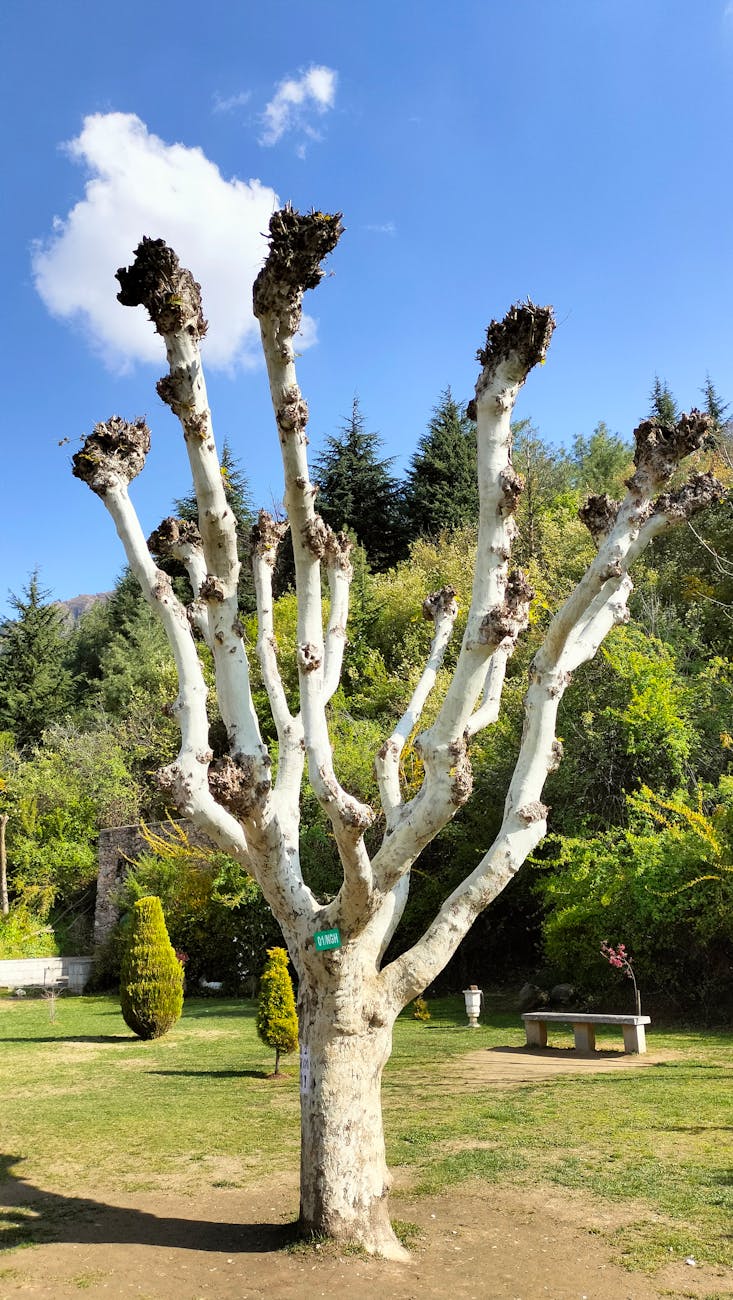
Pollarding is a bit different from coppicing – instead of cutting to the ground, you're cutting to a permanent 'head' or 'knuckle' above ground level. This creates a really distinctive, architectural look that I absolutely love, especially in a small garden like mine where every plant needs to pull its weight structurally. It's a fantastic way to keep larger trees or shrubs contained while still enjoying their features.
Where and When I Use Pollarding
I've successfully pollarded a couple of small lime trees (Tilia cordata 'Greenspire' – chosen for its smaller size) that were getting a bit too enthusiastic near my greenhouse, and even an old Cotinus 'Royal Purple' that was becoming leggy.
Like coppicing, the best time to pollard in the UK is during the dormant season, from late autumn (after leaf fall) through to late winter/early spring (before bud burst). I usually aim for November or February, avoiding the deepest frosts if possible. Our British weather can be unpredictable, so I watch the forecast for a few milder days.
The Art of the Pollarding Cut
- Choose Your Height: This is the most crucial step. Decide how high you want your permanent 'knuckle' to be. This will be the height at which all future pruning will occur. For my small garden, I aimed for about 5-6 feet (1.5-1.8m) on the lime trees, keeping their canopy above eye level but still contained. For the Cotinus, I went lower, about 3 feet (0.9m), to create a denser, shrub-like effect.
- Initial Pruning:
- First-time Pollarding: If you're starting from scratch with a young tree, you'll cut the main stem and any side branches back to your chosen height. Make clean cuts, ideally just above an outward-facing bud. This will form your initial 'knuckle'.
- Established Tree: For an older, overgrown tree, you might need to remove larger branches. Again, cut back to the chosen height, leaving short stubs that will form the future pollard head. I remember tackling an old, neglected Sycamore at my mum's place (much bigger than anything in my garden!) and it took a good few years to establish a proper pollard head, but it eventually worked.
- Subsequent Pruning (Annual or Biennial): Once your 'knuckle' has formed (usually after the first year or two), the process becomes much simpler. Every year or two, you'll cut all the new growth that has emerged from that knuckle back to the knuckle itself.
- Don't Cut the Knuckle: The key here is not to cut into the established knuckle, but just above it. This maintains the permanent structure and encourages a dense flush of new growth.
- Clean Cuts: Always make clean, sharp cuts to prevent damage and disease.
Pollarding creates a really striking effect, especially in winter when the bare, gnarled knuckles of the plants become a focal point. My pollarded Cotinus produces huge, vibrant purple leaves each spring, and the lime trees give a lovely dappled shade over a seating area without ever getting too large. It’s a real space-saver and a beautiful feature.
7. Ongoing Care, Benefits, and Maximizing Biomass from Your Efforts
So, you've done the hard work, and your plants are ready to bounce back with vigour! But the journey doesn't end there. Ongoing care is minimal but important, and the benefits you reap are truly fantastic. Plus, you'll be swimming in glorious plant material – let's not let that go to waste!
Nurturing Your Rejuvenated Plants
- Watering: Especially in the first spring after coppicing or pollarding, keep an eye on soil moisture. The plant is putting out a huge amount of new growth, which requires a lot of water. If we have a dry spring here in the UK (which, let's be honest, can happen even in April!), a good soak will be appreciated. I've seen new shoots on my dogwood wilt during an unseasonably dry spell, so I now keep a watering can ready.
- Feeding: As I mentioned, a good layer of compost or well-rotted manure around the base is excellent. This slow-release feed will support that burst of new growth. I usually apply this in late winter, after the cut, or in early spring.
- Pest and Disease Watch: Healthy, vigorous plants are generally more resistant to pests and diseases. However, keep an eye out, especially on new, tender growth. Thankfully, I've found coppiced and pollarded plants tend to be quite robust, but it's always good to be vigilant.
The Amazing Benefits You'll See
- Vigorous, Healthy Growth: This is the most obvious one. Overgrown, tired plants are transformed into youthful, energetic specimens.
- Enhanced Features: For plants like dogwood, you get a much better display of colourful winter stems. For others, it means larger leaves (like my Cotinus), more abundant flowers, or better fruit production (if you're coppicing a fruiting shrub like some hazels).
- Space Management: This is critical for my 800 sq ft garden. These techniques allow me to grow plants that would otherwise be too large, keeping them within bounds and preventing them from shading out my precious raised beds.
- Pest and Disease Reduction: Removing old, woody growth can often remove sources of lingering pests or fungal spores, leading to a healthier plant overall.
- Increased Biodiversity: A dense, multi-stemmed shrub provides excellent habitat and shelter for birds and beneficial insects, which I'm always trying to encourage.
Maximizing Biomass: Don't Let it Go to Waste!
This is where the former IT worker in me loves the efficiency! All those branches you've cut off? They're not waste; they're resources!
- Mulch: The smaller, thinner branches and leafy material can be shredded or simply chopped finely with secateurs and used as a fantastic, nutrient-rich mulch for your garden beds. This suppresses weeds, retains moisture, and improves soil structure – a win-win, especially with our heavy clay here in the Midlands.
- Compost: Any green, leafy material is brilliant for your compost bin. Woody stems take longer, so I usually reserve those for other uses.
- Bean Poles and Stakes: This is my favourite use! The straight, vigorous shoots from coppiced hazel or willow make fantastic, free bean poles, pea sticks, or supports for my heirloom tomatoes in the greenhouse. I harvest them, let them dry out in a sheltered spot for a few weeks, and then store them in my shed for the growing season. Last year, I managed to get enough hazel poles from just two small coppiced plants to support all my climbing beans and even a few of my 'Black Krim' tomatoes. It's incredibly satisfying.
- Habitat Piles: A small pile of woody offcuts tucked away in a corner of the garden can provide shelter for hedgehogs, insects, and other wildlife.
Conclusion: Embrace the Power of the Pruning Saw!
There you have it – my deep dive into the world of coppicing and pollarding. For years, I saw overgrown shrubs as a problem, a sign of neglect. But since embracing these ancient, sustainable techniques in my own small UK garden, I've come to see them as incredible opportunities. They're not just about cutting back; they're about rejuvenation, about shaping your space, and about fostering a healthier, more productive, and more beautiful garden.
From transforming a leggy Cotinus into a vibrant purple focal point to harvesting free bean poles from my coppiced hazel, these methods have brought so much joy and practicality to my 800 sq ft plot. I've learned that with a sharp tool, a bit of courage, and an understanding of our unique British growing conditions, you can truly unlock the hidden potential in your own back garden.
Don't be afraid to experiment, to make that first bold cut. Start with a suitable shrub, follow these steps, and I promise you'll be amazed at the vigour and beauty that bursts forth. It's a truly rewarding feeling to witness that transformation, knowing you've played an active role in nurturing your plants. So, grab your secateurs, brave the British chill, and get ready to rejuvenate your garden – you won't regret it! Happy gardening!