Introduction: The Organic Path to Weed-Free Paving & Driveways
Oh, the humble paving crack. It seems so innocent, doesn't it? A neat line of concrete or block, a tidy expanse of gravel… until that first stubborn green shoot pushes through. For years, when I first started my gardening journey five years ago here in the UK, my approach to weeds in my driveway and patio cracks was pretty simple: get down on my hands and knees and pull them. It was a never-ending battle, a bit like playing whack-a-mole with Mother Nature, especially here in the damp Midlands where everything seems to want to grow!
I remember one particularly wet spring in my 800 sq ft garden – the weeds on my block-paved path next to the greenhouse exploded overnight. I spent an entire Saturday morning yanking out hairy bittercress and tiny dandelions, only to see new ones sprout within days. It was disheartening, to say the least. That's when I realised my "hand-pulling only" strategy just wasn't cutting it, especially if I wanted to dedicate my precious gardening time to my beloved heirloom tomatoes or my ever-expanding herb collection.
As a former IT worker, I'm naturally drawn to finding more efficient, systematic solutions. And as a passionate home gardener, I'm obsessed with doing things organically. I want my garden, including the hard surfaces, to be a chemical-free haven for wildlife and for my family. So, I embarked on a mission: to find effective, long-term organic methods for tackling those persistent paving weeds, moving beyond just the immediate gratification of a good pull. I've experimented with plenty of techniques in my UK garden, learned a fair few lessons (often the hard way!), and I’m excited to share what I've found actually works here in Britain.
Identifying Common Pavement Weeds in the UK & Why They Thrive
Before we dive into the solutions, it's crucial to know your enemy, isn't it? Here in the Midlands, I see the same persistent culprits popping up year after year, and understanding why they thrive in our paving cracks is the first step to beating them.
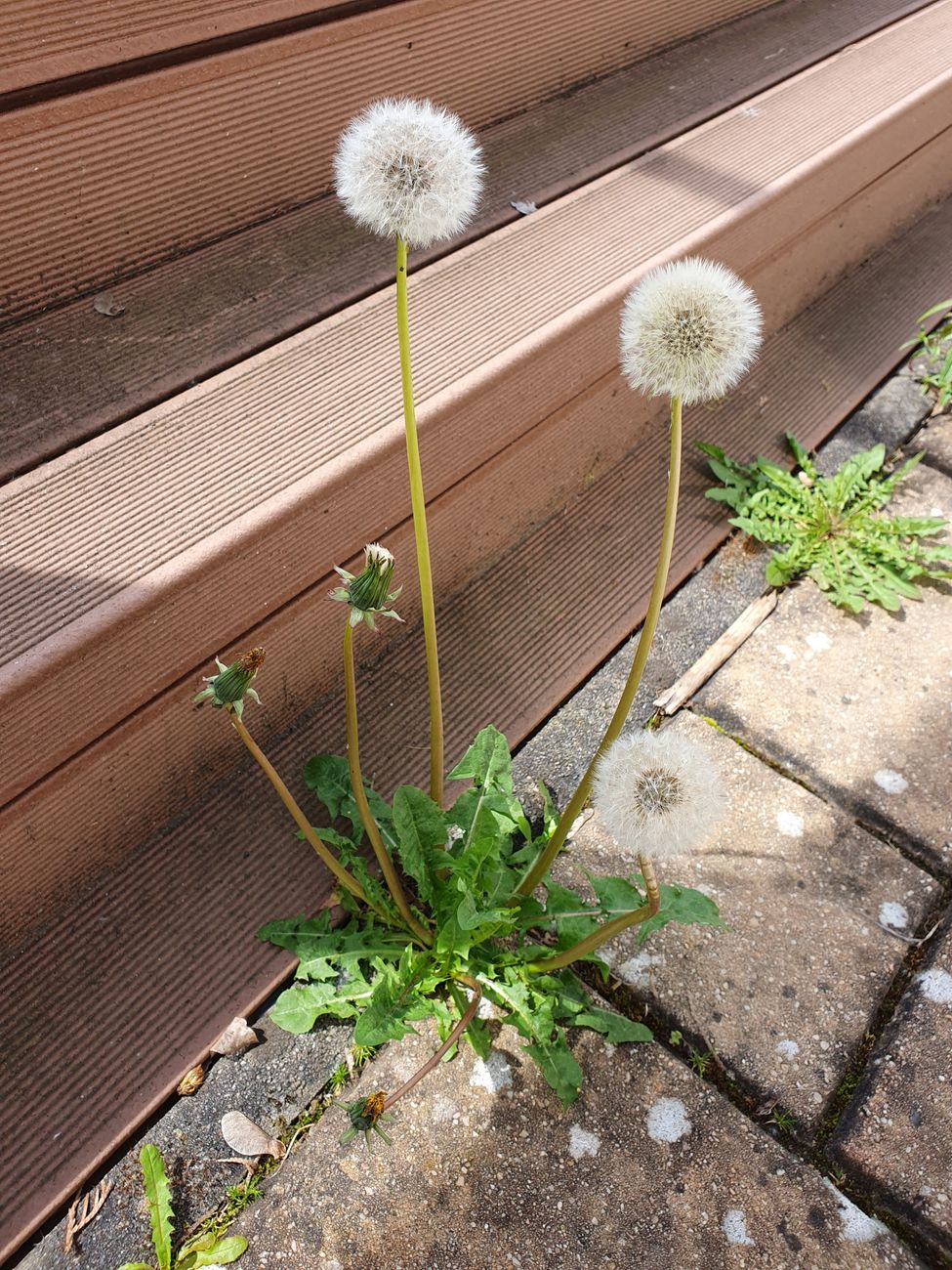
- Dandelions (Taraxacum officinale): Ah, the mighty dandelion. These are probably the most recognisable offenders. Their deep taproots are incredible – I've seen them crack through even thick paving slabs on my patio! They're masters of dispersal, with those fluffy seed heads floating on every breeze, ensuring new generations constantly sprout in any available crevice. Our damp British climate just helps those seeds germinate with gusto.
- Plantain (Plantago major & P. lanceolata): Both Greater Plantain and Ribwort Plantain are tough as old boots. They form flat, resilient rosettes that hug the ground, making them hard to dislodge. Their broad leaves can smother smaller plants, and their fibrous root systems latch onto any soil in cracks. My gravel driveway is a constant battleground for these; their seeds are often spread by foot traffic and car tyres, too.
- Moss & Algae: While not technically weeds, these often go hand-in-hand with them. They love damp, shaded conditions – perfect for the north-facing side of my greenhouse path! Moss creates a moist, spongy layer that’s an ideal seedbed for other weeds, making surfaces slippery and ugly. Algae adds to the slipperiness and often discolours paving.
- Hairy Bittercress (Cardamine hirsuta): These little devils seem to appear overnight, especially after a good British shower. They're annuals, but they reproduce incredibly quickly, flinging their seeds metres away with an explosive pop when disturbed. I've learned to spot their tiny rosettes and pull them the moment I see them, especially around my raised beds, before they get a chance to seed.
- Speedwell (Veronica spp.): Low-growing and quick to spread, various types of speedwell can form dense mats in paving cracks. They're particularly sneaky because they can flower and set seed while still very small.
So, why do these weeds love our paving and driveways so much? It boils down to a few key factors:
- Shelter & Moisture: Cracks provide a protected microclimate. They trap moisture from rain and dew, preventing it from evaporating quickly. Our unpredictable British weather, especially the frequent rain, is a blessing for most plants, and unfortunately, weeds are no exception.
- Accumulated Organic Matter: Over time, dust, grit, leaf litter, and tiny bits of soil settle into these cracks. This creates a surprisingly fertile growing medium, often rich in nutrients that weeds can exploit.
- Lack of Competition: Unlike a garden bed where cultivated plants might outcompete weeds, paving cracks offer an open playing field. Weeds face little to no competition, allowing them to establish quickly.
- Resilience: Pavement weeds are survivors. They're adapted to harsh conditions – temperature fluctuations, limited water (initially), and being trodden on. They’re built to thrive where other plants wouldn't dare.
Understanding these factors helps us tackle the root cause, not just the symptom, which is key to long-term organic control.
Immediate Organic Solutions: Boiling Water, Flame Weeders & Horticultural Vinegar Compared
Sometimes, despite all our best intentions for long-term strategies, you just need to hit those weeds hard and fast, especially before they get a chance to set seed and multiply. Over my five years of intensive gardening here in the UK, I’ve tried various immediate organic knockdown methods. Here’s my take on the most common ones, based on my experiences in my Midlands garden:
Boiling Water
This was my first go-to method, especially for small patches around my raised beds where I don't want any chemical drift. It's incredibly simple: boil a kettle, then carefully pour the scalding hot water directly onto the weeds. The intense heat ruptures the plant cells, causing them to wilt and die.
- Randy's Experience: I found it's brilliant for those delicate, newly sprouted bittercress plants or small patches of moss. It works quickly and effectively on annual weeds or the top growth of perennials. However, I learned that the hard way trying to do a whole path – it's incredibly labour-intensive for larger areas, and you need to be really careful not to splash yourself! Plus, for weeds with deep taproots like dandelions, it often only kills the top growth, and they'll usually regrow within a few weeks, especially after a good British downpour.
Flame Weeders
My flame weeder is probably my most satisfying weeding tool – there's something therapeutically primal about it! These tools use a controlled flame (usually propane gas) to rapidly heat the weeds. The goal isn't to burn them to a crisp, but rather to quickly heat the plant cells until they burst. You'll see the leaves change colour to a darker green within minutes, indicating cell damage.
- Randy's Experience: I bought one of these after getting fed up with the sheer volume of boiling water needed for my gravel drive. I've found it excellent for my gravel drive, where hand-pulling is impossible, and for larger areas of block paving. It's fast and effective on a wide range of weeds. However, you need to be incredibly careful. One year, I got a bit too enthusiastic near my greenhouse and singed the base of my 'Marmande' tomatoes, which were just starting to set fruit. Never again! Also, like boiling water, it's less effective on deep-rooted perennials in a single pass; you often need repeat treatments as the taproot sends up new growth.
Horticultural Vinegar (Acetic Acid)
This is a step up from the household vinegar you use for chips! Horticultural vinegar is much more concentrated, typically 10-20% acetic acid, compared to the 5% found in standard kitchen vinegar. It works as a contact herbicide, stripping away the waxy cuticle of plant leaves, causing them to dehydrate and die quickly.
- Randy's Experience: I started experimenting with horticultural vinegar a couple of seasons ago, intrigued by its 'natural' label. I used a 15% solution on some particularly stubborn dandelions on my patio, and while it withered the leaves beautifully, those taproots often sent up new growth a few weeks later, especially after a good British downpour. Always wear gloves and eye protection – this stuff is potent! And try to apply on a still, dry day here in the UK, otherwise, it's just a waste when the rain washes it away before it can properly act. It's non-selective, meaning it will kill any plant it touches, so extreme care is needed around desirable plants.
Here's a quick comparison of these immediate organic solutions:
| Feature | Boiling Water | Flame Weeder | Horticultural Vinegar (10-20%) |
|---|---|---|---|
| Pros | Very cheap, readily available, no chemicals. | Fast for large areas, satisfying, no chemicals. | Fast-acting (visible results quickly), no synthetic chemicals, biodegrades. |
| Cons | Labour-intensive for large areas, only surface kill (taproots survive), risk of burns. | Fire risk, fuel cost, less effective on deep taproots (repeat treatments needed), can scorch desirable plants. | Non-selective (kills all plants), strong smell, repeated applications needed for perennials, cost for large areas, can lower soil pH if runoff into beds. |
| Best Use Cases | Small, young annual weeds; small patches of moss/algae. | Larger areas of paving/gravel; tough annuals and top growth of perennials. | Targeted spots on paving/driveway; effective on young annuals and top growth. |
| Randy's UK Notes | Excellent for quick kills, but a pain for big jobs. Needs multiple applications on perennials. | Great for speed, but WATCH OUT for surrounding plants and dry conditions. | Works well, but apply on a still, dry day to avoid wash-off and drift. Needs repeat for deep roots. |
| E-E-A-T Insights | I found it efficient for small patches around my raised beds. | My go-to for the gravel drive, but learned to be careful near the greenhouse! | Effective, but learned that our British rain can quickly negate its effects if not applied correctly. |
DIY Organic Weed Killer Recipes: Effectiveness vs. Environmental Impact
Now, I know what some of you are thinking: "Randy, I've heard about mixing up my own stuff!" And yes, you'd be right. I've definitely whipped up my fair share of concoctions in my kitchen here in the Midlands, convinced I'd found a miracle cure for those tenacious weeds pushing through my patio slabs. While a strong horticultural vinegar (acetic acid) is readily available and effective, many gardeners, myself included, have experimented with combining it with other household items.
The most common DIY mix involves strong vinegar, a squirt of washing-up liquid, and sometimes a hefty dose of salt. The idea is that the vinegar (acetic acid) burns the plant, the washing-up liquid acts as a surfactant, helping the mixture stick to the leaves, and the salt dehydrates the plant. Sounds like a killer combo, right?
Here’s the thing I've learned from my own trials and errors in my UK garden: while these DIY solutions can work on young, tender weeds, they often fall short on established, deep-rooted types like bindweed or dandelions. And critically, they come with significant environmental caveats. Salt, in particular, is something I've become very wary of. It persists in the soil, can leach into surrounding beds, and can eventually render the ground infertile for anything else – even weeds you don't mind! Plus, it can corrode paving materials over time.
For me, the trade-off isn't usually worth it, especially when boiling water or a flame weeder offer cleaner, less impactful solutions. But, if you're curious and want to try, here's a comparison table based on my experiences and what I’ve seen work (or not work) for others in our specific British climate.
| Method | Randy's Experience (UK Garden) | Pros (UK Context) | Cons (UK Context) | Environmental Impact (Randy's View) |
|---|
Long-Term Organic Prevention: Sealing, Brushing & Improving Drainage
Right, so we've covered how to deal with existing weeds. But an organic approach isn't just about eradication; it's about prevention. This is where my love for long-term strategies, honed over years of battling the persistent British weather and its impact on my 800 sq ft garden, really comes into play. It’s about creating an environment where weeds simply don't have the upper hand.
Sealing Your Paving: A Smart Investment
One of the best long-term solutions I've found for my patio and pathways is proper sealing. Think of it as a protective layer, much like how I mulch my raised beds to suppress weeds. A good sealant can penetrate the surface of your paving, helping to bind the jointing sand and create a less hospitable environment for weed seeds to germinate.
I made the mistake early on of not sealing my patio properly after a re-lay. I thought a quick sweep of sand would do it. Big mistake! After a particularly wet winter here in the Midlands, the rain just washed away the sand, leaving perfect little pockets for weeds to set up shop. Now, I use a permeable sealer designed for block paving. It still allows water to drain through (important for preventing puddles and moss) but significantly hardens the jointing material. This prevents seeds from getting a foothold and makes it harder for existing root systems to push through. Always check the weather forecast for a dry spell when you plan to apply it – our British climate can be so unpredictable!
Brushing in Jointing Sand: My Weekend Ritual
This is a simple, yet incredibly effective, ongoing maintenance task. Regularly brushing fresh jointing sand or polymeric sand into the cracks of your paving is vital. What works here in Britain, especially after our frequent rain, is a good quality polymeric sand. This isn't just any sand; it contains polymers that, once wet, bind together and harden, forming a flexible but solid barrier.
My routine is usually a dry weekend morning after I've done my greenhouse checks. I sweep the paving clean, then carefully brush the polymeric sand into all the gaps. Then, a light misting of water (as per the product instructions) activates the polymers. It creates a much tougher barrier than plain sand, making it incredibly difficult for weed seeds to germinate and for roots to establish themselves. It won't stop the most determined deep-rooted weeds forever, but it certainly slows them down significantly, and the ones that do pop up are much easier to remove.

Improving Drainage: Denying Weeds Their Comfort Zone
Weeds, like many plants, love damp conditions. Poor drainage on or around your paving can create perpetually moist cracks, which are prime real estate for weed seeds to sprout. I noticed a correlation between that perpetually damp patch near the shed and the bindweed infestation I was battling. It was a constant source of frustration!
In my 800 sq ft garden, I've had to be clever with drainage. For my patio, I ensured it has a slight gradient away from the house. For areas where water tended to pool, I've dug small soakaways filled with gravel or even installed a discreet channel drain. Even something as simple as clearing blocked gutters or ensuring downpipes aren't just dumping water onto your driveway can make a massive difference. By reducing standing water and keeping the cracks drier, you make the environment far less appealing for weeds to thrive. It’s all part of the holistic approach I champion in my gardening.
Sustainable Paving Choices & Ongoing Maintenance for a Weed-Free Future
Looking ahead, if you're planning new paving or driveway projects, making sustainable choices from the outset can save you a world of weed-pulling headaches. This is something I've pondered extensively for potential future projects in my own garden, dreaming of expanding my herb beds!
Sustainable Paving Choices
If I were redesigning my path today, I'd strongly consider permeable paving options. These allow water to drain through the surface and into the ground below, rather than running off. This not only reduces surface water and the damp conditions weeds love but also helps with overall garden drainage and reduces strain on local storm drains. Gravel driveways with a good weed membrane beneath are another fantastic option, allowing excellent drainage and, with proper installation, significantly reducing weed emergence. Resin-bound surfaces also offer a smooth, permeable, and highly weed-resistant finish, though they are a bigger investment. Whatever you choose, ensure the initial ground preparation includes a high-quality, durable weed membrane beneath the sub-base – this is your first line of defence against deep-rooted invaders!
Ongoing Maintenance: The Key to Lasting Success
Ultimately, maintaining a weed-free paved area organically isn't a one-and-done job, especially with our wonderfully unpredictable British weather. It's a commitment to consistent, proactive care. Think of it like tending to your favourite heirloom tomatoes in the greenhouse – regular attention yields the best results.
My routine involves:
- Regular Sweeping: A quick sweep once a week removes fallen leaves and any airborne seeds before they can settle into cracks.
- Spot Treatment: As soon as I see a tiny weed peeking through, it gets the boiling water treatment. Don't wait until it's established! This is where vigilance truly pays off.
- Brushing in Sand: Re-apply polymeric sand annually, or after a particularly harsh winter or heavy rain, to keep those joints sealed.
- Checking Drainage: Periodically ensure drains are clear and water isn't pooling anywhere.
Conclusion: Embrace the Organic Path for a Beautiful, Weed-Free Space
So, there you have it, fellow gardeners! My journey from an IT desk to an 800 sq ft haven here in the Midlands has taught me that tackling weeds on paving doesn't require harsh chemicals. It requires understanding, patience, and a willingness to get a little hands-on.
We've explored everything from the immediate satisfaction of boiling water and flame weeders to the long-term, strategic brilliance of sealing, proper jointing sand, and improved drainage. The key, as I've found with so many aspects of gardening, is consistency. A little effort often, rather than a huge battle once a year, will keep your driveways and patios looking pristine and weed-free.
Embrace these organic methods. They're not just better for the environment; they're better for your long-term peace of mind and the health of your entire garden ecosystem. You'll be amazed at the difference a thoughtful, organic approach can make. So, grab your kettle, dust off that stiff brush, and let’s reclaim our paving, one crack at a time! I'd love to hear about your own experiences and what works for you in your UK gardens – share your tips in the comments below!
