Unlock Bumper Potato Harvests in Small UK Gardens
Oh, potatoes! There's simply nothing quite like digging up your own spuds, is there? That feeling of rummaging through the soil and unearthing those earthy treasures is, for me, one of the purest joys of gardening. When I first started transforming my 800 sq ft backyard here in the UK Midlands five years ago, I thought growing a decent potato crop was a pipe dream. My raised beds were already packed with my beloved heirloom tomatoes in the greenhouse, and herbs spilling over, leaving precious little ground space for anything as greedy as potatoes.
I honestly thought I'd be forever relying on the supermarket for my Sunday roasties. But then, after a bit of head-scratching and a fair bit of online research (a habit from my old IT days!), I discovered the magic of grow bags. What a revelation! Suddenly, my dreams of bumper potato harvests, even in a small space, felt completely achievable. Over the past few seasons, through plenty of trial and error – and yes, a few soggy failures thanks to our wonderfully unpredictable British weather – I've refined my technique. I've learned that with the right approach to variety selection, a clever layering method, and consistent watering, you really can achieve an incredible yield, even if your garden is more postage stamp than sprawling estate.
This isn't just theory; it's what I've put into practice right here in my Midlands garden. I've gone from timidly planting a few tubers to confidently expecting a substantial haul that keeps my kitchen well-stocked. So, if you're a fellow UK gardener with limited space but a big appetite for homegrown potatoes, grab a cuppa and let me share everything I've learned to help you grow your own bumper potato harvest in grow bags.
Choosing the Best Potato Varieties for UK Grow Bags
One of the first, and most crucial, steps to success with potatoes in grow bags – especially here in the UK – is picking the right variety. It's not just about flavour (though that's super important!), but also about how well a particular potato performs in a confined space and how it copes with our sometimes-damp, sometimes-chilly, sometimes-scorching climate. I've experimented with quite a few over the years, and I've definitely got my favourites and a few I'd probably steer clear of for grow bag growing.
Generally, for grow bags, you want to lean towards First Earlies and Second Earlies. These varieties mature much faster, usually producing a crop within 10-14 weeks. Their root systems aren't quite as extensive, making them much happier in a limited space like a grow bag. While you can grow Maincrop varieties in bags, they need larger containers, more nutrients, and a longer growing season, which can be a bit more of a gamble with our British summers. I tried 'King Edward' in a grow bag one year, thinking bigger must be better, but the yield was disappointing compared to what I got from a First Early in the same size bag.
Here's a breakdown of some varieties I've personally grown and what I've found works (or doesn't work) in my UK garden for grow bags:
| Variety Name | Type | Key Characteristics (UK Context) | Why I Recommend for Grow Bags (or not) | Approx. Harvest Time (from planting) |
|---|---|---|---|---|
| Swift | First Early | Very early, good disease resistance, small, waxy new potatoes. | My go-to for the earliest crop. Reliable yield in bags. | 10-12 weeks |
| Accent | First Early | High yields, good resistance to blight, excellent flavour. | Another strong performer for early harvests. Great for boiling. | 10-12 weeks |
| Charlotte | Second Early | Famous for salad potatoes, firm, waxy texture, good blight resistance. | Fantastic flavour, consistently good yield in bags. My favourite salad spud. | 13-15 weeks |
| Desiree | Maincrop | Red skin, yellow flesh, versatile for roasting/mashing, good drought resistance. | Can work if you use a very large bag (40L+), but yields can be hit or miss compared to earlies. Needs more feed. | 18-20 weeks |
| Sarpo Mira | Maincrop | Exceptionally blight resistant, floury texture, high yields. | While blight resistance is a huge plus here in the UK, I find it too vigorous for most grow bags. Better for open ground. | 18-20 weeks |
For me, 'Swift' and 'Charlotte' are the real stars for grow bags. 'Swift' gives me that first taste of homegrown potatoes early in the summer, usually by late June here in the Midlands if I plant in April. 'Charlotte' follows close behind, providing those perfect waxy salad potatoes that are just divine. I've found that focusing on these earlier, more compact varieties truly maximises the success in limited grow bag space, rather than trying to force a huge Maincrop potato into an unsuitable environment.
Setting Up for Success: Grow Bags, Compost, and Chitting Your Spuds
Getting your setup right from the very beginning makes all the difference, especially when you're growing in containers. This isn't just about throwing a tuber in some dirt; it’s about creating the optimal environment for those precious spuds to flourish. I've learned this the hard way – one year I used some flimsy grow bags that tore when I tried to move them, and another year I scrimped on compost, resulting in very sad, small potatoes. Never again!
Choosing the Right Grow Bags
First off, the grow bags themselves. Don't skimp here! I've found that proper, heavy-duty fabric grow bags (often called 'potato bags') are far superior to the thin plastic ones. They offer much better drainage and aeration, which is absolutely critical for healthy potato growth and preventing issues like blight and rot, especially during a wet British summer. Look for bags that are at least 30-40 litres in capacity. I personally use 35-litre bags for my First and Second Earlies, and I generally plant 3-4 chitted tubers per bag, depending on the variety's vigour. Make sure they have drainage holes or are made of breathable fabric; standing water is a potato killer.
The Best Compost for Bumper Spuds
Next up, compost. This is where your potatoes will get all their nutrients and moisture, so it needs to be good quality. I always opt for a peat-free, multi-purpose compost. Look for one that's labelled as 'John Innes No. 3' or specifically for vegetables, as these tend to have a good balance of nutrients and a slightly heavier, more stable structure than very light potting mixes. I usually mix in a handful or two of well-rotted garden compost or manure if I have it, and a slow-release organic potato fertiliser (following the packet instructions, of course). This gives them a fantastic start and sustained feed throughout their growing period. A good, rich, free-draining compost prevents waterlogging and ensures your tubers have plenty of room and food to bulk up.
Chitting Your Spuds: A Must for UK Gardeners
Now, let's talk about chitting. If you're new to gardening, this might sound a bit odd, but it's a game-changer, particularly with our sometimes-short and cool growing seasons here in the UK. Chitting simply means encouraging your seed potatoes to sprout shoots before planting. It gives them a crucial head start, leading to earlier harvests and often higher yields. I can tell you from experience, the year I skipped chitting because I was "too busy," my potato harvest was noticeably later and smaller. Never again!
Here’s how I do it: About 4-6 weeks before your target planting date (which for me in the Midlands is usually late March to mid-April, depending on the frost risk), I lay my seed potatoes in a single layer in old egg cartons or shallow trays. I place them in a cool, bright, frost-free spot – a windowsill in my shed or a cool corner of the greenhouse works perfectly. You want sturdy, short, green or purple shoots to form, not long, pale, spindly ones (those mean it’s too warm or dark). These strong sprouts are ready for planting.

The Layering Method: Planting and Earthing Up for Maximum Yield
This is the secret sauce to getting those truly impressive harvests from your grow bags: the layering method, combined with earthing up. Potatoes are fascinating plants; the tubers you eat actually form along the underground stem. By gradually burying the stem as the plant grows, you encourage it to produce more potatoes. It's a simple technique, but it's incredibly effective, and it's how I consistently get those wonderful yields in my small garden. I used to just plant my potatoes deep in the bag and leave them, but when I switched to this layering approach, my yields practically doubled!
Initial Planting
Once your seed potatoes are beautifully chitted and all risk of hard frost has passed (usually late March to mid-April for First Earlies here in the Midlands), it's time to plant. Fill your grow bag with about 15-20 cm (6-8 inches) of your prepared compost. Place your chitted seed potatoes (3-4 per 35L bag, shoots pointing upwards) on top of this layer, making sure they’re evenly spaced. Then, cover them with another 15-20 cm of compost. Give them a good initial watering. At this stage, the bag should only be about a third full.
The First Earthing Up
Now comes the magic! As your potato plants grow, you’ll start to see green shoots emerging from the compost. Once these shoots are about 15-20 cm (6-8 inches) tall, it’s time for the first earthing up. Gently add more compost around the base of the stems, burying the lower leaves and leaving only the top 5-10 cm (2-4 inches) of foliage exposed. This encourages the plant to form new potato tubers along the buried stem. I learned the importance of this when a late spring frost hit one year in my Midlands garden; earthing up not only boosted my yield but also protected the tender young shoots from frost damage.
Subsequent Earthing Up
Continue this process as the plants grow. Every time the shoots reach about 15-20 cm above the compost level, add more compost, leaving just the top few inches of foliage showing. You'll keep doing this until the grow bag is nearly full, usually leaving about 5 cm (2 inches) from the top. This layering technique maximises the available space in the bag for tuber formation. Remember to water thoroughly after each earthing up. Consistent moisture is key, especially during dry spells, which we do get, even here in the UK! By gradually adding that compost, you’re essentially tricking the plant into producing more delicious potatoes along a longer stem. It’s a bit more effort than just planting and forgetting, but the reward in your harvest is absolutely worth it.
Optimal Watering and Feeding for Thriving Grow Bag Potatoes
Once your potatoes are tucked into their grow bags and earthed up, the next crucial steps for a truly bumper harvest revolve around consistent watering and smart feeding. This is where I've seen the biggest difference in my own UK garden, especially with our notoriously unpredictable British weather!
The Art of Watering Grow Bag Potatoes
Grow bags, by their very nature, dry out much faster than soil in the ground or even raised beds. I learned this the hard way during my first couple of seasons here in the Midlands. I'd come home from a long day at my old IT job, and my potato bags would be wilting dramatically if we'd had a sunny spell.
My rule of thumb is this: check your grow bags daily, especially from late spring through summer. Stick your finger about an inch or two into the compost. If it feels dry, it's time to water. On a scorcher here in the Midlands, that might mean a good drenching every single day. For a typical British drizzle day, you might get away with every other day, or even less if the rain has been truly persistent.
When I water, I go for a deep, thorough soak until I see water draining from the bottom of the bag. This ensures the moisture penetrates right down to those developing tubers. For a standard 40-litre grow bag, I'm often pouring in 5-10 litres of water in one go during peak growth. Consistent moisture is key; fluctuations can stress the plants and even lead to issues like common scab, though that's less of an issue in grow bags than in heavy soil.
Feeding for Bumper Tuber Production
Potatoes are hungry plants, especially when they're busy forming all those delicious tubers! While your initial compost provides a good start, it won't sustain them through the entire growing season in a grow bag.
I start feeding my potatoes once they've been earthed up for the second time and the foliage is looking strong and healthy – usually around 4-6 weeks after planting. My go-to is a high-potash liquid feed, something like tomato feed, which I dilute to the manufacturer's recommendations. Potassium (potash) is essential for flower and fruit (or in this case, tuber) development, and it really makes a difference to the size and quantity of your spuds.
I apply this liquid feed every 10-14 days. I've found that pushing it too hard with nitrogen-rich feeds just encourages lots of leafy growth at the expense of tubers, which isn't what we're after. One year, I accidentally over-fed with a general-purpose feed, and while the foliage looked magnificent, the potato harvest was disappointingly small. Lesson learned! Stick to potash for spuds.
Troubleshooting Common Grow Bag Potato Problems in the UK
Even with the best intentions and meticulous care, gardening in the UK often throws up a few curveballs. Growing potatoes in grow bags helps mitigate some soil-borne issues, but others, particularly those related to our British climate, can still crop up. I've certainly had my share of challenges over the years!
My Top Grow Bag Potato Problems and How I Tackle Them
- Blight (Phytophthora infestans): This is the nemesis of UK potato growers. A fungal disease that thrives in warm, humid conditions – sounds familiar, doesn't it, here in Britain? I've seen it sweep through my garden in a matter of days after a week of typical summer rain.
- Symptoms: Dark brown or black lesions on leaves and stems, often with a fuzzy white mould on the underside in damp conditions. Tubers can also develop reddish-brown decay.
- Randy's Solution: Prevention is paramount. I choose blight-resistant varieties like 'Sarpo Mira' or 'Setanta' for my maincrop. Good air circulation is vital, so I space my bags well apart. If I spot it early on an affected leaf, I immediately remove it and dispose of it (never compost it!). If it takes hold, I sadly cut down all the foliage to just above soil level to try and prevent spores reaching the tubers. It's heartbreaking, but it can save some of your crop.
- Slugs and Snails: Another classic UK garden pest! They love the damp conditions around grow bags.
- Symptoms: Irregular holes in leaves, slime trails, and often, devastating damage to developing tubers if they can get in.
- Randy's Solution: I use a combination of methods. I scatter organic slug pellets (the ferric phosphate kind) around the base of my bags. I also patrol at dusk with a torch, especially after rain, and manually remove them. Sometimes I put copper tape around the bags, which they apparently don't like crossing.
- Yellowing Leaves / Poor Growth: This can often be a sign of nutrient deficiency or incorrect watering.
- Symptoms: Leaves turning yellow, stunted growth, pale foliage.
- Randy's Solution: First, I check my watering routine – am I watering deeply and consistently? Then, I consider feeding. If it's general yellowing, it could be nitrogen deficiency, but if it's interveinal yellowing (veins stay green), it might be magnesium. A good liquid feed rich in general nutrients or a specific magnesium sulphate (Epsom salts) drench can often sort it out.
Here's a quick troubleshoot table based on my experiences:
| Problem | Symptoms (UK Specific) | Randy's Solution (UK Specific) |
|---|---|---|
| Potato Blight | Rapidly spreading dark brown/black spots on leaves/stems, often fuzzy white mould on underside in damp UK conditions. | Prevention: Use blight-resistant varieties (e.g., 'Sarpo Mira'). Ensure good air circulation. Action: Immediately remove and destroy affected foliage. If severe, cut down all foliage to soil level to protect tubers from infection. Don't compost! |
| Slugs & Snails | Irregular holes in leaves, slime trails, damage to tubers (especially if bag is on the ground). | Prevention: Use organic slug pellets around bag base. Copper tape can deter. Action: Hand-pick slugs/snails at dusk. Elevate bags slightly on pot feet or bricks if possible to reduce access. |
| Yellowing Leaves | General pale or yellow foliage, stunted growth. | Check Watering: Ensure consistent, deep watering – not too little, not waterlogged. Nutrient Check: Apply a balanced liquid feed, or if interveinal yellowing, a magnesium sulphate (Epsom salts) drench. I aim for potash-rich feeds during tuber development. |
| Scab (Common Scab) | Rough, scabby patches on tuber skin. | Prevention: Less common in grow bags than in alkaline soil. Maintain consistent moisture, especially during tuber formation. Avoid over-liming compost. |
| Small Tuber Yield | Many small potatoes, not many large ones. | Review Feeding: Ensure regular high-potash feeding during tuber development. Review Watering: Consistent watering is crucial; stress from inconsistent moisture can limit tuber size. Earthing Up: Did you earth up enough? More stem means more potential tubers. Could also be variety choice (some naturally produce smaller spuds, like certain first earlies). |
Harvesting Your Hard Work and Storing Your Bumper UK Spuds
This, for me, is the most exciting part of growing potatoes in grow bags – the treasure hunt! After months of nurturing, watering, and fending off those pesky slugs, it's finally time to see what wonders lie beneath. There’s nothing quite like pulling out that first handful of homegrown spuds.
When to Harvest Your Grow Bag Potatoes
The timing of your harvest depends on the potato variety you've chosen:
- First Earlies: These are the quick growers, ready for 'new potato' deliciousness in as little as 10-12 weeks after planting. I usually lift mine from late May to July here in the Midlands. The foliage will typically still be green, but I'll often 'rob' a few from the bottom of the bag for an early treat.
- Second Earlies: Taking a little longer, around 13-16 weeks. I usually harvest these from July to August. Again, the foliage might still be green, but the tubers will be larger and more developed.
- Maincrop: These are the long-haul varieties, taking 17-20 weeks or more. I harvest my maincrop from late August through to October. This is when you really wait for the foliage to start yellowing and dying back naturally. This signals that the plant has put all its energy into developing those big, storable tubers.
One year, I got a bit too eager with my maincrop 'Desiree' and lifted them while the foliage was still green and vigorous. The skins rubbed off easily, and they didn't store well at all. I learned to be patient; letting the foliage die back properly helps the skins 'set,' making them much more robust for storage.
The Joy of Harvesting from Grow Bags
This is where grow bags truly shine! Instead of digging up half your garden, you simply empty the bag. I usually lay down an old tarp or sheet next to the bag. Then, I carefully tip the entire contents of the grow bag onto the tarp. It's like finding buried treasure!
Gently rummage through the compost, pulling out all those beautiful spuds. I try to be gentle to avoid bruising or damaging the skin, as any nicks can lead to spoilage later. It's a slightly messy but incredibly satisfying job, and it's fantastic for kids to get involved with too. My niece absolutely loves helping me with the "potato hunt" in my greenhouse every summer.
Curing and Storing Your Bumper Spuds
Once harvested, your potatoes need a bit of TLC before storage. This process is called curing, and it's essential for preventing rot and extending their shelf life.
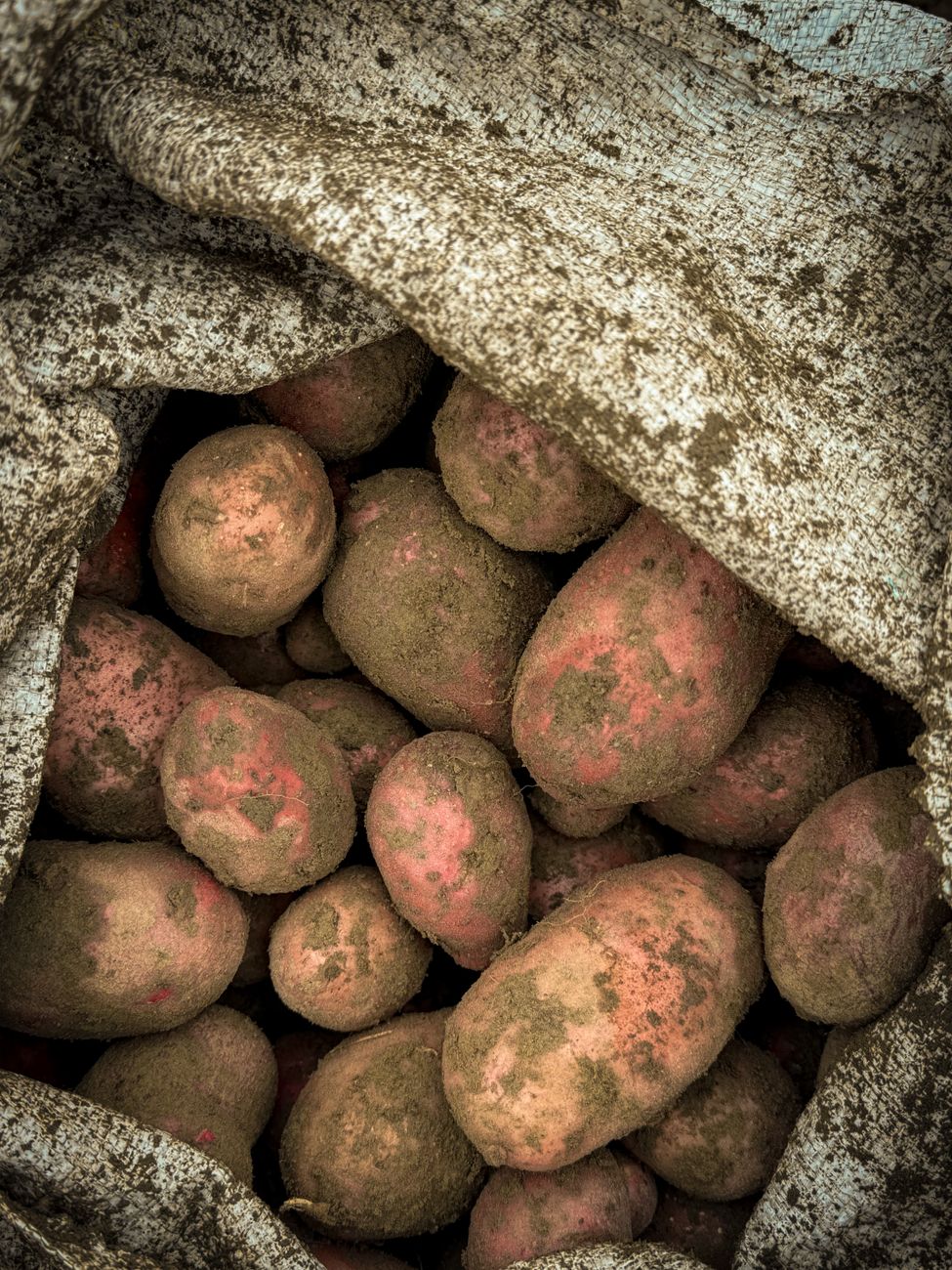
I spread my harvested potatoes out in a single layer on newspaper or an old hessian sack in a cool, dark, well-ventilated spot for about 1-2 weeks. My garage is perfect for this. During this time, any minor skin damage will heal, and the skins will toughen up. Don't wash them until just before you're ready to use them! The dirt actually helps protect them.
After curing, I store my maincrop potatoes in paper sacks or hessian bags in the darkest, coolest, driest part of my shed. Light will turn them green and make them taste bitter (and produce solanine, which is toxic!), and warmth will encourage sprouting. Aim for a temperature between 4-7°C. I check them regularly, removing any that show signs of rot to prevent it spreading. My 'Cara' potatoes from last season, harvested in September, lasted well into March using this method!
Here's a handy guide for harvest and storage:
| Potato Type | Typical Harvest Time (UK Midlands) | Foliage Status | Randy's Storage Tip (after curing) |
|---|---|---|---|
| Conclusion: Your Bumper Potato Harvest Awaits! |
So there we have it, my fellow UK gardeners! From selecting the perfect variety to that immensely satisfying moment of tipping out a grow bag brimming with homegrown spuds, growing your own bumper potato harvest really is a rewarding adventure. I’ve shared with you the exact methods and lessons I've learned over five intensive years in my 800 sq ft Midlands garden, experimenting with everything from 'Charlotte' for those early salads to 'Sarpo Mira' battling our British blight.
Remember those key takeaways:
- Variety is Vital: Choose varieties suited to grow bags and our UK climate – think 'Charlotte' for earlies and blight-resistant 'Sarpo Mira' for maincrop.
- Layering for Success: The earthing-up method isn't just tradition; it's how you encourage more tubers, filling those bags from bottom to top.
- Water Wisely, Feed Smart: Grow bags dry out fast, so daily checks are a must. And always choose a high-potash feed to boost those tuber yields.
- Troubleshoot with Trust: Don't let a bit of blight or a few slugs get you down. With a bit of vigilance and the right approach, you can protect your precious crop.
- Harvest with Care, Store with Intent: Patience is a virtue, especially with maincrop. Let that foliage die back, cure your spuds, and store them properly for months of deliciousness.
Growing potatoes in grow bags is such an accessible way to enjoy fresh, homegrown vegetables, even if you’re short on space like I once was before transforming my backyard. It's a fantastic journey of learning and discovery, and I truly hope my experiences and tips from here in Britain help you achieve your most abundant potato harvest yet.
Don't be afraid to experiment, to make mistakes (I've made plenty!), and most importantly, to enjoy every single step of the process. There’s nothing quite like digging into your own potatoes, knowing they’ve come straight from your UK garden. Happy growing, everyone!