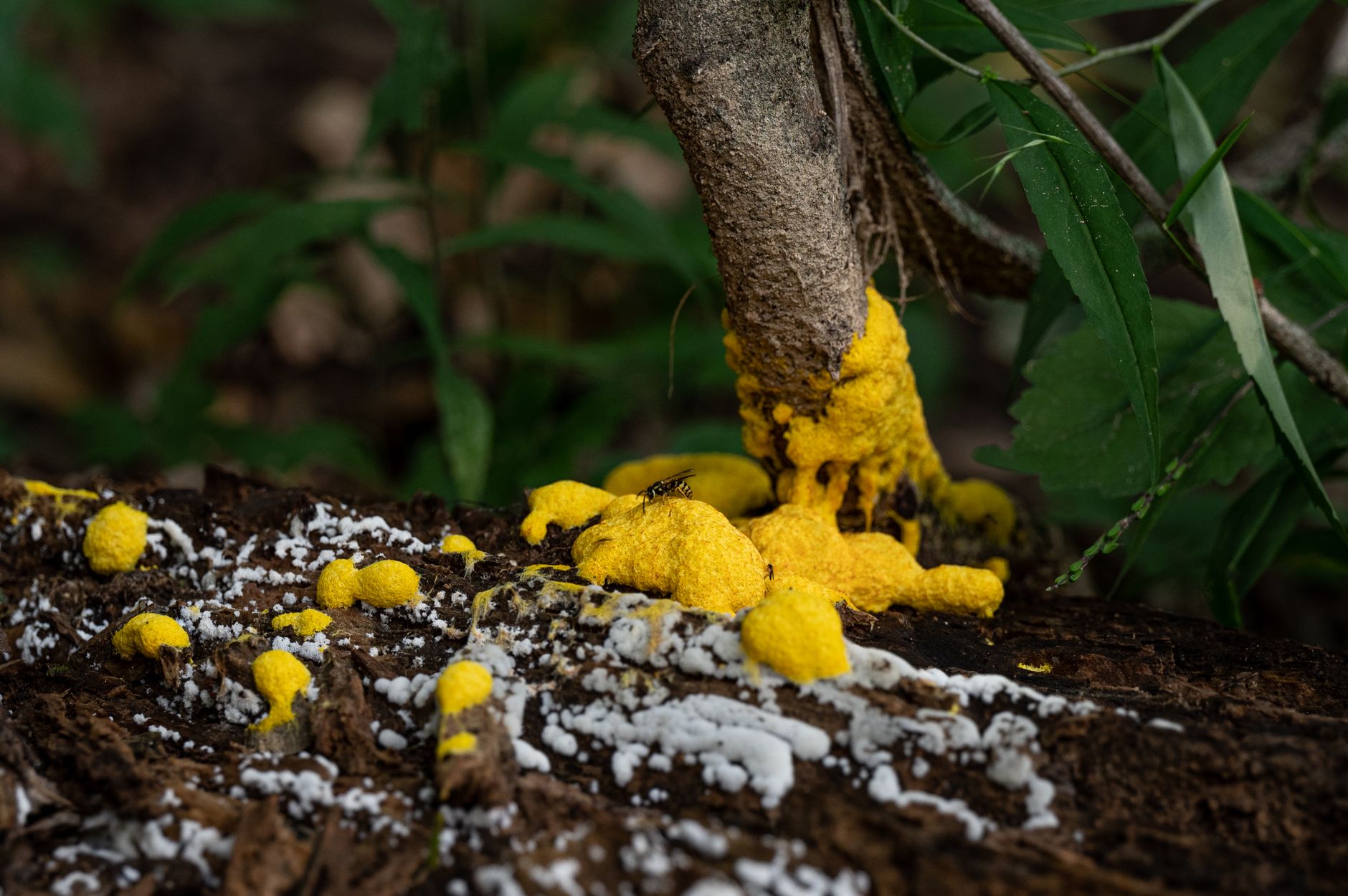
Right, fellow green-fingered enthusiasts! Randy here, coming to you from my 800 sq ft patch of gardening heaven here in the UK Midlands. If you're anything like me, you've probably spent countless hours nurturing your plants, only to occasionally stumble upon something that makes you scratch your head – or even raise a tiny bit of panic. Today, we're tackling one of those garden oddities that pops up, particularly after a good spell of our famously damp British weather: slime mold.
Unveiling the Mystery: What is That Slime in Your UK Garden?
I remember the first time I saw it. It was about three years ago, early summer, just after a few days of persistent drizzle had left everything in my raised beds feeling wonderfully moist. I was out inspecting my beloved 'Costoluto Fiorentino' tomatoes, hoping they were setting fruit nicely in the greenhouse (a battle in itself with our variable UK climate!), when I spotted it near my herb bed. A blob of bright, almost neon yellow, looking suspiciously like something a dog had, well, you know, brought up on my woodchip mulch. My heart did a little flutter. Was it a new pest? A deadly fungus? Was it going to devour my precious thyme and sage?
That initial shock quickly turned into curiosity, which, as many of you know, is the gardener's greatest asset. Having spent five years intensively cultivating everything from 'Crimson Sweet' watermelons (yes, in the UK!) to a whole spectrum of heirloom tomatoes in my greenhouse, I've learned that unusual sights in the garden often have fascinating, and usually harmless, explanations. This vibrant, often bizarre-looking growth, which many UK gardeners, myself included, have affectionately (or perhaps despairingly) dubbed "dog vomit slime mold," is a perfect example. It's a common visitor in our gardens, especially where there's plenty of organic matter and that lovely dampness we get so much of here in Britain. So, let's pull up a chair, grab a cuppa, and demystify this intriguing garden guest.
What Exactly is Slime Mold? A Biological Brief
Okay, let's get a little bit nerdy for a moment – my former IT life still peeks through occasionally! When I first saw that yellow blob, my mind immediately jumped to "fungus." But here's the kicker: slime molds aren't actually fungi, plants, or animals. They're what scientists call protists, specifically a type of organism known as a plasmodial slime mold, or Myxomycetes. Sounds complicated, right? Don't worry, the practical upshot is much simpler.
Think of them as nature's tiny, mobile clean-up crew. In their main 'feeding' stage, they exist as a single, giant cell with many nuclei, called a plasmodium. This plasmodium creeps along, often quite slowly, consuming bacteria, fungal spores, and other microscopic organic matter. It's like a microscopic amoeba that's decided to go super-sized! In my 800 sq ft garden, I often find them quietly working away in the damp, shaded areas, especially where I've piled up my homemade compost or laid down a good thick layer of woodchip mulch around my raised beds. They absolutely thrive on the decaying stuff – which is exactly what we want in a healthy, organic UK garden, isn't it?
When conditions are just right – usually warm and very damp, like after a typical British summer downpour – this plasmodium decides it's time to reproduce. It then forms those more visible, often brightly coloured, fruiting bodies that we see. These structures release spores, which then spread to new areas, continuing their life cycle. It's a truly fascinating process to observe, and once you understand what it is, that initial panic tends to melt away, replaced by a sense of wonder at the sheer biodiversity of our gardens.

Identifying Common Slime Molds in UK Gardens: From 'Dog Vomit' to 'Tapioca'
Now, while there are hundreds of species of slime mold, in my five years of intensive UK gardening, I've primarily encountered a couple of common types. Knowing what they look like, and where to expect them, can save you a lot of head-scratching.
The absolute superstar of slime mold sightings in my Midlands garden, and likely yours too, is Fuligo septica, or as we lovingly (or not-so-lovingly) call it, 'Dog Vomit Slime Mold'. This is the one that first startled me near my herbs. It starts as a bright yellow, sometimes orange, foamy or creamy mass. As it matures, it often dries out, turning whitish, then crumbly and brown, almost like dried breadcrumbs. I most frequently spot it on my woodchip paths, around the base of my 'Charlotte' potato plants in raised beds, and sometimes even creeping up the stems of my courgettes after a prolonged wet spell. It's a real opportunist, popping up wherever there's decaying organic matter and plenty of moisture.
Another one I've come across, though less frequently, is Brefeldia maxima, which I tend to think of as 'Tapioca Slime Mold'. This one is often much larger and typically appears as a brilliant white, sometimes slightly greyish, bubbly or foamy mass. It really does look like a giant dollop of tapioca pudding! I've mainly found this one clinging to rotting logs or old tree stumps at the edge of my garden, rather than directly in my active growing beds. It's less dramatic in colour but equally intriguing in form.
Here's a quick rundown of the common suspects you might find lurking in your UK garden:
| Common Name | Scientific Name | Typical Appearance | Common Locations in UK Garden | Randy's Personal Observation/Tip |
|---|
When and How to Intervene: A Practical UK Gardener's Guide
Right, so we've established that slime mold is largely harmless, a fascinating little creature doing its thing. But what if it's, well, inconvenient? What if that bright yellow 'dog vomit' has decided to set up shop right where you're trying to showcase your prize-winning 'Marmande' tomatoes, or worse, is slowly engulfing your tiny 'Little Gem' lettuce seedlings?
In my 800 sq ft Midlands garden, I've only ever felt the need to intervene a handful of times in my five years of intensive gardening. My first rule of thumb is always: observe first. Most of the time, if left alone, the plasmodium will simply move on or dry up and turn into spores within a day or two, especially if we get a bit of sun here in Britain. But there are those moments.
One year, a particularly vibrant patch of Fuligo septica (the 'dog vomit' one) decided to set up right at the edge of my greenhouse path, dangerously close to where I was trying to germinate some early 'Sungold' tomatoes. It wasn't hurting them, but it was spreading towards the warmth and damp, and honestly, it was looking a bit… much. That’s when I decided a gentle intervention was warranted.
Here’s a quick guide based on my own trial and error in our sometimes-damp UK climate:
My Go-To Intervention Methods (When Absolutely Necessary)
- The Gentle Hose-Down: This is my absolute favourite and usually the first thing I try. If the slime mold is on a path, patio, or a non-porous surface, a good blast with the garden hose will usually dislodge it and break it up. It washes away harmlessly into the soil. I’ve used this successfully when it’s popped up on the gravel path leading to my raised beds. It's quick, easy, and doesn't harm anything.
- Scoop and Compost: If it's on mulch, bark chips, or a surface where hosing isn't practical or would just spread it, I’ll carefully scoop it up. I use an old trowel or a spade, gathering it into a bucket. Then, it goes straight into my active compost bin. The heat and decomposition process in a good compost heap will break it down quickly and effectively. I did this once when a patch appeared right on top of my newly mulched herb bed – didn't want it spreading over my 'Genovese' basil!
- Let it Dry (Patience, Randy!): Sometimes, the best intervention is no intervention at all. If it's in an out-of-the-way spot, or on a leaf that I can simply prune later, I just leave it. A spell of dry weather, which we do get occasionally even here in the Midlands, will often cause it to dry out and disappear on its own. This saves me effort and lets nature take its course. This is my preferred method if it’s on a piece of fallen wood or an old leaf.
Here's a comparison table I've put together based on what I've found works best here in my UK garden:
| Intervention Method | When to Use (Randy's Advice) | Pros | Cons |
|---|---|---|---|
| Gentle Hose-Down | On paths, patios, hard surfaces. When slime mold is new/active. | Quick, easy, requires no special tools. Harmlessly disperses the mold. | May spread spores (though usually not an issue). Not suitable for delicate plants or loose soil. |
| Scoop & Compost | On mulch, bark, soil, near seedlings. When appearance bothers you. | Removes the visible mold completely. Adds organic matter to compost. Prevents further spreading in that spot. | Requires direct contact (gloves!). Can be messy. Might disturb surrounding soil/mulch. |
| Let it Dry Out | In out-of-the-way areas. On fallen leaves/wood. When time isn't an issue. | Zero effort required. Allows nature to take its course. Educates you on its lifecycle. | Takes time (days). Appearance may persist for a short period. Not suitable for high-traffic or visible areas. |
Remember, the goal isn't to eradicate slime mold from your garden – that's impossible and unnecessary. It's about managing its presence if it becomes an aesthetic nuisance or, in very rare cases, slightly impedes a tiny seedling. I've learned that a light touch is always best; after all, it's just a temporary visitor!
Preventing Recurrence and Promoting Overall Garden Health
While you can't truly "prevent" slime mold entirely (it's a natural part of a healthy ecosystem, remember?), you can certainly make your garden less inviting for large, noticeable outbreaks. It's all about promoting general garden health, which is something I'm absolutely obsessed with here in my 800 sq ft Midlands patch. Healthy soil, good airflow, and balanced moisture are the foundations of success for my heirloom tomatoes, my bountiful herbs, and everything in between – and they naturally reduce the conditions slime mold thrives in.
Here are a few things I do, often learned the hard way through my own gardening experiments (and occasional failures!) here in the UK climate:
Manage Moisture – Don't Overwater!
Slime molds love damp, humid conditions, which we get plenty of in Britain! While I ensure my plants get enough water, especially my thirsty greenhouse tomatoes like 'Black Krim', I try to avoid constant dampness on the surface.- Morning Watering: I always water in the morning. This gives the surface of the soil and mulch a chance to dry out during the day, reducing the overnight dampness that slime mold enjoys.
- Deep, Infrequent Watering: Instead of shallow daily sprinkles, I aim for deeper, less frequent watering. This encourages roots to grow deeper and allows the top layer of soil to dry out between waterings. This is particularly crucial in my raised beds where drainage is excellent but drying can be quick on windy days.
- Good Drainage: In my raised beds, I've ensured excellent drainage by building them correctly and using a good quality, free-draining soil mix. This prevents waterlogging, which can create persistent damp spots.
Promote Air Circulation:
Good airflow is vital for preventing all sorts of fungal issues and, yes, it helps deter slime mold too. Trapped humidity is an open invitation.- Smart Plant Spacing: This is a big one. I learned early on not to cram too many plants into my small space, tempting as it is! Giving plants adequate room, like my 'Brandywine' tomatoes in the greenhouse, allows air to circulate around them, drying out leaves and soil surfaces.
- Pruning: I regularly prune the lower leaves of my tomato plants and other leafy greens to improve air circulation at the base. This also keeps leaves from touching the damp soil, which is another common entry point for various issues, not just slime mold.
- Weed Control: Keeping weeds down isn't just for aesthetics or nutrient competition; a dense mat of weeds can trap humidity at ground level. I aim for a relatively weed-free garden, especially around my vegetables.
Turn Your Compost and Mulch:
Slime mold thrives on decaying organic matter that is consistently damp.- Active Composting: I turn my compost bins regularly. This aerates the pile, speeds up decomposition, and generates heat, creating an environment too active and hot for slime mold to comfortably set up a persistent home. It's a key part of my soil-building efforts here in the Midlands.
- Aerating Mulch: If you have a thick layer of organic mulch (like wood chips or bark), occasionally raking or turning it over can help dry out the bottom layers and prevent a constant damp environment right at the soil surface. I do this around my fruit bushes in late spring.
By focusing on these fundamental principles of good gardening – which I’ve found work wonders for everything from my herbs to my heirloom peppers – you'll naturally create a less appealing environment for any slime mold outbreaks, while simultaneously boosting the overall health and productivity of your UK garden. It’s all about working with nature, not against it.
Conclusion: Embrace or Gently Remove – Your Slime Mold Decision
So, there we have it. That mysterious, often startling, blob of slime in your UK garden isn't a menace, a pest, or a threat to your beloved 'Gardeners Delight' tomatoes or your carefully nurtured 'Rosemary'. It’s a fascinating, ancient organism playing its part in the grand tapestry of your garden's ecosystem.
Through my five years of intense gardening here in the Midlands, experimenting with everything from seed saving to companion planting, I’ve learned to appreciate the unexpected visitors, even the ones that look like something out of a sci-fi film. When I first started, spotting something like 'dog vomit' slime mold would have sent me into a panic, convinced my entire crop was doomed. One mistake I made was rushing to remove it aggressively, thinking it was a fungus attacking my plants, only to realise later it was entirely harmless.
What I've learned since then, through observation and a bit of research, is that slime mold is generally a sign of a healthy, active soil environment, rich in decaying organic matter. It's a decomposer, a recycler, and ultimately, a beneficial if slightly odd-looking, resident.
Whether you choose to let that vibrant yellow blob dry out on its own, gently coax it into your compost, or simply hose it off your path, remember it's just another incredible, albeit sometimes startling, part of our wonderful garden ecosystem here in the UK. Don't let it cause you any stress.
The next time you spot that mysterious growth, take a moment to observe it. Watch how it changes over the course of a day or two. Appreciate its unique beauty and its role in nature. Your garden, like mine, is a living, breathing space, full of surprises. Embrace them, learn from them, and enjoy the journey! Happy gardening, fellow UK green thumbs!
