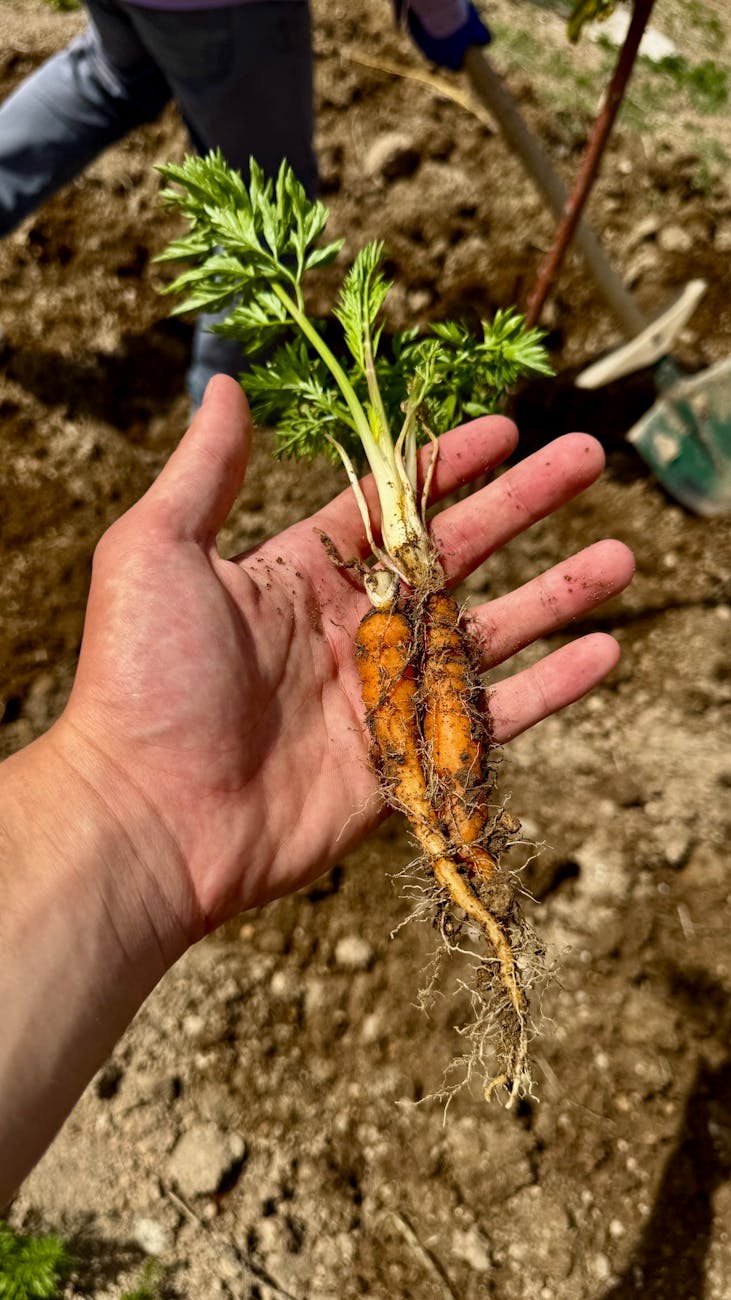
Introduction: Unlocking Reliable Direct Sowing in Challenging Clay Soils
Let's be honest, trying to direct sow fine seeds like carrots, beets, and radishes into heavy, unforgiving clay soil can feel like you're fighting a losing battle, especially here in the often-soggy (or suddenly bone-dry!) UK Midlands. I remember my first couple of seasons, five years ago now, staring dejectedly at patchy rows, or worse, rows where nothing at all had emerged from the seemingly impenetrable earth. It was enough to make an ex-IT worker wonder why I’d ever swapped spreadsheets for soil!
But I’m Randy, and if there's one thing I've learned in my 800 sq ft backyard packed with raised beds and a greenhouse, it's that persistence and a bit of clever experimentation pay off. Over the years, I've transformed my stubborn clay into a productive haven, even for those notoriously fussy direct-sown crops. I've had my share of failures – believe me, the British weather has a way of humbling you – but I've also had some incredible breakthroughs.
This isn't about magical quick fixes; it's about understanding our unique UK clay, preparing it properly, and employing smart sowing techniques that genuinely work. What I'm going to share with you are the practical, hard-won lessons from my own UK garden: the soil amendments I swear by, the specific timing that works here in the Midlands, and the precision methods that have given me consistently reliable and even germination for those sweet, crisp carrots, earthy beets, and peppery radishes. If I can do it in my heavy clay, you absolutely can too. Let's get those seeds sprouting!
Understanding Your Enemy: The Unique Challenges of Heavy Clay for Fine Seeds
When I first moved into my current place in the Midlands, I quickly realised my garden wasn't just 'soil' – it was a solid, brick-like mass that laughed in the face of my enthusiastic digging. That's the reality of heavy clay, isn't it? It's dense, it's slow to warm up in our often-chilly UK springs, and it has a frustrating habit of going from waterlogged to rock-hard in what feels like mere hours, especially with our unpredictable British weather.
For fine seeds like carrots, beets, and radishes, this heavy clay presents a unique set of challenges that I’ve learned to tackle head-on. Firstly, that density means poor aeration. Tiny rootlets need oxygen to sprout, and they simply can't push through compacted, airless soil. I've spent too many seasons carefully sowing, only to find the seeds rotting before they even had a chance, simply because the soil was too wet and stifling.
Then there's the moisture retention – a double-edged sword. Clay holds onto water like nothing else, which sounds good in theory, but in practice, it often means periods of waterlogging. Once it eventually dries out, especially if we get a sudden sunny spell after rain, the surface bakes hard and cracks. I've seen it countless times in my beds; a tiny, emerging seedling simply can't break through that crust. It's like asking a newborn chick to peck its way out of concrete! This cracking can also shear off fragile young roots, which is a devastating sight after all that effort.
Another issue I've observed in my UK garden is the slow warming. Clay takes ages to heat up in the spring, delaying germination for warmth-loving seeds and making precise sowing times a real gamble. I remember one year I sowed some 'Autumn King 2' carrots a bit too early, hoping for an early crop, and they just sat there, sulking in the cold, wet clay for weeks longer than they should have, eventually leading to a very gappy row. Understanding these inherent properties of our clay is the first crucial step to outsmarting it.

Transforming Clay: Essential Soil Preparation for Optimal Seedbeds
Alright, so we know what we're up against with our stubborn UK clay. The good news is, you don't have to replace it all! Over my five-plus years of intensive gardening, I've found that the real secret lies in consistently improving its structure through generous applications of organic matter. My goal isn't to turn it into sandy loam overnight – that's impossible – but to make it workable, well-draining, and rich in the microbial life that seeds adore.
One of the biggest mistakes I made early on was trying to dig in sand without enough organic matter; it just made a kind of weak concrete! What works here in Britain, for my clay, is a steady diet of compost, well-rotted manure, and a touch of grit in the areas where drainage is particularly sluggish. These amendments don't just add nutrients; they create tiny air pockets, improve drainage while still retaining moisture, and allow those delicate rootlets to push through with ease. I usually prepare my beds in the autumn and winter, letting the amendments integrate over the colder months, but a good spring top-up before sowing is also essential.
Here's a breakdown of what I've found most effective in my Midlands garden:
| Amendment Type | Randy's Experience in UK Clay | Best for
5. Post-Sowing Care: Nurturing Germination and Early Growth in Clay
So, you’ve meticulously prepped your soil, sown your seeds with precision, and now you’re waiting. This waiting period, from tiny seed to robust seedling, is absolutely critical, especially in our heavy UK clay soils. It’s where many a hopeful gardener, myself included in my early days, has stumbled. Nurturing those nascent plants through their most vulnerable stage requires a consistent, gentle hand.
Watering: The Delicate Dance on Clay
This is probably the biggest post-sowing challenge with clay. Clay holds water, which is great, but it can also become a brick-like crust if it dries out, or a waterlogged mess if overdone. The goal is consistent moisture in the top inch or so where the seeds are, without ever making it soggy.
- Initial Watering: Immediately after sowing, I give the seedbed a gentle soak with a watering can fitted with a fine rose. This settles the soil around the seeds.
- Ongoing Moisture: For the next week or two, I check the soil surface daily. If it feels dry to the touch, another gentle watering is needed. I usually do this in the early morning or evening to reduce evaporation. I’ve learned the hard way that a strong jet of water can wash tiny seeds away or create mini-craters, so a fine spray is non-negotiable.
- The Clay Crust Conundrum: One year, after a lovely sunny spell here in the Midlands following a light shower, I found my newly sown carrot bed had developed a formidable crust. My ‘Paris Market’ carrots just couldn’t break through! Now, if I see this happening, I very gently mist the surface to soften it, or sometimes lightly brush my hand across it to break it up before it hardens too much. A thin layer of fine grit or vermiculite applied over the seeds after sowing can also help prevent this, acting as a buffer.
- UK Weather Watch: Our British weather is famously unpredictable. A sudden downpour can quickly turn your carefully prepared seedbed into a quagmire. If heavy rain is forecast, I sometimes lightly cover very fresh sowings with fleece or even a spare cloche to prevent them from being washed out or compacted into oblivion. Conversely, a surprise dry spell can quickly desiccate seeds in the top layer of clay. Be vigilant!

Pest Protection: Battling British Invaders
Our damp UK climate means slugs and snails are always on the prowl, and they absolutely adore tender young seedlings. A single night can wipe out an entire row of radishes or beets.
- Early Vigilance: As soon as those first tiny green shoots appear, I’m out there, usually at dusk or first thing in the morning, on slug patrol.
- Physical Barriers: I've had success with wool pellets forming a rough barrier around my beds, and sometimes even a thin line of crushed eggshells, though those break down quickly in the rain.
- Beer Traps: Simple and effective. A small container sunk into the soil with a bit of beer can lure them away from your precious seedlings. I place these strategically around my carrot and beet beds.
- Birds: Less common for root crops, but sometimes birds can scratch around. A light covering of bird netting or fleece can offer temporary protection if you notice issues.
Weeding: Giving Your Seedlings Space to Thrive
Weeds are the arch-nemesis of any gardener, but especially for fine, slow-germinating seeds like carrots in clay. They compete fiercely for precious moisture, nutrients, and light, and in heavy clay, any competition can spell disaster.
- Early Action: I aim to weed as soon as I can distinguish my seedlings from the weeds. With carrots, this can be tricky as they look quite similar to some common weed seedlings initially.
- Gentle Hand-Weeding: In my experience, a small hand fork or even a Japanese Hori Hori knife is invaluable for carefully teasing out weeds without disturbing the delicate roots of your desired crops. I always do this when the soil is slightly damp – not bone dry, which makes pulling hard, and not soaking wet, which can compact the soil further.
- The Carrot Problem: One year, I let the weeds get a bit ahead in my carrot bed. By the time I finally got around to it, the weeds were so intertwined with the tiny carrot tops that I ended up pulling out more carrots than weeds. A frustrating but valuable lesson! Now, I dedicate specific time each week to 'weed patrol' in my direct-sown beds.
Thinning: The Tough but Necessary Task
This is often the hardest part for new gardeners, me included initially. You’ve put all that effort into getting your seeds to germinate, and now I’m telling you to pull some out! But for root crops, thinning is absolutely vital for developing decent-sized roots. Without it, your carrots will be spindly, your radishes tiny, and your beets won't swell.
- When to Thin: I thin my seedlings when they’ve developed their first set of true leaves (the second set of leaves to appear after the initial cotyledons).
- Carrots: Aim for 2-3 inches (5-7.5 cm) apart. I usually go for 2 inches for smaller varieties like 'Amsterdam Forcing' and 3 for chunkier ones like 'Autumn King'.
- Radishes: These are fast growers, so I thin them to about 1-2 inches (2.5-5 cm) apart, depending on the variety. 'French Breakfast' does well at 1 inch.
- Beets: I thin beets to about 3-4 inches (7.5-10 cm) apart. Sometimes, if two beet seeds germinate very close together, I’ll leave both for a while, harvesting one for its greens and letting the other develop a root.
- How to Thin: Always water the bed thoroughly before thinning. This loosens the soil and makes it easier to pull out seedlings without disturbing the roots of the ones you want to keep. I gently pull the unwanted seedlings, or sometimes snip them at soil level with small scissors to minimise disturbance. The scent of thinned carrots can attract carrot fly, so it’s best to do it on a breezy day or in the evening, and ideally, cover the bed with an insect mesh afterwards.
6. Troubleshooting Common Germination Failures in Heavy Clay
Let's be honest, gardening isn't always sunshine and bountiful harvests. Especially with clay soil and our famously fickle UK weather, things can go wrong. I've had my share of failures over the past five years in my 800 sq ft Midlands garden, and often, the troubleshooting process has been my greatest teacher. Here are some common issues and what I’ve learned about fixing them.
No Germination at All
This is soul-crushing when you've put in the effort.
- The Clay Crust: As I mentioned, this is a big one. A dry spell after rain can bake the top layer of clay into a concrete-like slab that tiny seedlings simply can’t push through.
- My Fix: Gentle misting to soften, or for next time, a fine layer of grit or vermiculite over the seeds. I also learned to break up any crust before it hardens too much.
- Too Wet or Too Dry: Clay is a balancing act. If the soil is waterlogged, seeds can rot. If it dries out completely, they lose viability.
- My Fix: Consistent, gentle watering. Stick your finger in the soil – if it’s dry an inch down, water. If it’s soggy, hold off. I learned this when I drowned a whole bed of 'Early Scarlet Globe' radishes one spring.
- Sowing Depth: Too deep, and the seedling uses all its energy trying to reach the surface. Too shallow, and it dries out or gets washed away.
- My Fix: Stick to the recommended 1/4 to 1/2 inch (0.5-1 cm) depth. I now use my finger or a specific dibber to ensure uniformity.
- Old Seeds: Sometimes it's not you, it's the seeds. If your packet is old, viability might be low.
- My Fix: I always do a quick germination test on a damp paper towel for older seeds now, especially for expensive or favourite varieties like my 'Rainbow Blend' carrots.
Patchy Germination
You get some lovely seedlings, but then big gaps. Annoying!
- Uneven Moisture/Soil Prep: This often comes back to the initial soil prep. If you have lumps of unamended clay, or pockets of wet and dry, germination will be inconsistent.
- My Fix: Really double down on breaking up those clods and incorporating organic matter and grit uniformly. My mantra is now "finer and more consistent" for seedbeds.
- Seed Distribution: If you're broadcasting, some areas might get more seeds than others.
- My Fix: My precision sowing techniques (seed tapes, pelleted seeds, or careful single-seed placement) largely solve this now.
- Pests: Ants can sometimes carry off seeds, or slugs can feast on emerging seedlings before you even notice them.
- My Fix: Vigilant pest control and checking my rows daily.
Seedlings Damping Off
This is a fungal disease where healthy seedlings suddenly collapse at the soil line. It's particularly prevalent in cool, damp UK conditions.
- My Fix: Prevention is key. Ensure good air circulation (don't overcrowd), avoid overwatering, and make sure your soil has excellent drainage. Adding a thin layer of fine grit over the seeds, as mentioned, can also help keep the surface a bit drier around the delicate stems. I learned this the hard way when a batch of early 'Detroit Dark Red' beets just keeled over after a cold, wet week.
![IMAGE_PLACEER_2: close up of collapsed seedling from damping off in a tray]
Slow or Stunted Growth
Your plants are up, but they just aren't thriving.
- Soil Compaction: Even with good initial prep, heavy clay can re-compact, especially after heavy rain or if you walk on the beds. Roots struggle to penetrate.
- My Fix: Avoid walking on beds at all costs. Regular, gentle aeration with a broadfork (before sowing) or careful hand cultivation around established plants can help.
- Nutrient Lock-up: Clay holds nutrients well, but sometimes they're unavailable to plants due to pH or compaction.
- My Fix: Consistent addition of well-rotted compost and other organic matter feeds the soil microbiome, which in turn makes nutrients available. A quick liquid feed of seaweed extract can sometimes give a boost.
- Competition: Weeds or overcrowding from not thinning can seriously stunt growth.
- My Fix: Stay on top of weeding and thinning! It’s really that simple.
UK Weather Woes: The Unpredictable Element
- Unexpected Cold/Frost: A late spring frost can decimate tender young seedlings.
- My Fix: Keep an eye on the forecast. If a cold snap is coming, I quickly cover new sowings with fleece or cloches. I've learned never to trust an early April warm spell!
- Heavy Rain: As mentioned, it can wash seeds away, compact the soil, or lead to waterlogging.
- My Fix: Ensure good drainage and consider temporary coverings if prolonged heavy rain is forecast right after sowing. I lost a whole batch of 'Sparkler' radishes to a sudden deluge last year that just turned the bed into a river.
7. Conclusion: Your Path to Abundant Root Crops in Clay Soil
And there you have it, fellow UK gardeners! We've journeyed through the challenges of heavy clay, from breaking down those stubborn clods to lovingly thinning out your seedlings, all in pursuit of that ultimate prize: a reliable, abundant harvest of carrots, beets, and radishes.
What I've learned over my five years of intensive gardening here in the Midlands, with my heavy clay and unpredictable British weather, is that direct sowing in challenging conditions isn't just possible – it's incredibly rewarding. It demands patience, observation, and a willingness to learn from every success and every setback. It’s about understanding your soil, working with it rather than against it, and making small, consistent efforts that add up to big results.
Remember those key takeaways:
- Transform Your Clay: It all starts with deep soil preparation, incorporating copious amounts of organic matter and grit to create that friable, aerated seedbed. This is non-negotiable.
- Precision is Power: Sowing at the correct depth and spacing, whether by hand or with clever aids, sets your seeds up for success from day one.
- Nurture with Care: Consistent moisture, diligent pest control (those slugs!), and timely weeding and thinning are the pillars of strong early growth.
- Learn from Every Season: Don't be disheartened by failures. Every patchy row or stunted root is a lesson learned about your specific microclimate and soil. I've certainly had my share, but they've made me a better gardener.
The taste of a home-grown carrot, pulled fresh from your own soil, is incomparable. The crisp crunch of a homegrown radish, or the earthy sweetness of a beet, makes all the effort worthwhile. You can grow fantastic root crops in heavy clay. I’ve done it, and you can too!
So, go on, get out there! Dig in, experiment, and don't be afraid to get your hands dirty. Your clay soil isn't a curse; it's an opportunity to truly master your craft.
I'd love to hear about your experiences. What are your favourite carrot, beet, or radish varieties for UK conditions? What’s your top tip for direct sowing in clay? Share your successes (and even your failures!) in the comments below – we're all learning together. Happy growing!