Introduction: Why First-Year Root Establishment is Your Key to Long-Term Vigor
When I first started gardening in my small 800 sq ft UK backyard five years ago, fresh out of the IT world, I was obsessed with what I could see above ground. Lush leaves, vibrant flowers, juicy heirloom tomatoes in my greenhouse – that was the dream. But over time, and after a fair few struggles with plants that just never seemed to thrive, I learned a hard, vital lesson: what's happening beneath the surface is often far more critical than anything you can observe with the naked eye. Especially when it comes to trees and shrubs.
Here in the Midlands, with our famously unpredictable British weather, I've had my share of challenges. From soggy winters to surprisingly dry summers, a plant’s ability to cope often boils down to its root system. A strong, deep, and widespread root system established in that crucial first year isn't just about survival; it’s about unlocking true long-term vigour, resilience against disease, and the ability to shrug off those extreme weather events we seem to get more of these days. I've seen it firsthand with my own 'Cornelian Cherry' dogwood (Cornus mas) and the 'Pink Delight' Hydrangea paniculata I planted a few years back – the ones I took extra care with in year one are now absolute showstoppers. The ones I rushed? Well, let's just say they taught me a valuable lesson.
This isn't about magical thinking; it's about solid horticultural science mixed with practical, hands-on experience from my UK garden. I've experimented, I've made mistakes (oh, have I made mistakes!), and I've learned what truly works here in Britain to get those roots going strong right from the start. In this guide, I want to share my journey and the strategies I've found most effective for giving your new trees and shrubs the very best start, ensuring they become robust, thriving members of your garden for years to come.
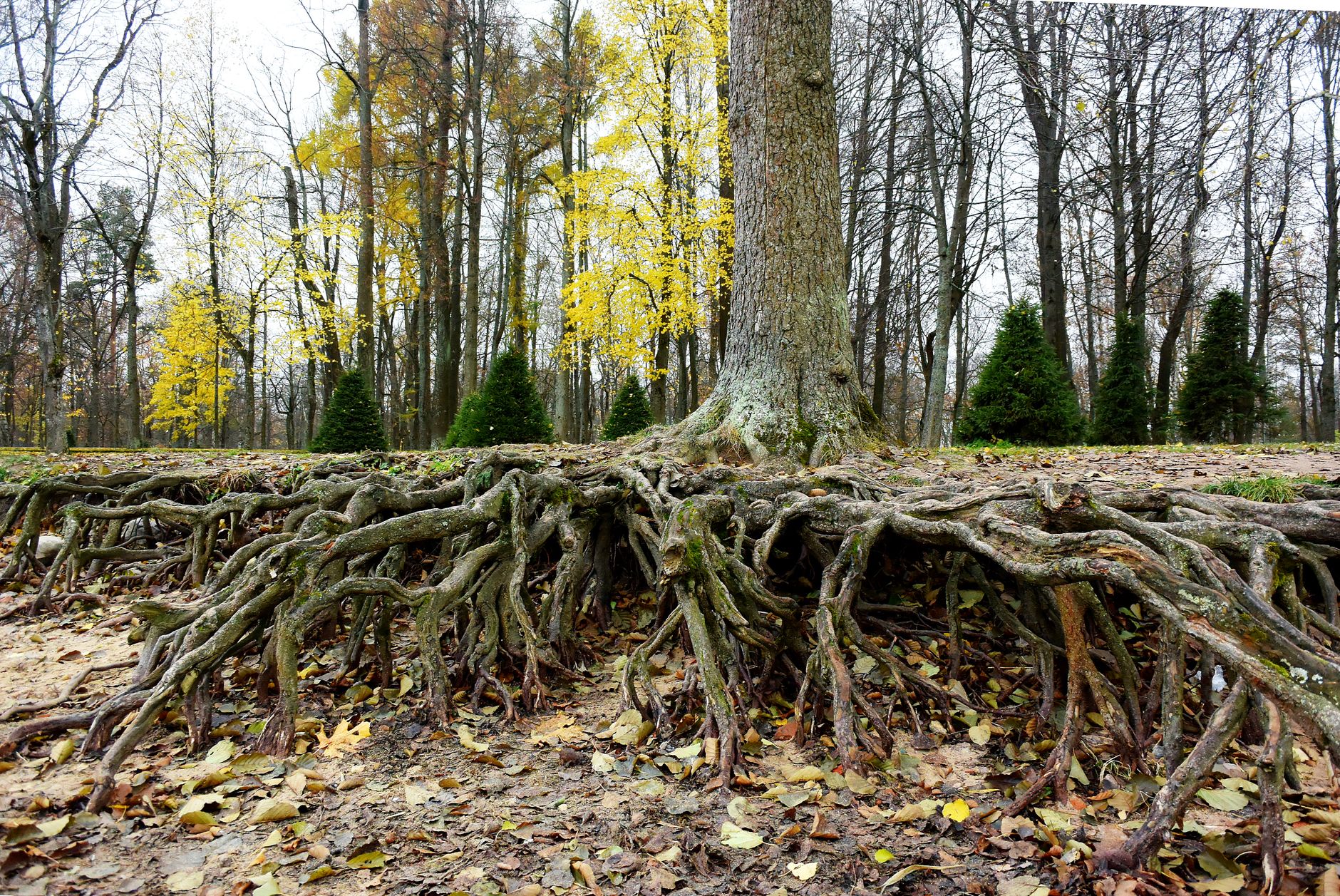
The Hidden World Beneath: Understanding Tree & Shrub Root Systems
Before we even think about digging a hole, it's absolutely essential to understand what’s going on underground. When I first started, I pictured roots as just a big, tangled mess, like spaghetti under the soil. I quickly learned that this couldn't be further from the truth. The root system is the plant's anchor, its plumbing, and its primary way of gathering nutrients and water. Get this wrong, and everything above ground will suffer, no matter how much you fuss over it.
Trees and shrubs generally have two main types of root systems: taproots and fibrous roots. While many of our common garden trees and shrubs develop a combination, it's the widespread, fibrous, feeder roots that are doing most of the heavy lifting. These are the tiny, hair-like roots that spread out incredibly far, often two to three times the width of the canopy, and it’s these that we want to encourage to grow deep and wide in that first year. In my 800 sq ft garden, I've seen how a young 'Acer palmatum' (Japanese Maple) that I carefully planted developed a root system that truly explored its patch, helping it withstand a surprisingly dry August we had last year. On the flip side, a 'Bay Laurel' I planted too deep a few years back really struggled, never putting on much growth, because its roots were constantly waterlogged and stressed.
Understanding this hidden world helps us make better decisions about planting depth, soil preparation, and even watering. It’s not just about stability against our infamous British winds, though that's certainly a bonus, but about efficient nutrient uptake and drought resistance. Think of it as the plant's unseen engine; if the engine isn't well-built and tuned, the car won't get very far.

Groundwork for Growth: Essential Pre-Planting Soil & Site Preparation
This is where many, including my younger self, often rush things, and it’s a decision that can haunt you for years. I learned this the hard way with a 'Malus 'Evereste'' crab apple tree. I was so excited to get it in the ground, I just dug a hole, plopped it in, and hoped for the best. The tree survived, but its growth was always a bit lacklustre, and it took ages to establish properly. The mistake? Not properly preparing the soil.
Here in the Midlands, we often contend with heavy clay soil. While it’s rich in nutrients, it can be a nightmare for drainage, especially for young roots that need oxygen. Before planting anything new, I now dedicate serious time to site and soil preparation. This means assessing drainage, soil type, and making amendments. For my 'Mirabelle de Nancy' plum tree, I spent a full weekend amending a 2-metre wide area, not just the planting hole, with plenty of well-rotted compost and grit to break up the clay. It made a world of difference; that tree took off like a rocket!
Site selection is equally important. Think about sun exposure throughout the day, shelter from prevailing winds (a big factor in the UK!), and proximity to existing structures or other plants. I always consider our British climate; planting a sun-loving shrub in a spot that gets morning sun but is shaded in the afternoon, especially in summer, can hinder its root development as the soil stays cooler and wetter for longer.
Below is a comparison of different approaches to soil and site preparation, based on what I've tried in my UK garden:
| Preparation Method | Pros (for UK conditions) | Cons (for UK conditions) | Randy's Experience & Recommendation
for UK gardening is always a delightful challenge. Getting those roots established properly in the first year can make all the difference, especially with our unpredictable British weather. I've learned this the hard way with a few struggling shrubs that just never seemed to truly take off. But I've also had great successes, like with my 'Pink Delight' Hydrangea paniculata, which, thanks to a solid start, now produces absolutely massive flower heads every summer, even after a particularly soggy winter.
This article isn't just about getting a plant to survive; it's about helping it thrive for years to come. We'll be talking about how to encourage those crucial deep, widespread root systems that will anchor your trees and shrubs, making them resilient against drought, strong against wind, and more resistant to pests and diseases.
The Hidden World Beneath: Understanding Tree & Shrub Root Systems
When I first started gardening in my small 800 sq ft backyard here in the UK, I was obsessed with what I could see above ground. Lush leaves, vibrant flowers, juicy heirloom tomatoes in my greenhouse – that was the dream. But over time, and after a fair few struggles with plants that just never seemed to thrive, I learned a hard, vital lesson: what's happening beneath the surface is often far more critical than anything you can observe with the naked eye. Especially when it comes to trees and shrubs.
I used to picture roots as just a big, tangled mess, like spaghetti under the soil. I quickly learned that this couldn't be further from the truth. The root system is the plant's anchor, its plumbing, and its primary way of gathering nutrients and water. Get this wrong, and everything above ground will suffer, no matter how much you fuss over it.
Trees and shrubs generally have two main types of root systems: a taproot (a single, dominant root that grows straight down) and fibrous roots (a network of thin, branching roots spreading outwards). While many of our common garden trees and shrubs develop a combination, it's the widespread, fibrous, feeder roots that are doing most of the heavy lifting. These are the tiny, hair-like roots that spread out incredibly far, often two to three times the width of the canopy, and it’s these that we want to encourage to grow deep and wide in that first year. In my 800 sq ft Midlands garden, I've seen how a young 'Acer palmatum' (Japanese Maple) that I carefully planted developed a root system that truly explored its patch, helping it withstand a surprisingly dry August we had last year. On the flip side, a 'Bay Laurel' I planted too deep a few years back really struggled, never putting on much growth, because its roots were constantly waterlogged and stressed.
Understanding this hidden world helps us make better decisions about planting depth, soil preparation, and even watering. It’s not just about stability against our infamous British winds, though that's certainly a bonus, but about efficient nutrient uptake and drought resistance. Think of it as the plant's unseen engine; if the engine isn't well-built and tuned, the car won't get very far.
Groundwork for Growth: Essential Pre-Planting Soil & Site Preparation
This is where many, including my younger self, often rush things, and it’s a decision that can haunt you for years. I learned this the hard way with a 'Malus 'Evereste'' crab apple tree. I was so excited to get it in the ground, I just dug a hole, plopped it in, and hoped for the best. The tree survived, but its growth was always a bit lacklustre, and it took ages to establish properly. The mistake? Not properly preparing the soil.
Here in the Midlands, we often contend with heavy clay soil. While it’s rich in nutrients, it can be a nightmare for drainage, especially for young roots that need oxygen. Before planting anything new, I now dedicate serious time to site and soil preparation. This means assessing drainage, soil type, and making amendments. For my 'Mirabelle de Nancy' plum tree, I spent a full weekend amending a 2-metre wide area, not just the planting hole, with plenty of well-rotted compost and grit to break up the clay. It made a world of difference; that tree took off like a rocket!
Site selection is equally important. Think about sun exposure throughout the day, shelter from prevailing winds (a big factor in the UK!), and proximity to existing structures or other plants. I always consider our British climate; planting a sun-loving shrub in a spot that gets morning sun but is shaded in the afternoon, especially in summer, can hinder its root development as the soil stays cooler and wetter for longer.
Below is a comparison of different approaches to soil and site preparation, based on what I've tried in my UK garden:
| Preparation Method | Pros (for UK conditions)
| Cons (for UK conditions)
| Randy's Experience & Recommendation
Post-Planting Nurturing: Strategic Watering, Mulching & Early Care
Alright, you’ve put in the hard yards with preparation and planting. Now comes the crucial first year of hands-on nurturing. This isn't just about keeping your new tree or shrub alive; it's about actively encouraging those roots to dive deep and spread wide. Think of yourself as a root coach – you’re guiding them towards their best performance, especially with our often-unpredictable British weather.
The Art of Strategic Watering for Deep Roots
When I first started gardening five years ago here in the UK, I made the classic mistake of thinking more frequent watering was always better. I’d give everything a quick sprinkle daily, especially in summer. Big mistake! All that did was encourage weak, shallow roots that were totally reliant on my daily attention. The moment a dry spell hit, or I missed a day, my plants would wilt faster than an IT project deadline.
What I've learned, through plenty of trial and error in my 800 sq ft Midlands garden, is that deep and infrequent watering is the golden rule for root establishment. You want to send those roots on a treasure hunt for moisture, forcing them to explore the deeper soil layers.
Here’s a comparison of what I mean, based on my own experiences here in Britain:
| Watering Approach | Description | Randy's Experience & UK Context |
|---|---|---|
| Frequent, Shallow | Light watering daily or every other day, just wetting the surface soil. | Don't do this! I used to think this was caring. It creates weak, surface-level roots that are highly vulnerable to our common UK dry spells, even short ones. Evaporation is also a massive issue, especially on sunny, breezy days. |
| Infrequent, Deep | Thoroughly soaking the soil once or twice a week, allowing the top layer to dry out slightly between waterings. | This is the way! I aim for this with my new fruit trees (like the 'Discovery' apple I planted two years ago) and shrubs. It forces roots to chase moisture downwards, building resilience. It saves water in the long run and helps plants cope with our unpredictable British summer heatwaves and droughts. |
| Targeted, Measured | Using a watering can or slow-drip hose to deliver water directly to the root ball area, rather than spraying broadly. | Absolutely essential in my small space. It ensures every drop goes where it’s needed, reducing waste and discouraging weeds from thriving on wasted water. I measure out 5-10 litres for newly planted shrubs, depending on their size, twice a week in dry periods. |
| Rainfall Monitoring | Adjusting watering schedule based on actual rainfall, not just the forecast. | Crucial here in the UK Midlands! I keep a rain gauge in my garden. A quick shower might look like a lot, but often it only wets the top inch of soil. I only count rainfall as a "watering" if we get a solid 10-15mm or more. Otherwise, I supplement. |
When I water, I don't just pour it on. I let the water sink in, then come back and add more. For my young hazel shrubs, I'll use a watering can with a rose to gently soak the area around the base, letting it penetrate for 10-15 minutes before applying a second round. You're aiming for moisture 12-18 inches deep, not just the top few inches.

The Mulch Magic
Mulching is another non-negotiable in my UK garden for first-year root establishment. It’s a simple layer of organic material placed on the soil surface around your plant, and it performs several vital functions:
- Moisture Retention: This is huge, especially when we get those unexpected heatwaves. A good 2-3 inch layer of mulch dramatically reduces water evaporation from the soil, meaning your deep watering lasts longer.
- Temperature Regulation: Mulch acts like insulation, keeping the soil cooler in summer and warmer in winter. This protects tender new roots from extreme temperature swings, which can be a real issue with our changeable British weather.
- Weed Suppression: Less weeds mean less competition for water and nutrients, allowing your new tree or shrub to focus all its energy on root growth.
- Soil Improvement: As organic mulches break down over time, they slowly release nutrients and improve your soil structure.
I’m a big fan of using wood chip mulch, often sourced from local arborists, or my own homemade compost. I apply a good 2-3 inch layer, keeping it a few inches away from the trunk or stem of the plant to prevent rot and pest issues. I learned this the hard way when a thick layer of mulch right against a young gooseberry bush led to collar rot one particularly damp autumn. Always leave a little breathing room!
Early Care: Vigilance and Gentle Support
Beyond watering and mulching, early care means being observant. Regularly check your new plants for any signs of stress.
- Weeding: Keep the area around your plant weed-free. Weeds are greedy neighbours, stealing precious water and nutrients that your young roots desperately need. I hand-weed around new plantings every couple of weeks.
- Pest and Disease Checks: While less common to see root issues directly, stunted growth or wilting can sometimes be symptoms of something else going on. Look for common UK pests like aphids on new growth, or signs of fungal issues. Early detection is key.
- Staking (Use Sparingly): I generally avoid staking unless absolutely necessary. Too much support can lead to a weaker trunk and root system, as the plant doesn't have to build its own strength against the wind. If you must stake, use a single stake and tie it loosely enough that the plant still has some sway. I once staked a young plum tree too tightly, and it developed a very thin, weak trunk section where the ties were. Lesson learned!
Spotting & Solving Root Woes: Common First-Year Challenges for UK Gardeners
Even with the best intentions, things can go awry in the first year. Our British climate, with its unpredictable swings from deluges to droughts, can throw a real spanner in the works. I've certainly had my share of head-scratching moments and outright failures in my UK garden, especially when it comes to newly planted stock. Learning to read the signs of root distress is like learning a new language – once you understand it, you can take action.
The Tell-Tale Signs of Root Trouble
Most root issues manifest above ground, which can be confusing. Here’s what I look out for:
- Persistent Wilting: If your plant is wilting even after you’ve watered it, or if it wilts in the morning when it should be turgid, it’s a red flag. This can indicate either too little water (roots can’t supply enough) or, paradoxically, too much water (roots are suffocating and rotting).
- Yellowing or Browning Leaves (especially edges): This often signals nutrient deficiencies or water stress. Leaf scorch (browning edges) is a classic sign of insufficient water uptake, either due to dry soil or damaged roots. I saw this on a young Viburnum in that scorching July we had a couple of years back.
- Stunted Growth: If your plant isn’t putting on new growth, or if it looks generally unhappy and isn't thriving, it could be struggling with root establishment.
- Leaves Dropping Prematurely: A plant shedding leaves when it shouldn’t be is often trying to conserve moisture because its roots can’t keep up.
- General Lack of Vigor: It just looks... sad. No vibrancy, no lushness.

Common First-Year Root Woes in the UK & My Solutions
Underwatering (The Dry Spell Scramble):
- The Problem: We often underestimate how quickly soil can dry out, especially with new plants that haven't spread their roots far. A week without rain and a bit of sun can turn moist soil into a brick.
- Randy's Story: Last summer, despite the dodgy weather, we had a two-week dry patch. I almost lost a beautiful young 'Black Lace' elderberry because I assumed the previous rain was enough. Its leaves were crisping at the edges.
- My Solution: Deep, thorough watering. I dug a small test hole near the root ball to confirm the dryness, then gave it 10 litres of water, slowly, waiting for it to soak in before adding more. I then topped up the mulch. Consistent monitoring is key.
Overwatering & Poor Drainage (The Soggy Bottom Blues):
- The Problem: Many parts of the UK, including my Midlands garden, have heavy clay soils. These drain poorly, meaning roots can sit in waterlogged conditions, leading to oxygen deprivation and root rot.
- Randy's Story: When I first tried to plant a weeping willow (a terrible idea for my small space and clay soil, I now realise!), I didn't amend the soil enough. After a particularly wet spring, it just gave up the ghost. When I pulled it out, the roots were dark, mushy, and smelled awful.
- My Solution: This is why pre-planting soil preparation is crucial. If you suspect overwatering after planting, check soil moisture by hand. If it's constantly soggy, you might need to improve drainage around the plant – carefully creating a shallow trench to divert water, or even, in extreme cases, lifting the plant to improve the planting hole with more grit and organic matter (a last resort, as it causes more transplant shock). For future plantings, always incorporate plenty of organic matter and grit into heavy clay.
Transplant Shock:
- The Problem: Even with careful planting, moving a plant from a pot or nursery bed to its new home is a big deal. It takes time for the roots to adjust.
- Randy's Story: Every year, no matter how careful I am, some plants just sit there for a few weeks, looking glum. My 'Blueberry Muffin' Hydrangea did this last spring.
- My Solution: Patience and consistent, gentle care. Ensure adequate water and mulch. Avoid stressing the plant further with fertilisers in the first year. A little wilting for the first week or two is normal; persistent, severe wilting is not.
Pest Damage:
- The Problem: While less common to kill a new tree or shrub outright, some pests can damage roots. Vine weevil larvae are particularly notorious in the UK, especially for container-grown plants, but they can affect newly planted stock too. They munch on roots, leading to wilting and eventual collapse.
- Randy's Story: I once had a new Camellia in a large pot that just started to look really sickly, despite perfect watering. When I tipped it out, the tell-tale C-shaped white grubs were everywhere, having devoured most of the fine roots.
- My Solution: Be vigilant. If a plant is wilting inexplicably and you've ruled out water issues, gently probe the soil around the base or carefully lift it to inspect the roots. Biological controls (nematodes) are effective against vine weevils here in the UK, applied in spring or autumn when soil temperatures are right.
The key to solving root woes is observation. Don’t ignore subtle signs. Early intervention, whether it’s adjusting your watering schedule or investigating a pest problem, can make all the difference to your plant's long-term survival and vigour.
Conclusion: A Strong Start for a Lifelong Legacy
So there you have it, fellow gardeners. Mastering first-year root establishment isn't just a fancy horticultural term; it's the bedrock of a thriving garden. It’s about giving your new trees and shrubs the very best possible start, setting them up for a lifetime of healthy growth, abundant harvests, and beautiful blooms.
I've learned, often the hard way through my own mistakes here in the UK Midlands, that the effort you put in beneath the soil in that crucial first year pays dividends for decades. It's about understanding the hidden world beneath our feet, preparing the ground thoughtfully, planting with precision, and then nurturing with strategic care.
From amending my heavy clay soil to adopting deep, infrequent watering, and religiously applying a good layer of mulch, these practices have transformed my approach to bringing new plants into my 800 sq ft backyard. My 'Cherokee Purple' tomatoes in the greenhouse might get all the glory, but the quiet strength of my fruit trees and robust shrubs comes from those carefully established root systems.
Remember, gardening is a journey of continuous learning and experimentation, especially here in Britain with our wonderfully unpredictable climate. Don't be afraid to get your hands dirty, observe closely, and learn from your plants. Give those roots the attention they deserve, and you'll be laying down a strong, vital legacy that will bring joy to your garden for years to come. Happy planting!