
Cultivating Cut Flower Perfection: Why Long Stems Matter for Your UK Garden
Hello fellow gardeners! Randy here, coming to you from my little patch of green heaven right here in the UK Midlands. If you're anything like me, there's a special kind of magic in stepping out into your garden, secateurs in hand, and harvesting a bounty of blooms to bring indoors. It's one of the purest joys of summer, especially after battling our often-unpredictable British weather. But let's be honest, there's nothing quite as deflating as cutting a beautiful zinnia or cosmos, only to find the stem is too short to really make an impact in a vase. I've been there, more times than I care to admit, especially in my early years when I was still figuring out the nuances of our climate.
For me, after years of growing everything from heirloom tomatoes in my greenhouse to a riot of herbs in my raised beds, I’ve become utterly obsessed with cut flowers. And the secret to truly stunning, professional-looking bouquets? Long, strong stems. It’s not just about aesthetics either; longer stems often mean the plant is healthier, more productive, and has better vase life. Imagine a tall, elegant vase overflowing with 'Queen Lime Red' zinnias, or a delicate arrangement of 'Sensation Pink' cosmos dancing above the rim. That's the dream, isn't it? And it's a dream that's entirely achievable, even here in our sometimes-challenging UK garden conditions.
I've spent the last five years really digging into what makes a cut flower thrive, experimenting in my 800 sq ft backyard with everything from soil amendments to watering schedules. What I’ve learned, often through trial and error (and a fair few floppy stems!), is that mastering a few key techniques – strategic pinching, optimal spacing, and timely support – can transform your cut flower patch. This isn't just about growing more flowers; it's about growing better flowers, the kind that make you feel like a floral artist every time you snip. So, grab a cuppa, and let's dive into how we can get those glorious, lengthy stems from some of our favourite cut flower champions: zinnias, cosmos, and snapdragons.
Understanding Your Cut Flowers: Growth Habits for Zinnias, Cosmos, and Snapdragons
Before we even think about pinching or spacing, it's vital to understand the basic growth habits of the stars of our show. Each plant has its own quirks and preferences, and knowing these helps us work with them, rather than against them, especially when dealing with our often-damp British summers. I've grown all three extensively in my Midlands garden, and while they're all fantastic cut flowers, their approaches to growing tall and strong are quite different.
For instance, zinnias (my absolute favourite for their vibrant colours!) tend to be a bit more naturally bushy. If left to their own devices, they'll often produce a main central stem with a large flower, followed by smaller, shorter side shoots. Cosmos, on the other hand, are airy and elegant, often shooting up quickly with a more open growth habit. Snapdragons are unique with their vertical spires, loving the cooler shoulders of our growing season. Understanding these fundamental differences is the first step to coaxing out those impressive stems.
Here’s a quick rundown of their general growth habits, based on what I’ve observed firsthand here in my UK garden:
| Feature | Zinnia (e.g., 'Benary's Giant', 'Queen Lime Red') | Cosmos (e.g., 'Sensation Pink', 'Double Click') | Snapdragon (e.g., 'Rocket', 'Madame Butterfly') |
|---|---|---|---|
| Growth Habit | Bushy, branching, determinate (main flower first) | Tall, airy, feathery foliage, indeterminate | Upright, spires, strong central stem |
| Height (UK) | 60-120 cm (2-4 ft) | 90-180 cm (3-6 ft) | 60-120 cm (2-4 ft) |
| Stem Strength | Moderate to strong | Delicate but long, can be prone to bending | Very strong, stiff |
| Bloom Type | Daisy-like, many petal forms | Open, cup-shaped | Spiked, intricate florets |
| Season (UK) | Summer, loves heat | Mid-summer to first frost | Late spring, early summer, autumn (cool season) |
| Light Needs | Full sun (6+ hours) | Full sun (6+ hours) | Full sun to partial shade |
| Vase Life | 7-10 days | 5-7 days | 7-10 days |
Strategic Pinching for Bushier Plants and Abundant, Long Stems
Now, this is where the magic really begins. Pinching is a game-changer, and it's a technique I swear by for almost all my cut flowers, especially zinnias and cosmos. When I first started, I was hesitant, worried I was hurting the plant or delaying blooms. One mistake I made was not pinching early enough, or not pinching hard enough, resulting in those single, leggy stems that just don’t quite cut it. But I've learned that a little bit of strategic removal can lead to an explosion of growth and many more usable stems.
The principle behind pinching is simple: it encourages the plant to branch out. Most plants have a dominant central growing tip (the "apical meristem") that produces hormones suppressing side shoot development. By removing this tip, you tell the plant, "Hey, time to grow sideways!" This results in a bushier plant with multiple stems, rather than just one or two main ones. For us cut flower growers here in the UK, this means more flowers per plant, and crucially, more long, strong flowers that are perfect for cutting.
Here's how I approach pinching for our three stars:
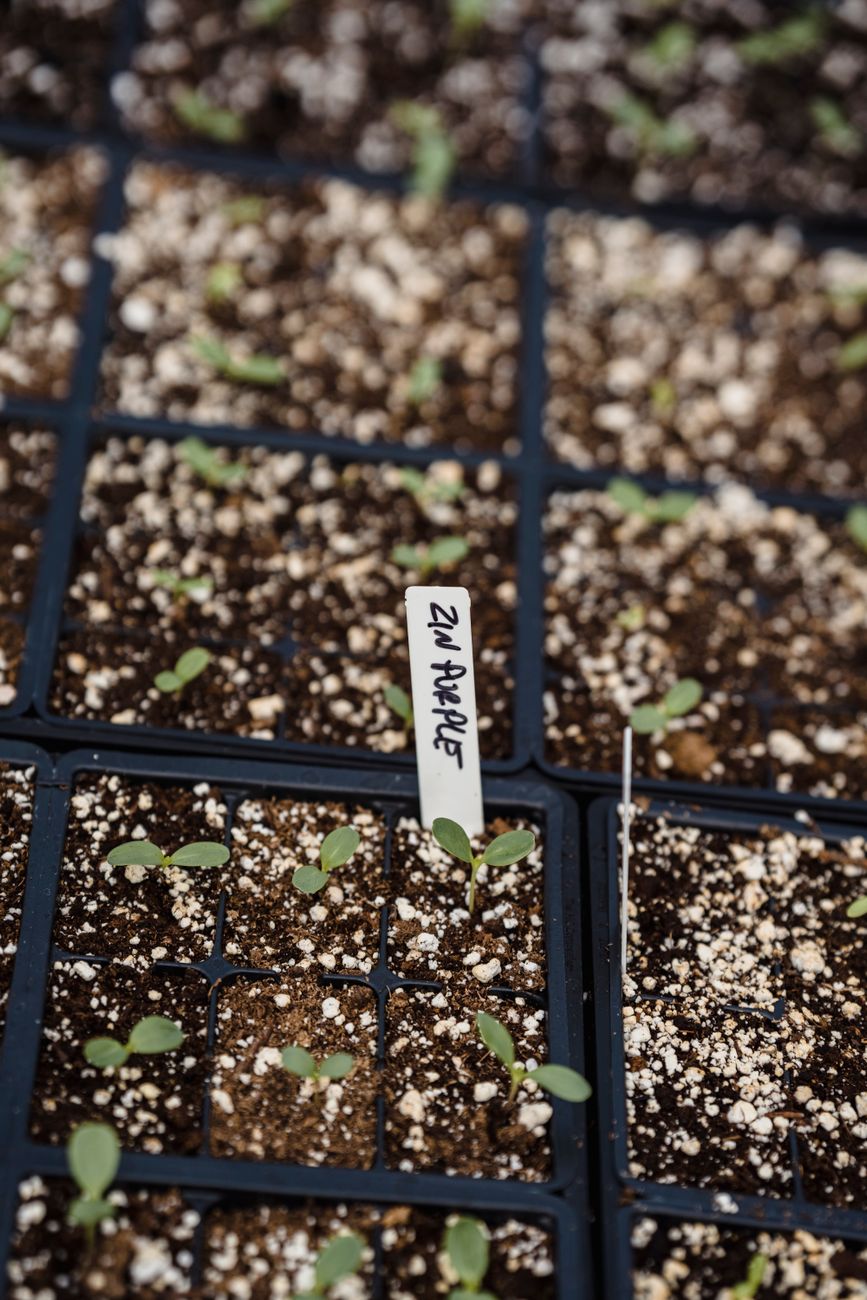
Zinnias: I aim to pinch my zinnia seedlings when they have developed at least 3-4 sets of true leaves (not the tiny initial 'cotyledon' leaves). I use sharp snips or my fingernails to remove the top 2-3cm (about an inch) of the main stem, just above a set of leaves. This encourages the plant to send up multiple strong side shoots from the leaf nodes below. I remember my 'Benary's Giant Salmon Rose' zinnias, left unpinched one year, gave me a few spectacular blooms but then petered out. The year after, with a good pinch, I had a continuous harvest of dozens of stems from the same number of plants! Timing is key here in the UK; usually, I'm doing this from late May into early June, depending on when I sowed.
Cosmos: Cosmos absolutely love a good pinch. Their growth habit means they can get quite tall and spindly if left unpinched. I pinch cosmos when they are about 20-30cm (8-12 inches) tall and have developed several sets of true leaves. Similar to zinnias, I remove the top 5-10cm (2-4 inches) of the central stem, just above a leaf node. This encourages a much more robust, multi-stemmed plant. Last summer, despite a few weeks of typical British drizzle, my pinched 'Double Click Cranberry' cosmos were absolute monsters, producing stems that easily hit 90cm (3 feet) and kept going until the first hard frost. Unpinched cosmos often produce shorter, weaker stems that flop in the wind.
Snapdragons: Pinching snapdragons is a slightly different beast, but just as effective. I pinch them when they are about 10-15cm (4-6 inches) tall and have 4-5 sets of true leaves. I remove the top 2-3 sets of leaves, which leaves a sturdy base. This encourages the plant to send up multiple strong flower spikes rather than just one dominant one. Because snapdragons are often grown in the cooler parts of our UK season, getting them to branch early means a longer harvest window. I've found that my 'Rocket Golden' snapdragons, when pinched, give me a fantastic flush in June, then again in September, offering a much more consistent supply of those architectural spires.
Optimal Spacing: Giving Each Plant Room to Flourish and Strengthen
If pinching is about encouraging bushiness, then optimal spacing is about ensuring each of those bushy, multi-stemmed plants has everything it needs to grow those long, strong stems we're after. This is particularly crucial here in the UK, where our often-damp climate means good air circulation is vital to prevent fungal diseases that can weaken plants and ruin blooms. One of my biggest learning curves, especially coming from an IT background where everything is about efficiency, was realising that cramming plants together to maximise yield often backfires spectacularly.
When plants are too close, they compete fiercely for light, water, and nutrients. This competition leads to leggy, weak growth as they stretch desperately towards the sun. The stems become thin and brittle, prone to bending and snapping, especially during a windy British summer storm. Plus, with reduced airflow, moisture lingers, creating a perfect breeding ground for powdery mildew – a common menace in my Midlands garden during humid spells. I learned this the hard way with a dense patch of 'Orange Profusion' zinnias in my second year; they looked fantastic from above, but underneath it was a mildew-ridden jungle of short, weak stems.
Giving your plants enough room allows them to develop strong root systems, access ample light on all sides, and benefit from good air movement. This directly translates to thicker, sturdier stems that can proudly hold up their blooms.
Here’s my go-to spacing guide, tailored for UK growing conditions and based on my own experience in my raised beds:
| Flower Type | Recommended Spacing (UK) | Why this spacing works in the UK | Randy's Top Tip |
|---|---|---|---|
| Zinnia | 20-30 cm (8-12 inches) | Allows good air circulation to combat mildew in damp summers; ample light for branching. | For 'Benary's Giant' types, closer to 30cm is better for really hefty stems. |
| Cosmos | 30-45 cm (12-18 inches) | Prevents tangling and flopping of their airy foliage; reduces competition for light. | Taller varieties (e.g., 'Sensation') definitely need the wider end of the range. |
| Snapdragon | 15-20 cm (6-8 inches) | Encourages multiple strong spikes; supports each other slightly, but still allows air. | Can be planted slightly closer if you're planning to provide individual staking. |
Remember, these are guidelines from my own experiences. If you're growing smaller dwarf varieties, you might get away with slightly less space, but for robust, cut-flower quality stems, don't skimp on room. It’s an investment in the health and productivity of your plants, and ultimately, in the beauty of your homegrown bouquets.
Implementing Effective Support Systems for Upright and Unblemished Stems
Right, so we've talked about pinching and spacing to build a robust plant from the ground up, but even the strongest stem in the world sometimes needs a little helping hand, especially here in the UK with our famously fickle weather. I've learned this the hard way more times than I care to admit. Those beautiful, heavily laden Zinnia blooms or tall Cosmos can be absolutely flattened by a sudden summer downpour followed by a gust of wind, turning your pride into a muddy mess in a matter of hours. This is where effective support systems come into their own, ensuring your stems stay straight, clean, and ready for the vase.
For me, the most efficient and reliable system for my cut flower beds – especially for Zinnias and Cosmos – is flower support netting. I've got a couple of raised beds in my 800 sq ft Midlands garden dedicated to cutting flowers, and stringing up a layer of horizontal netting has been a game-changer. The trick, I've found through trial and error, is to install it early. You want to get that netting in place when your plants are still relatively small, say around 6-10 inches tall. This allows them to grow up through the mesh naturally, rather than trying to thread them through later when they're already sprawling.

I typically use a sturdy 4x4 inch mesh netting, stretched taut between metal stakes I’ve hammered into the corners and sides of my raised beds. For a standard 4ft x 8ft bed, I'll use about six stakes, bracing them well against our often blustery British winds. As the plants grow, their stems find their own way through the squares, providing gentle, even support that keeps them upright without constricting them. It's almost invisible once the foliage fills out, and it's far more effective than individual staking for a dense bed of flowers. Last season, during a particularly nasty week of heavy rain and wind in late July, my netted Zinnias stood tall while a neighbouring patch I'd neglected to net were absolutely flattened. Lesson learned, again!
For my Snapdragons, which tend to have slightly stiffer but still vulnerable stems, I often combine the netting with individual bamboo canes for the tallest varieties like 'Madame Butterfly'. I'll push a slim cane close to the main stem of each plant and use soft twine or plant clips to gently secure it every foot or so. This extra reinforcement is crucial for those stately spires, preventing them from kinking or snapping just as they're reaching their peak. It’s all about anticipating the challenges our British climate throws at us and preparing your plants to withstand them.
Beyond Pinching: Watering, Feeding, and Pest Patrol for Robust Stems
Pinching, spacing, and supporting are foundational, but for truly robust and healthy stems that last in the vase, we can’t overlook the daily grind of good horticultural practice. Think of it as the ongoing care that turns a good plant into a great one. I’ve learned that consistency is key here in my UK garden, especially when it comes to watering and feeding.
Watering: Good, consistent watering is absolutely vital for strong stems. When plants are stressed by drought, they divert energy from stem elongation and strength to survival, often resulting in woody, short, or weak stems. I aim for deep, infrequent watering rather than shallow, daily dribbles. This encourages roots to grow deeper, making the plant more resilient to dry spells. In my raised beds, I typically water thoroughly every 2-3 days during dry periods, checking the soil moisture with my finger before I even think about reaching for the hose. During particularly hot and dry British summers, like the one we had a couple of years back, I might water every evening for newly established plants, but I always ensure the water penetrates deep into the root zone. Overwatering, especially in our often damp climate, can be just as detrimental, leading to root rot and weak, susceptible growth. It's a fine balance, and I've certainly drowned a few plants in my early days by being too enthusiastic.
Feeding: Just like us, plants need good nutrition to thrive. While too much nitrogen can lead to lush, leafy growth at the expense of flowers and stem strength, a balanced feed is crucial. Once my cut flower plants are established and have started actively growing, I'll typically give them a diluted feed every two weeks. My go-to is often a liquid seaweed extract, which provides a fantastic range of micronutrients that promote overall plant health and resilience. I also make my own comfrey tea here in the Midlands – a fantastic, potassium-rich organic feed that really encourages strong flowering and robust stems without excessive leafiness. I've found this homemade brew works wonders for my Zinnias, giving them that extra boost just as they're setting buds. A well-fed plant is better equipped to produce long, sturdy stems and ward off common UK pests.
Pest Patrol: Finally, a vigilant eye for pests is non-negotiable. A plant under attack from aphids or slugs is a plant that's diverting energy to repair damage rather than growing strong, unblemished stems. I'm a big believer in integrated pest management (IPM) in my garden. Every morning, with my cuppa in hand, I do a quick patrol. I'm looking for the early signs: curled leaves, sticky residue, or nibbled edges. Slugs, those infamous British garden villains, are particularly fond of young Snapdragons. My method? I use organic slug pellets sparingly around vulnerable plants and also religiously hand-pick them during my evening rounds. For aphids on Cosmos or Zinnias, a strong jet of water from the hose often dislodges them, or a simple homemade garlic spray can do the trick. The key is early detection; catching an infestation before it takes hold saves your stems from becoming weak, distorted, or simply unpresentable for the vase.
Your UK Cut Flower Garden: A Seasonal Checklist for Stem Success
So there we have it, fellow gardeners! We've journeyed through the essentials of cultivating those coveted long, strong stems for your UK cut flower garden. From the moment those tiny seeds germinate in my greenhouse here in the Midlands, right through to harvesting armfuls of blooms, every step is a deliberate act towards achieving that vase-ready perfection. It's been a fantastic learning curve over the past five years, filled with triumphs and, honestly, a fair few soggy disappointments thanks to our unpredictable British weather. But that's the joy of gardening, isn't it? Every season brings new lessons and new opportunities to refine our craft.
Let's quickly recap the golden rules for stem success, a sort of seasonal checklist that I run through in my head each year:
Early Spring (Seed Sowing/Transplanting):
- Pinching: Plan which varieties you'll pinch (most Zinnias, Cosmos, Snapdragons) for bushier growth and more, longer stems.
- Spacing: Ensure you give your seedlings ample room from the start. I'm talking at least 9-12 inches for Zinnias and Cosmos, and 6-9 inches for Snapdragons in my raised beds. Don't be afraid to thin!
Late Spring/Early Summer (Active Growth):
- Pinching: Execute your strategic pinching when plants are 6-12 inches tall, aiming for those lower leaf nodes.
- Support: Install your netting or stakes before plants get too tall and leggy. Early intervention is key to preventing wind and rain damage. I usually get my netting up by late May/early June.
Mid-Summer (Peak Growth & Flowering):
- Watering: Maintain consistent, deep watering, especially during dry spells. Check soil moisture regularly.
- Feeding: Fortify your plants with a balanced liquid feed every couple of weeks, like my trusted seaweed extract or comfrey tea.
- Pest Patrol: Be vigilant! Daily checks for slugs and aphids will save your stems from damage and keep your plants thriving.
- Harvesting: Cut regularly and deeply to encourage more blooms and longer stems.
Mastering long, strong stems isn't just about following a set of instructions; it's about understanding your plants, observing them closely, and adapting to the unique challenges and joys of gardening in the UK. It's about getting your hands dirty, experimenting in your own patch, and finding what truly thrives in your microclimate. I promise you, the effort is worth every single unblemished, glorious stem you pull from your garden. There's nothing quite like walking into your kitchen with a vase bursting with homegrown Zinnias, Cosmos, and Snapdragons, knowing you nurtured every single one of those perfect stems.
So go on, give these techniques a try in your own UK garden this season. Share your successes, learn from any wobbles, and most importantly, enjoy the incredible journey of growing your own cut flowers. Happy gardening, everyone!
