Introduction: Sharing Your Garden with Four-Legged Friends
Alright, fellow green-fingered friends! Randy here, coming to you from my little patch of heaven right here in the UK Midlands. If you're anything like me, your garden isn't just a place for growing glorious tomatoes and crisp salad leaves; it's also a haven for the whole family, and that often includes our beloved four-legged companions. I absolutely adore my Border Terrier, Poppy, she's a bundle of joy and always "helping" me out in the garden. But let's be honest, that boundless energy and curious nose can sometimes lead to a bit of a clash between our horticultural dreams and their natural instincts.
I've spent the last five years transforming my 800 sq ft backyard from a neglected lawn into a productive powerhouse, packed with raised beds, a cosy greenhouse, and more herbs than you can shake a trowel at. And believe me, in that time, I've had my fair share of "incidents" involving Poppy and my precious plants. From mysteriously flattened rows of 'Charlotte' potatoes to freshly dug holes right where I'd just planted my 'Sungold' tomato starts, I've learned a lot about coexisting peacefully. It's a constant dance, isn't it? We want our furry friends to enjoy the garden, but we also want our hard work to thrive without becoming a doggy playground.
This article isn't about keeping your dog out of the garden entirely – that's often unrealistic and, frankly, a bit mean-spirited. Instead, I'm going to share my tried-and-tested, humane, and low-cost strategies to protect your vegetable beds from digging and trampling. We'll explore what works here in Britain, drawing on my own experiences (and a few of my mistakes!) in my Midlands garden. Let's make sure our dogs and our delicious homegrown produce can happily share the space.
Understanding Why Your Dog Targets Your Garden Beds
Before we dive into solutions, it’s absolutely crucial to understand why your dog is targeting your garden beds in the first place. Trust me, it’s not usually out of spite! In my UK gardening journey, I've found that once you get a handle on their motivations, finding the right deterrent becomes much simpler. It's like debugging a computer program – you need to understand the root cause, not just patch over the symptoms.
Here are the main reasons I've observed dogs getting up to mischief in the veg patch:
- Boredom and Excess Energy: This is a big one, especially for active breeds like my Poppy. If they're not getting enough mental stimulation or physical exercise, that pent-up energy has to go somewhere. Digging, for many dogs, is an incredibly satisfying and natural outlet. I learned this the hard way when I left Poppy alone for a bit too long one drizzly afternoon, only to return and find a fresh crater right in my bed of 'Autumn King 2' carrots. Lesson learned!
- Hunting Instincts: Our gardens are teeming with fascinating smells and potential prey. Voles, mice, grubs, even moles (though less common in my raised beds) can live under the soil. Dogs have an incredible sense of smell, and they'll happily dig to investigate or try to catch whatever critter they've sniffed out. I've watched Poppy spend a good twenty minutes trying to "catch" a particularly elusive earthworm in my herb bed – thankfully, no real damage done that time!
- Comfort and Temperature Regulation: On a hot summer's day (rare, but they happen even here in the Midlands!), a cool patch of freshly dug soil can be incredibly inviting for a dog looking to cool down. Conversely, some dogs might dig a shallow scrape to nestle into for warmth or security.
- Attention Seeking: Sometimes, bad behaviour gets attention, even if it's negative attention. If your dog learns that digging gets you to come out and interact with them, they might repeat the behaviour.
- Curiosity and Play: Gardens are full of interesting textures, smells, and things to chew on or roll in. A newly turned bed, with its soft soil, is just an irresistible invitation for a playful pup. I once found Poppy "rearranging" a newly planted row of 'Sugar Snap' peas, simply because the stakes and string looked like a fun game!
Understanding these instincts means we can approach the problem with empathy and design solutions that work with their nature, rather than against it. It's about redirecting, not punishing.

Robust Physical Barriers: Fencing, Raised Beds & More
When it comes to keeping paws off your prized 'Moneymaker' tomatoes or your tender 'Cosmic Purple' carrots, robust physical barriers are often your most effective first line of defence. I've experimented with various options in my 800 sq ft Midlands garden over the years, from temporary solutions around my early potato plantings to more permanent fixtures for my main veg beds. What works here in Britain, especially with our sometimes unpredictable weather, is often about durability and clever design.
My primary strategy revolves around my raised beds. They are an absolute game-changer for so many reasons in a UK garden – better drainage, warmer soil earlier in the season, and crucially, they provide an immediate physical barrier. A 30cm high raised bed is often enough to deter casual trampling and some digging, as it makes the effort of getting into the bed less appealing. For more persistent diggers, or those with a penchant for jumping, you might need to build on top of that.
I've also learned the value of a good fence. When I first started gardening five years ago here in the UK, I made the mistake of thinking a few bamboo canes would be enough. Poppy laughed in the face of my flimsy attempts! Now, for my more vulnerable crops, especially my greenhouse where I coddle my heirloom tomatoes like 'Cherokee Purple' and 'Black Krim', I've got proper fencing.
Let's break down some of the most effective physical barriers I've used:
Fencing Solutions
Fencing can range from super simple, temporary setups to more robust, permanent structures. The key is to match the fence to your dog's size, determination, and the specific area you need to protect.
- Temporary Wire Fencing (e.g., chicken wire or mesh): This is great for new plantings or specific beds during vulnerable periods. I often use this around my 'King Edward' potato beds when they're just emerging, as Poppy seems to find freshly disturbed soil irresistible. It's easy to install with stakes and can be removed later.
- Decorative Picket Fencing: While a bit more of an investment, a low picket fence (around 60-90cm high) can define your garden space beautifully and provide a good deterrent for most smaller to medium-sized dogs. I have a small section of this around my perennial herb spiral – it looks charming and keeps paws out.
- Netting/Hoop Tunnels: For delicate crops like my early brassicas or strawberries, I use hoops covered with insect netting. This serves a dual purpose: it keeps pests like cabbage white butterflies away, and it's a physical barrier against curious noses and paws. Just make sure the netting is secured at the base.
Raised Beds
As mentioned, raised beds are my go-to. My beds are mostly 45cm high, built from reclaimed scaffold boards. This height alone is usually enough to deter Poppy from easily hopping in, but for particularly enticing new soil, I sometimes add a temporary barrier on top.
Other Physical Deterrents
- Prickly Branches/Pinecones: This is a simple, low-cost trick I picked up from an old gardener down the road. Laying thorny rose trimmings (handle with care!), holly branches, or even abundant pinecones around the base of vulnerable plants or in newly dug beds can make the area less appealing to walk or dig on.
- Stones/Pebbles: For very small areas, or around individual plants, a layer of small, uncomfortable-to-walk-on stones or pebbles can be effective. It also looks quite nice around permanent plantings.
Here's a comparison table of some robust physical barriers I've used in my UK garden:
| Barrier Type | Pros (Randy's UK Experience) | Cons (Randy's UK Experience) | Cost (Approx. UK) | Effectiveness (Randy's Rating) |
|---|---|---|---|---|
| Raised Beds (30-45cm high) | Excellent drainage for our British climate; naturally deters trampling; defines garden space beautifully; ergonomic for me! | Initial setup can be time-consuming and costly (materials, soil); not effective for determined jumpers; can limit overall garden footprint if not planned well. | ££-£££ | 4/5 (for deterring trampling/casual digging) |
| Temporary Wire Fencing | Low cost; easy to install and remove; versatile for specific crops/seasons (e.g., early potatoes or my 'Foremost' peas); good for smaller dogs. | Less aesthetically pleasing; can be flimsy in strong Midlands winds unless well-staked; determined dogs can push through or jump over; requires regular checks for damage. | £ | 3/5 (good for temporary, less persistent dogs) |
| Picket Fencing | Visually appealing; clearly defines areas; reasonably durable against casual attempts; good for medium-sized dogs. | Higher initial cost and installation effort; not high enough for jumpers unless very tall; can still allow small dogs to squeeze underneath if gaps are wide; wood needs maintenance in our damp UK climate. | ££-£££ | 3.5/5 (good visual & physical deterrent) |
| Hoop Tunnels/Netting | Protects against pests and dogs; excellent for delicate crops like my 'Florence' fennel or newly sown salads; lightweight and easy to adapt. | Not suitable for all crops (e.g., tall tomatoes); can be easily damaged by very persistent dogs; needs to be securely anchored to prevent removal by wind or dog; can be fiddly to access crops. | £-££ | 4/5 (for specific, delicate crops) |
| Prickly Branches/Pinecones | Free (if you have them!); environmentally friendly; good for small, targeted areas or around individual plants. | Effectiveness varies greatly by dog; can be messy; needs regular replenishment as they break down or get moved; care needed during placement/removal not to injure yourself or your dog. | Free | 2/5 (supplementary, not standalone) |
Humane Scent & Taste Deterrents: What Works (and What Doesn't)
Beyond physical barriers, another humane approach I've experimented with extensively in my UK garden is using scent and taste deterrents. The idea is simple: make your garden beds smell or taste unpleasant enough that your dog decides to find somewhere else to dig or chew. This is where my experimental nature really comes into its own! I’ve tried everything from old wives’ tales to commercial sprays, and I can tell you, not all of them are created equal, especially when dealing with our often damp British weather.
One mistake I made early on was thinking a single application would do the trick. Many of these deterrents need regular reapplication, especially after a good downpour (which, let's face it, is a common occurrence here in the Midlands!). It's a bit of a dance, finding the right balance between effectiveness and effort.
Here are some of the scent and taste deterrents I've tried, with my honest assessment of what works (and what definitely doesn't) in a real-world UK garden:
- Citrus Peels: This is a classic recommendation. Dogs are supposedly put off by the strong smell of citrus. I've scattered orange, lemon, and grapefruit peels around my newly planted 'Crimson Flow' broad beans. In my experience, it works for about a day, maybe two, if it doesn't rain. As soon as the sun dries them out or a shower washes the oils away, they lose their potency. It's a very short-term solution and needs constant refreshing.
- Coffee Grounds: Another popular one, said to deter dogs and even slugs. I've used spent coffee grounds from my morning brew around the base of my 'Marmande' tomato plants in the greenhouse. While they're great for adding a bit of nitrogen to the soil, I've found their deterrent effect on Poppy to be minimal at best. She seems pretty indifferent to them, and they quickly blend into the soil.
- Vinegar: Some gardeners swear by a diluted vinegar spray. The strong, acrid smell is supposed to be a big turn-off. I tried a 1:1 ratio of white vinegar and water around a problem spot where Poppy kept digging near my 'Kestrel' sprouts. It definitely smelled strong to me, but the smell dissipates quickly, especially outdoors. I wouldn't recommend spraying it directly onto plants, as it can be harmful.
- Cayenne Pepper/Chilli Powder: This is one I approach with caution. While the spicy taste and smell can deter dogs, I personally don't like using it. There's a risk of it getting into their eyes or nose and causing distress, which goes against my humane approach. I tried a very light sprinkle around a single bed once, and while it did deter digging, I felt uneasy about it. I'd rather avoid anything that could cause discomfort.
- Commercial Dog Repellent Sprays: There are various brands available in UK garden centres and pet shops. These usually contain bittering agents or strong scents designed to be unpleasant. I've tried a few of these, especially around the edges of my raised beds. Some have been moderately effective for a few days, but again, the British rain is their nemesis. They require frequent reapplication, which can get costly. Read reviews carefully, as effectiveness varies wildly.
- Specific Deterrent Plants: Planting certain herbs or strong-smelling plants around the perimeter of your beds can sometimes help. Rosemary, rue, and strongly scented marigolds are often cited. I've got plenty of rosemary and lavender in my garden, and while they look and smell lovely to me, I haven't noticed them acting as a significant deterrent to Poppy's digging impulses. Perhaps it's more of a general "less inviting" vibe than a hard barrier.
It's clear that while these methods can play a supporting role, they often fall short as standalone solutions, especially with active, curious dogs and our unpredictable UK weather. They're best used in conjunction with physical barriers.
Here's my personal breakdown of humane scent and taste deterrents:
| Deterrent Type | Pros (Randy's UK Experience) | Cons (Randy's UK Experience) | Cost (Approx. UK) | Effectiveness (Randy's Rating) |
|---|---|---|---|---|
| Citrus Peels | Free (if you eat citrus!); natural and biodegradable; pleasant smell for humans. | Very short-lived, especially in our damp UK climate – oils wash away quickly; needs constant replenishment; large quantities needed for effective coverage; for my Poppy, it was more of a temporary distraction than a deterrent. | Free | 1/5 (minimal, very temporary) |
| Coffee Grounds | Free (from your brew!); adds organic matter and nitrogen to soil; good for soil structure; pleasant earthy smell. | Minimal deterrent effect on dogs in my experience; quickly integrates into soil, losing any superficial scent; effectiveness as a deterrent is highly questionable for persistent dogs; primarily a soil amendment, not a dog repellent. | Free | 0.5/5 (negligible) |
| Vinegar Spray (Diluted) | Cheap and readily available; strong initial smell. | Smell dissipates very quickly, especially outdoors and after rain; can harm plants if sprayed directly or in too high a concentration; requires very frequent reapplication to be remotely effective; I found it more of a hassle than a help for long-term protection. | £ | 1/5 (short-lived, limited use) |
| Cayenne Pepper/Chilli | Can be highly effective due to strong taste/smell. | My main concern is ethical – potential to cause distress or harm to the dog (eyes, nose, mouth); risk of inhalation; washes away with rain; I personally avoid this method due to humane considerations. | £ | N/A (Ethical concerns) |
| Commercial Sprays | Specifically formulated to deter dogs; often contain bittering agents; some claim longer lasting effects. | Effectiveness varies wildly between brands and dogs; often expensive for the amount needed, especially with frequent reapplication requirements due to British weather; can have an artificial smell; some dogs just ignore them after initial curiosity; I've found success limited and costly for my 800 sq ft garden. | ££-£££ | 2/5 (hit or miss, costly) |
| Deterrent Plants (e.g., Rosemary, Rue) | Aesthetically pleasing; adds biodiversity to the garden; can provide other benefits (culinary, medicinal); long-term, low-maintenance solution. | Not a strong enough deterrent for most dogs with a digging habit; dogs can simply walk over or around them; effectiveness is more about making an area less inviting than actively repelling; I've not seen a significant impact on Poppy's behaviour from these alone in my Midlands garden. | £-££ (for plants) | 1.5/5 (very subtle effect) |
Training & Enrichment: Solving the Problem at its Source
Ultimately, if you want long-term peace in your UK garden, addressing why your dog is digging or trampling is key. It’s not just about putting up barriers; it’s about understanding their needs. From my years of wrangling everything from stubborn broad beans to even more stubborn terriers (not my own, but friends’ furry garden wreckers!), I’ve learned that a happy, well-exercised dog is less likely to view your prize-winning 'Marmande' tomatoes as a new digging challenge.
The Designated Digging Pit: A Game Changer for My Midlands Garden
This is, hands down, one of the best investments of time and a few quid I’ve made for canine harmony. My mate's lively Springer Spaniel, Barney, was a notorious bed-digger, especially in my pea patch, before we implemented this. I helped him set up a simple digging pit in a less-used corner of his garden, using a cheap plastic sandpit from a DIY store, filled with a mix of play sand and some topsoil, and buried a few of his favourite toys and high-value treats.
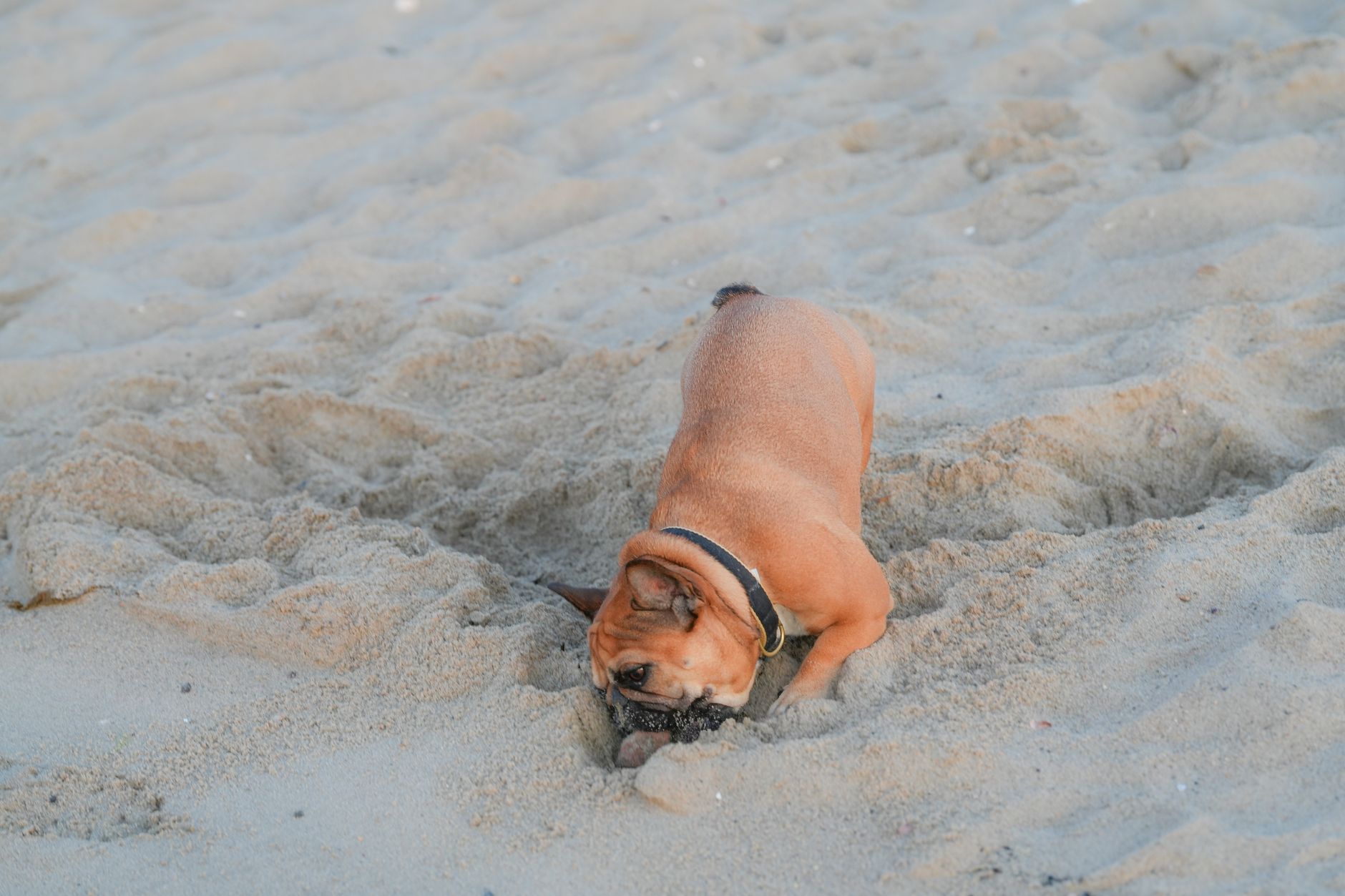
The trick is to make this the most exciting place to dig. When Barney showed any interest in his veg beds, we’d gently redirect him to his pit, encouraging him with enthusiastic praise when he dug there. It took consistency, especially during those unpredictable British spring showers when boredom sets in, but after a few weeks, he understood. Now, if he needs to excavate, he heads straight for his pit. It's a win-win: he gets to fulfil a natural instinct, and my tender brassicas are safe. I've even seen Barney proudly unearth a forgotten chew bone from it, looking like the happiest dog in the Midlands!
Exercise and Mental Stimulation: A Tired Dog is a Good Gardener's Friend
Think about it: a bored dog with pent-up energy is going to find an outlet, and your freshly tilled raised beds look incredibly inviting for a bit of 'gardening' of their own. This is where personal experience comes in. My own border collie, Pip, isn't a digger, but she loves to chase squirrels, which could easily lead to trampling if my beds weren't somewhat protected.
What works for us here in the UK is ensuring she gets plenty of proper walks – not just a quick potter around the block. A good romp in the local park, a hike across the Derbyshire dales, or even some dedicated playtime in the garden with a ball or frisbee can make a world of difference. Mental stimulation is equally vital. Puzzle toys, training sessions, or even just teaching a new trick can tire a dog out far more effectively than you might think. A dog that’s mentally and physically satisfied is far less likely to turn its attention to your delicate 'Sungold' tomato plants. This is especially important during the wet, miserable UK winter when outdoor time can be limited.
Consistency and Positive Reinforcement: Your Best Training Tools
Just like successfully germinating those tricky heirloom seeds, consistency is paramount when training your dog. Every time your dog approaches a forbidden bed, calmly redirect them. Use a consistent command like "Leave it!" or "Off!" followed by praise and a reward when they move away or go to their designated spot.
I’ve learned that shouting or punishment is rarely effective and can actually make the problem worse, creating a negative association with the garden. We want our dogs to enjoy being in the garden with us, just not in the veg beds! The goal is to build positive associations with appropriate behaviours, making your garden a shared, happy space, not a battleground. This approach has served me well in everything from training Pip to not jump on my seedlings to convincing my dad that companion planting actually works!
Strategic Planting: Using Nature to Protect Your Beds
Beyond fences and training, you can actually enlist the help of other plants to protect your vulnerable beds. This is one of my favourite low-cost, humane strategies, as it blends seamlessly into the garden's aesthetics and works with nature, not against it. I’ve experimented with several options in my 800 sq ft Midlands garden, and what works best often depends on the dog and the specific area you're trying to protect.
The Prickly Perimeter: A Natural Dog Deterrent
Dogs, much like us, generally don't enjoy sharp objects. Planting thorny or prickly plants around the perimeter of your beds can create an effective, albeit subtle, barrier. I've had great success using gooseberry bushes (Ribes uva-crispa) at the edges of some of my larger raised beds. Varieties like 'Invicta' are incredibly productive and, more importantly for this purpose, have wicked thorns that most dogs will learn to avoid quickly.
- Gooseberries: I planted a few 'Invicta' bushes at the corners of my main fruit bed, and their thorny branches have deterred any curious paws from investigating my strawberries. Plus, I get delicious fruit for crumbles!
- Raspberry Canes: While they need support, a dense row of autumn-fruiting raspberries like 'Autumn Bliss' along a fence line can also create a prickly barrier. Just be mindful of their spreading habit.
- Rugosa Roses: If you have space, these incredibly hardy roses have very dense, thorny stems and can form an impenetrable hedge, perfect for a garden boundary. Just ensure they are kept trimmed if near paths.
I wouldn't recommend planting these inside your veg beds, of course, but as a border or an outer layer, they're brilliant. Just ensure they’re not so close that you prick yourself every time you harvest!
Scented Sentinels: The Olfactory Offensive
Dogs have an incredible sense of smell, and some strong-scented plants can be surprisingly effective deterrents. I’ve tried various options, with mixed results depending on the individual dog’s sensitivity, but here are some that have shown promise in my UK garden:
| Plant Name (UK-friendly) | Scent/Characteristic | My Experience in the Midlands | Notes for UK Gardeners |
|---|---|---|---|
| Lavender (Lavandula angustifolia) | Strong, aromatic, floral | Good for deterring some dogs (and cats!). I interplant 'Hidcote' around my herb beds. | Thrives in full sun, well-drained soil. Great for pollinators too! |
| Rosemary (Rosmarinus officinalis) | Pungent, woody, herbaceous | Less effective for digging, but some dogs dislike the strong aroma. | Needs a sheltered spot in colder UK regions, or grow in pots to move indoors. |
| Rue (Ruta graveolens) | Very strong, often described as unpleasant or medicinal | More potent, but can cause skin irritation in some people (photodermatitis). Use with caution. | Hardy, prefers full sun. Handle with gloves, especially on sunny days. |
| Marigolds (Tagetes spp.) | Pungent, earthy | Often cited, but I've found their effectiveness against dogs hit-or-miss. Good for pests, though! | Easy to grow from seed, suitable for UK summer bedding. |
| Coleus canina (Plectranthus caninus) | "Scaredy Cat Plant" - reputedly emits an odour similar to fox urine. | I've tried this in pots around my salad leaves. Some anecdotal success, but not a foolproof solution. | Frost-tender, so treat as an annual in most of the UK or overwinter indoors. |
My approach is to interplant these around the edges of susceptible beds or in pots placed strategically. While not a complete barrier, they add another layer of discouragement and contribute to the overall sensory experience of the garden – for humans, at least!
Dense Planting: A Living Wall
Sometimes, the best defence is simply making it difficult to get into the bed in the first place. Taller, denser crops can create a natural visual and physical barrier. Last summer, I grew a patch of 'Swift' sweetcorn quite close to a pathway where Pip (my dog) occasionally likes to cut corners. By the time the corn was shoulder-high, it formed a dense, leafy wall that naturally diverted her around the bed.
Similarly, a thick planting of Jerusalem artichokes (Helianthus tuberosus) – a real powerhouse here in the UK – can create an impressive, impenetrable hedge. Just remember they are vigorous growers and can take over if not managed! The principle is simple: if the plants are packed tightly enough, they leave less room for paws to tread and less bare soil for digging. This works well for paths or edges of beds that get occasional traffic rather than determined digging.
Conclusion: A Harmonious Garden for All (Dogs Included!)
Phew! We've covered a lot of ground, haven't we? From robust physical barriers to clever scent deterrents, and from tackling the root cause with training to enlisting nature's help with strategic planting, the journey to a pet-proof vegetable garden is multifaceted. As a UK home gardener with five years of intensive experience in my 800 sq ft Midlands plot, I've tried most of these strategies, and I can honestly say there's no single magic bullet. The key, as I’ve learned through countless experiments with everything from 'Costoluto Fiorentino' tomatoes to companion planting garlic, is a combination of approaches.
Remember, our dogs aren't trying to be malicious; they're just being dogs, following their instincts. Our role, as responsible and passionate gardeners, is to create a space where both our beloved companions and our precious plants can thrive. It’s about understanding their needs, setting clear boundaries, and providing appropriate alternatives.
My journey from a former IT worker to a full-time gardening obsessive has taught me endless patience, especially when dealing with the unpredictable British weather or a particularly stubborn pest. This same patience is vital when pet-proofing your garden. You might have a setback – a rogue paw print in a newly sown bed or a curious nose unearthing a spring onion – but don't get discouraged. Adjust your strategy, try a new deterrent, reinforce your training, and celebrate every small victory.
Ultimately, a garden is a place of joy, growth, and connection. With a thoughtful, humane, and low-cost approach, you can create a vibrant, productive vegetable patch that coexists beautifully with your furry friends. My own UK garden is a testament to this – a place where heirloom tomatoes ripen in the greenhouse, bees buzz around the lavender, and Pip can happily chase squirrels (not into the veg beds!) while I harvest a basket full of homegrown goodness.
So, go forth, experiment, and enjoy the process. Your garden, and your dog, will thank you for it! What strategies have worked best for you in your UK garden? I'd love to hear your experiences and tips in the comments below!