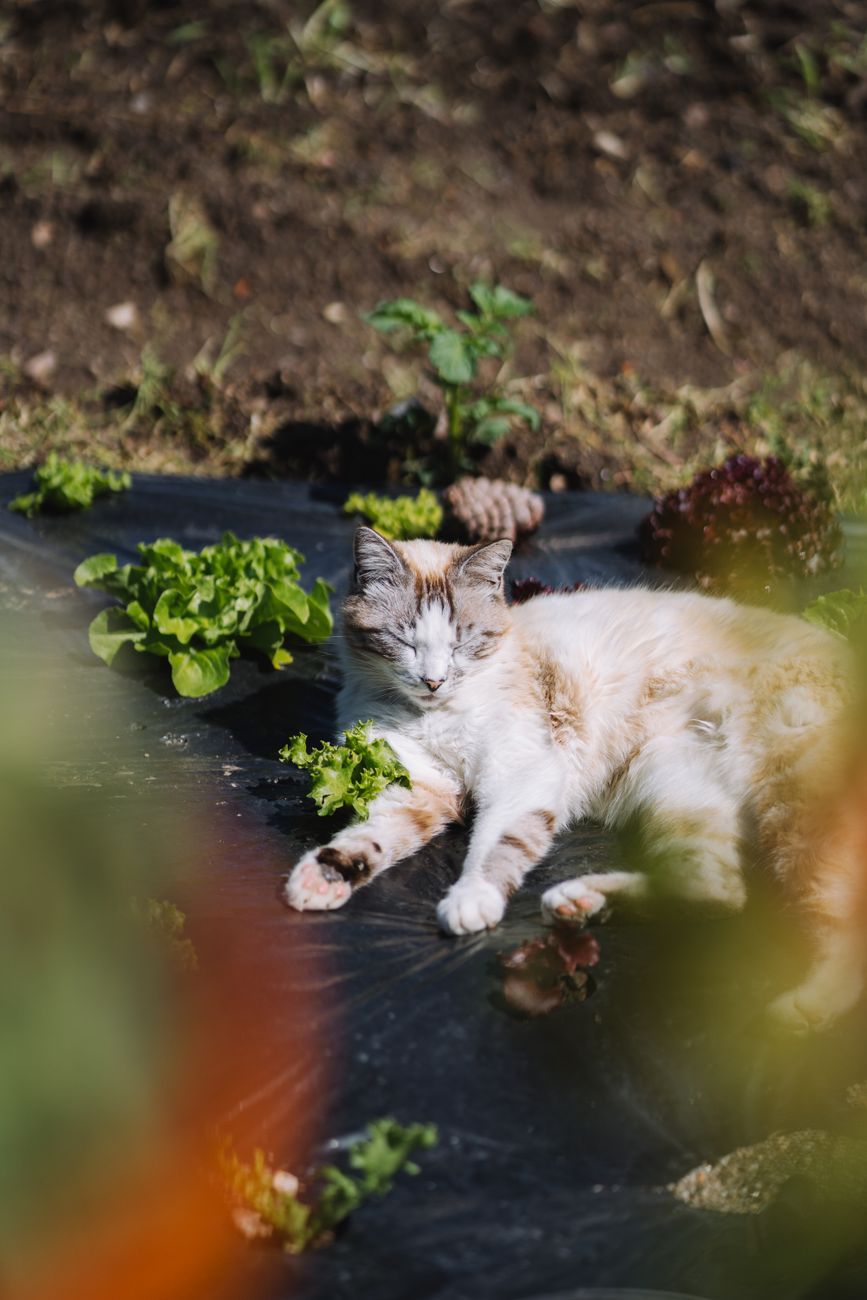
Introduction: The Feline Foe in Your Veg Patch
If you've ever walked out to your meticulously prepared vegetable beds, full of hope for a season of homegrown goodness, only to find a fresh, unmistakable "gift" from a neighbourhood cat (or your own furry friend!), then you know my pain. Here in my 800 sq ft Midlands garden, packed with raised beds and a cherished greenhouse, I've battled this feline foe more times than I care to admit. It’s a truly disheartening sight – disturbed seedlings, freshly dug soil, and that lingering smell that makes you question if you’ll ever get a decent harvest of 'Gardener's Delight' tomatoes without a side of cat.
When I first started gardening seriously five years ago, after swapping my IT desk for digging forks, I thought the biggest challenges would be our famously unpredictable British weather or battling slugs. Oh, how naive I was! The local cat population quickly taught me a harsh lesson about protecting my precious plant starts and my carefully amended soil. But fear not, fellow UK gardeners! Through years of trial and error, a few outright failures, and plenty of cups of tea spent observing cat behaviour (yes, I became a bit of a cat detective), I've learned some truly effective, humane, and organic strategies. This isn't about harming our feline friends; it's about politely, yet firmly, telling them, "Not in my veg patch, mate!"
Understanding Why Your Vegetable Beds Attract Feline Visitors
Cats are creatures of habit and comfort, and let's be honest, our vegetable beds – especially those lovely raised ones I've built up over the years – are practically designed to be a five-star outdoor litter box in their eyes. Why, you ask? Well, it boils down to a few key reasons I’ve observed in my own garden here in the heart of the UK.
Firstly, cats are hardwired to bury their waste. It's a natural instinct to cover their scent, protecting themselves from predators (even if the biggest predator around here is usually my overly enthusiastic Border Terrier, Pip!). Freshly tilled, loose, and soft soil is absolutely perfect for this. It’s easy to dig, easy to cover, and offers excellent drainage. My raised beds, filled with a lovely mix of compost and spent mushroom substrate, are particularly appealing. I've noticed this most acutely in early spring, when I've just prepared a bed for my early 'Swift' potatoes or sown some 'Aquadulce Claudia' broad beans. The soil is at its most inviting then, before the plants really start to fill out.
Secondly, our vegetable beds often get a good dose of sunlight, especially in the spring and autumn when the weather here in the Midlands can be a bit chilly. A sunny, sheltered spot with soft earth is like a luxury spa for a cat looking for a comfortable place to do their business or even just have a good old sunbathe and roll. I've even seen my neighbour's tabby, Mittens, enjoying a leisurely stretch amongst my emerging 'Crimson Flowered' fava beans before doing the deed! They're also territorial, and leaving their scent is a way of marking their patch. Unfortunately for us, our lovingly cultivated garden plots become prime real estate. Understanding these motivations is the first step towards politely, but firmly, redirecting them.
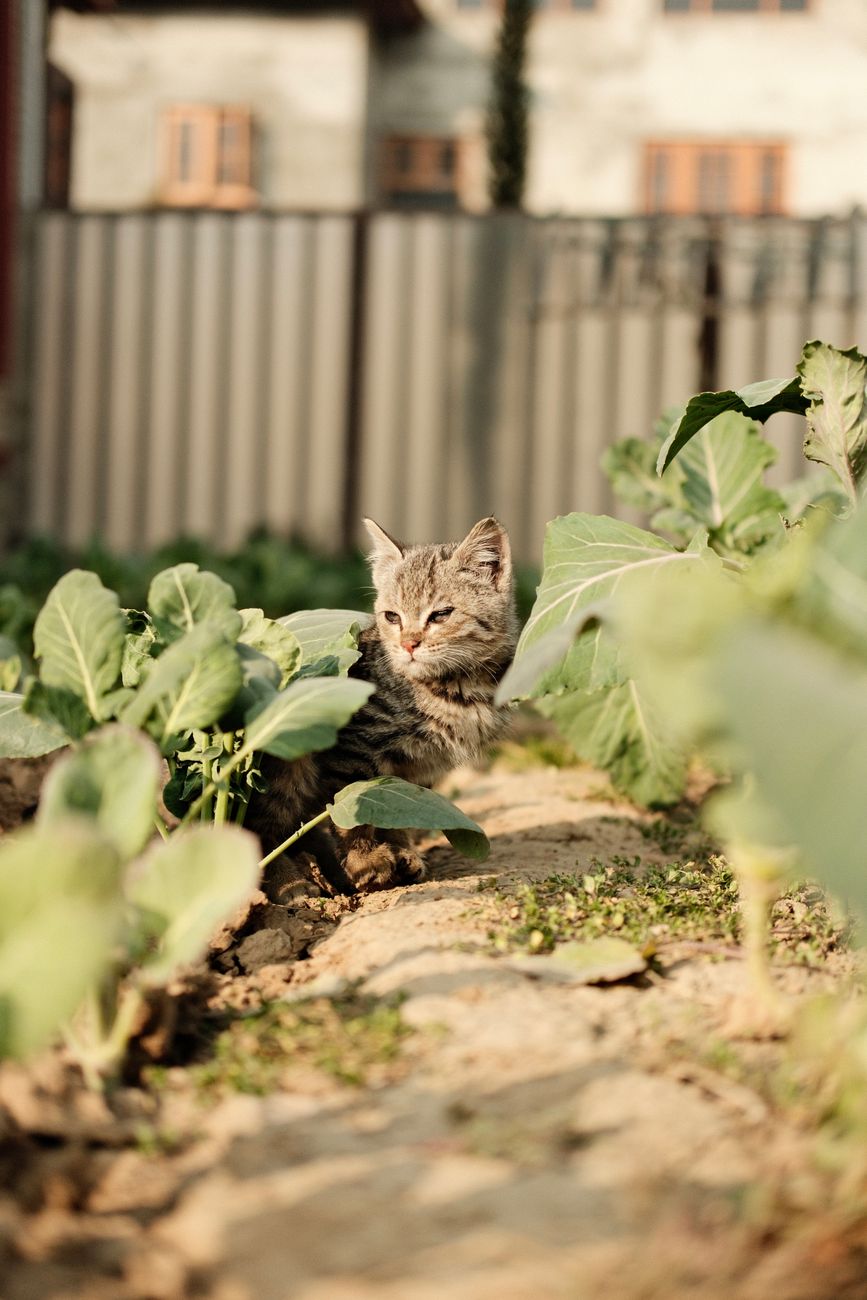
Creating Impenetrable Barriers: Physical Defences for Your Veggies
After a particularly frustrating spring where a local ginger tom repeatedly dug up my 'Early Nantes' carrots, I realised I needed to get serious about physical barriers. What works here in Britain, with our often blustery winds and sudden downpours, needs to be robust and practical. I’ve experimented with everything from elaborate netting structures to simple twig fences, and I’ve certainly had my share of failures (a particularly ambitious netting tunnel once collapsed in a March gale, taking a few tender pea shoots with it!). But I've also found some real champions.
My philosophy here in my 800 sq ft plot is to make the soil surface inaccessible or at least highly unpleasant for digging. For newly sown beds, especially my precious salad greens like 'Salad Bowl' lettuce or 'Rocket', I often use a combination of methods. Horticultural fleece, secured tightly, is fantastic for warmth and keeps out pests, but also acts as a brilliant cat deterrent. For larger areas or established plants, more robust solutions are needed. I've found that creating a 'lid' or a 'skirt' around my raised beds is often the most effective. It needs to be something they can't easily push aside or jump over. Remember, a determined cat is a surprisingly agile adversary!
Here's a comparison of some physical defence methods I've personally tried and what I've learned works (and doesn't) in my UK garden:
| Barrier Type | Randy's Experience (Pros/Cons for UK) | Best Use in UK Garden | Cost (UK Estimate) |
|---|---|---|---|
| Chicken Wire/Netting Covers | Pros: Highly effective; creates an impenetrable physical barrier. Relatively cheap and easy to cut. Can be shaped into cloches. Cons: Can be fiddly to install and remove for watering/harvesting. Needs to be secured well against wind. Can get tangled if not careful. I once got my new 'Red Russian' kale tangled trying to remove the netting. | Covering newly sown seeds (e.g., 'Winter Gem' lettuce, radishes) or young seedlings. Protecting specific plants like my 'Sungold' tomatoes before they get too big. | Low-Medium (£10-£30 for a roll, depending on length/height) |
| Horticultural Fleece | Pros: Excellent for protecting tender seedlings from cold British snaps and pests, and cats. Very lightweight and easy to lay. Cons: Tears easily. Needs to be very well secured with pegs or rocks, especially in windy Midlands weather, or cats can just push it aside. Can restrict light if left on too long. I've had it blow away a few times, leaving my 'Paris Market' carrots exposed. | Early spring protection for seeds and small plants. Temporary cover for vulnerable crops (e.g., beetroot, spinach). | Low (£5-£20 per roll) |
| Plastic/Wooden Spikes | Pros: Easy to push into the soil. Makes the surface uncomfortable for cats to dig or walk on. Cons: Can be unsightly. Not ideal for dense planting. You have to remove them for planting/harvesting. Can be a trip hazard if not careful. I bought some plastic ones that just broke when I tried to push them into my clay-heavy Midlands soil. | Around individual plants or in gaps between rows (e.g., protecting young 'Bush Baby' courgettes). | Low-Medium (£10-£25 for a pack) |
| Cloches (DIY or Bought) | Pros: Provides both physical barrier and microclimate benefits (great for our UK climate!). Can be made from recycled bottles or wire hoops covered with netting/fleece. Cons: Can be bulky. Limited to smaller areas or individual plants. Needs good ventilation on sunny days to prevent scorching. My DIY bottle cloches sometimes blew away in strong winds until I learned to peg them down properly. | Protecting single plants or short rows (e.g., early 'Moneymaker' lettuce, 'Minibel' tomatoes, early herbs like dill). | Low (DIY) - Medium (£15-£40 for bought) |
| Raised Bed Lids/Frames | Pros: Most robust option. Creates a secure, enclosed environment. Can be hinged for easy access. Offers excellent protection against all sorts of pests and weather. Cons: Requires woodworking skills (or a decent budget). Can be heavy. Needs to be well-constructed to withstand British winds. I built one for my main tomato bed in the greenhouse, and it took a whole weekend but was worth it for my 'Black Krim' tomatoes. | Dedicated protection for specific raised beds, especially those with vulnerable crops like 'Sweet Millions' peppers or early brassicas. | Medium-High (£30-£100+ depending on materials and size) |
Humane Scent and Texture Repellents: Making Your Beds Unappealing
While physical barriers are my go-to for securing specific areas, I’ve found that a multi-pronged approach often works best, especially in a busy garden like mine. This is where humane scent and texture repellents come into play. The idea here is to make your vegetable beds utterly unappealing to a cat’s sensitive paws and nose, without causing them any harm. It’s a bit like putting out a "do not disturb" sign, but in cat language!
I’ve tried just about every old wives' tale and gardening hack under the sun for this. Some have been surprisingly effective, while others – well, let's just say a few lemon peels didn't deter Mittens for more than an hour! The key with these methods, especially here in the often-wet British climate, is consistency and reapplication. A good downpour can wash away scents or dislodge textures, so you need to be vigilant, particularly during those vulnerable spring and autumn months when cats are most active and the soil is most exposed.
What I've learned through my own trials in my Midlands garden is that cats dislike certain strong smells and prefer a smooth, soft surface for digging. Disrupting either of these can be enough to send them elsewhere. It’s all about creating an environment that feels wrong to them.
Here's a comparison of some humane scent and texture repellents I've used, and their effectiveness in my UK garden:
| Repellent Type | Randy's Experience (Effectiveness for UK) | How to Use in UK Garden | Reapplication (UK Weather) |
|---|---|---|---|
| Citrus Peels (Orange, Lemon) | Effectiveness: Moderate, temporary. Cats generally dislike the strong scent. Pros: Free, organic, adds nutrients as it decomposes. Cons: Scent fades quickly, especially after British rain. Needs frequent reapplication. I've found it helps for a day or two around my 'Crimson Crush' tomato plants, but not long-term. | Scatter fresh peels directly onto the soil surface, particularly around vulnerable plants or newly sown areas. Replenish every few days. | Every 2-3 days, or after heavy rain. |
| Coffee Grounds | Effectiveness: Low to Moderate. Some cats are deterred by the smell and texture. Pros: Free, organic, good for soil. Cons: Scent dissipates quickly. Can compact soil if used in large quantities. I tried this around my 'Gigante d'Italia' parsley, but the neighbour's cat seemed quite indifferent after a few hours. | Sprinkle a thin layer over the soil surface. Can be mixed into the top inch of soil. | Every 3-4 days, or after rain. |
| Pine Cones/Prickly Twigs | Effectiveness: Good for texture aversion. Cats dislike walking or digging on sharp, uneven surfaces. Pros: Free, natural, long-lasting. Cons: Can be a bit messy. May need to be moved for planting/harvesting. I use these a lot around the base of my 'Celebrity' pepper plants and they've been quite effective at deterring digging. | Lay a dense layer of pine cones, thorny rose cuttings, or small twiggy branches directly on the soil surface, leaving no smooth spots for digging. | Infrequent, only if dislodged or new bare patches appear. |
| Strong-Smelling Herbs | Effectiveness: Variable. Plants like Rue, Pennyroyal, Lavender, or even strong Rosemary can deter some cats. Pros: Adds beauty and fragrance to the garden, can attract beneficial insects. Cons: Not always 100% effective for all cats. Can take time for plants to establish. I planted some lavender around my herb raised bed, and while it looks lovely, some cats still use the edges. | Plant around the perimeter of your vegetable beds or intersperse amongst vegetables. Crush leaves occasionally to release more scent. | Ongoing (as plants grow), refresh scent by crushing leaves. |
| Commercial Cat Repellents | Effectiveness: Variable, often temporary. Pros: Convenient, specifically formulated. Cons: Can be expensive, often needs frequent reapplication, especially in our British weather. Some contain chemicals I prefer to avoid in my organic veg patch. I tried a granule one once, but it washed away after the first proper downpour here in the Midlands. | Follow manufacturer's instructions. Usually involves sprinkling granules or spraying liquid around the affected areas. | As per instructions, typically after rain or every few days. |
| Water Spray (Motion-Activated) | Effectiveness: Excellent deterrent for most cats. Pros: Humane, non-toxic, effective. Cons: Can be expensive upfront. Requires water connection. Can accidentally spray you! I invested in one for the corner of my greenhouse where a particularly stubborn cat was trying to dig up my heirloom 'Costoluto Fiorentino' tomatoes, and it worked a treat. | Position to cover the vulnerable area. Ensure it's aimed correctly to avoid spraying paths or areas you frequently walk. | Ongoing, as long as water supply is connected and batteries (if any) are charged. |
Harnessing Nature: Plants That Naturally Deter Cats
Now, this is where my love for plants really comes into its own! Beyond physical barriers and direct repellents, we can actually use the power of nature itself to make our vegetable beds less appealing to our furry neighbours. I've experimented quite a bit with this in my own 800 sq ft Midlands garden, planting deterrents strategically around my raised beds and even near the greenhouse door where my heirloom tomatoes grow.
The key here is understanding what scents and textures cats generally dislike. Their sense of smell is far more acute than ours, and certain strong, pungent aromas are definite turn-offs for them.

One of the most talked-about options, and one I've had some decent success with, is Plectranthus caninus, often marketed as the "Scaredy Cat Plant" or "Coleus canina". Last year, I planted a few of these around the edges of my brassica bed after finding a fresh deposit among my sprouting kale. The plant itself isn't particularly attractive, to be honest – it's got a slightly grey-green foliage – but it emits a rather pungent, skunk-like odour when brushed against. What works here in Britain is planting them fairly close together, about 30cm apart, to create a consistent scent barrier. While it won't repel every single cat, it certainly seemed to make my patch less inviting for the most persistent offenders. Just remember it's a tender perennial, so here in the UK, it might need lifting or replacing each year, especially after a frosty winter.
Beyond the dedicated "Scaredy Cat" plant, many common herbs and ornamentals can lend a helping paw. I've found great success with:
- Rue (Ruta graveolens): This perennial herb has beautiful blue-green foliage and a strong, bitter scent that cats really dislike. I have a small patch near my herb spiral, and it's always been a no-go zone for local moggies. A word of caution though: Rue can cause skin irritation for some people, especially in bright sunlight, so wear gloves when handling it.
- Lavender (Lavandula angustifolia): Oh, lavender! Not only is it a pollinator magnet and a joy to smell for us humans, but cats tend to steer clear of its strong floral aroma. I have lavender hedging along one side of my main path, and it acts as a lovely fragrant barrier. Plus, it thrives in our UK climate and adds a touch of classic British garden charm.
- Rosemary (Salvia rosmarinus): Another culinary favourite that cats aren't fond of. I have a huge rosemary bush near the entrance to my greenhouse, and it's rare to see any paw prints near my precious 'Marmande' tomatoes. It's a hardy evergreen here in the Midlands, providing year-round scent.
- Pennyroyal (Mentha pulegium): This mint relative has a very strong, distinctive scent. While effective, like all mints, it can be incredibly invasive. If you choose to use pennyroyal, I strongly recommend planting it in pots and placing those pots strategically around your beds, rather than directly in the soil. I learned this the hard way with spearmint taking over a corner of my raised bed a few years back!
The key with these plants is to integrate them into your garden design, either as border plants, in pots around your vegetable beds, or dotted amongst your edibles where their scent can be most effective. It's a gentle, visually appealing way to send a clear, albeit fragrant, message to any prospecting feline digging crew.
Sustainable Solutions: Long-Term Strategies and Community Engagement
Keeping cats out of your veg patch isn't usually a one-and-done job; it's a bit like weeding – an ongoing conversation with nature. This isn't just about single fixes; it's about shifting the balance in your garden over time, making it consistently less appealing for feline excavation. I've found that consistency is absolutely key here in my UK garden. If I slack off for a week or two, especially after a period of heavy rain that washes away scents, those familiar little paw prints start to reappear.
One of the most important long-term strategies is maintenance and persistence. Remember those scent repellents like coffee grounds, citrus peels, or even your proprietary sprays? They need topping up, especially after a good British downpour. I have a mental checklist to re-sprinkle coffee grounds around my carrots and parsnips after every significant rain shower here in the Midlands. Similarly, check your physical barriers regularly. Is that chicken wire still secure? Has a gap appeared in your netting? A quick weekly check can prevent a lot of heartache.
Another approach I've considered, though haven't fully implemented in my own garden (mostly due to space constraints), is creating an alternative, designated "cat toilet" area. If there's a quiet, secluded corner of your garden that's away from your prized vegetables, you could create a small patch of fine sand or loose soil. The idea is to provide an even more attractive digging spot than your beds, diverting their attention. This requires regular cleaning of the alternative spot, of course, to keep it appealing to the cats. It's an interesting concept and one worth exploring if you have the space and a particularly persistent feline visitor.
Finally, and this is perhaps the trickiest but potentially most effective long-term solution, is community engagement. Let's be honest, most of these cats belong to someone. In my experience, a polite, friendly chat with your neighbours can go a long way. I've had a few such conversations over the years, not accusatory, but simply explaining the challenge I'm facing in my vegetable patch and how it impacts my ability to grow food for my family.
Sometimes, cat owners aren't even aware their beloved pet is causing issues. You might suggest they consider:
- Bells on collars: While not foolproof, a bell can alert birds and other wildlife, and might make the cat a little more hesitant to linger.
- Keeping cats indoors during prime hunting/digging times: Often dusk and dawn.
- Providing enrichment indoors: If a cat is bored, they might be more inclined to seek entertainment (and a toilet) outside.
This isn't about telling people what to do with their pets, but about finding a mutually respectful solution. Here in the UK, neighbourly relations are often built on polite communication, and I've found that approach generally yields better results than anything confrontational. It's about educating and working together to protect everyone's enjoyment of their outdoor space.
Reclaiming Your Garden: A Peaceful Coexistence
We've covered a fair bit, haven't we? From understanding the feline psyche to deploying an arsenal of humane, organic solutions, the journey to a cat-free vegetable patch is a rewarding one. My own UK garden, packed with heirloom tomatoes, fragrant herbs, and a rotating feast of seasonal vegetables, has seen its share of feline foes over the years. But through persistent trial and error, I've learned that reclaiming your space doesn't mean resorting to harsh chemicals or cruelty.
The heart of it all lies in a multi-pronged approach:
- Physical Barriers: The simplest and often most effective method. From chicken wire cloches over young seedlings to strategically placed netting or even those prickly mats, making it physically difficult for them to access your soil is a game-changer. I still swear by my mini cloches for newly sown seeds here in the Midlands – a lesson learned after losing an entire row of early carrots one spring!
- Scent and Texture Repellents: Harnessing what cats naturally dislike – strong smells like citrus, coffee, or even specific essential oils, and textures like pine cones or rough mulch – creates an unappealing environment. These need consistency, especially with our unpredictable British weather, but they work.
- Plant Power: Integrating cat-deterring plants like Coleus canina, Rue, or Lavender into your garden design provides a beautiful, fragrant, and natural barrier.
Remember, every garden, every cat, and every bit of British weather is different. What works perfectly for my greenhouse-grown 'Sungold' tomatoes might need a slight tweak for your outdoor broccoli patch. Don't get disheartened if it takes a bit of experimentation. The key is patience, observation, and a willingness to try different combinations.
For me, my garden is my sanctuary, a place where I connect with nature and grow my own food. Knowing my vegetable beds are safe from unwelcome deposits means I can truly relax and enjoy the fruits (and vegetables!) of my labour. It’s about creating a peaceful coexistence, where our beloved feline friends can enjoy the garden, just not in the vegetable patch.
So, roll up your sleeves, embrace these humane and organic strategies, and reclaim your little slice of green heaven. Your plants, and your peace of mind, will thank you for it. Happy gardening, fellow Brit!