It's Randy here, your fellow UK gardener from the bustling (and sometimes muddy!) Midlands. If you're anything like me, there's nothing quite as satisfying as stepping into your greenhouse or walking past your raised beds and seeing those indeterminate tomato plants absolutely laden with fruit. Juicy 'Gardener's Delight', hefty 'Cherokee Purple', the deep, rich 'Black Krim' – they're a testament to months of care, battling slugs, and praying for just enough British sunshine.
My journey from an IT desk to digging in the dirt of my 800 sq ft backyard, packed with raised beds and a cherished greenhouse, has been a steep learning curve over the past five years. And let me tell you, one of the biggest lessons I've learned – often the hard way – is that those ambitious, ever-growing indeterminate tomato plants need more than just a polite nod of support. They need serious, strategic reinforcement if you want to enjoy every single one of those peak-season harvests. I've seen cages buckle, stems snap, and precious fruit end up bruised on the soil, usually after a particularly blustery day here in the Midlands. I'm obsessed with finding what truly works in our often-unpredictable UK climate, and today, we're diving deep into how to give your tomatoes the rock-solid support they deserve.
Why Your Indeterminate Tomatoes Demand Extra Support: A UK Gardener's Guide
When I first started gardening five years ago, fresh out of the IT world and brimming with enthusiasm, I thought a standard, off-the-shelf tomato cage would be enough for my 'Moneymaker' plants in the greenhouse. Boy, was I wrong! I learned this the hard way: indeterminate tomatoes, unlike their determinate, bushier cousins, just keep on growing, producing flowers, and setting fruit until the cold weather finally calls it quits. In my UK garden, especially within the sheltered confines of my greenhouse, this means they can reach truly astonishing heights and widths, often pushing past 6-8 feet.
The sheer weight of all that foliage and, more importantly, the hundreds of developing fruits, quickly becomes immense. Think about a single 'Cherokee Purple' tomato – it can weigh over a pound! Now multiply that by dozens on one plant, and you've got a serious structural challenge. This isn't just about the occasional heavy fruit; it's the continuous, cumulative strain on the plant's stems and whatever support structure you've provided. Here in Britain, even in a greenhouse, that weight, combined with the occasional draft or even just my clumsy shoulder brushing past a heavily laden branch, can lead to disaster. For my outdoor tomatoes, like the 'Sungolds' I grow in a raised bed, the threat of our infamous British winds and sudden downpours makes robust support absolutely non-negotiable. I've had entire plants topple over after a particularly nasty summer storm, leaving a heartbreaking mess of green tomatoes on the ground.
What I've found in my Midlands garden is that the plant diverts so much energy into producing those glorious fruits that the stems, while strong when young, can become surprisingly brittle under constant, increasing strain. If they're not properly supported, they bend, crack, or even snap, cutting off the flow of nutrients to developing tomatoes. It's not just about preventing collapse; it's about ensuring consistent, healthy growth and allowing the plant to put all its energy into ripening those delicious fruits for our relatively short UK growing season.
Spotting the Strain: Identifying Overloaded Tomato Cages Before Collapse
I've become a hawk in my greenhouse and around my raised beds during peak tomato season. After a few early failures where I missed the warning signs, I now know exactly what to look for. Identifying an overloaded tomato cage or a struggling plant before it all goes pear-shaped is crucial for saving your harvest. It's a bit like being an IT troubleshooter, but for plants – you learn to spot the subtle errors before they become system crashes!
The most obvious sign is a leaning cage. If your cage isn't standing perfectly upright, or if it's got a definite tilt to one side, especially after a growth spurt or a windy day, that's your first major red flag. I often see this with my 'Black Krim' plants, which produce some truly hefty fruits, causing the cage to list dramatically towards the heaviest clusters. Another clear indicator is bent or visibly stressed cage wires. Are they bowing outwards? Do they look like they're about to give way? Sometimes, if you listen closely, you might even hear a faint creak or groan from the metal, especially if you give the plant a gentle nudge.
Beyond the cage itself, pay close attention to the plant's stems and branches. Look for:
- Deep creases or folds where a stem meets the cage wire: This indicates the wire is digging in and the stem is taking too much weight.
- Split branches: This is a major structural failure, often occurring where a heavy fruit cluster pulls a branch away from the main stem. I've seen this happen too many times, particularly with varieties like 'Costoluto Fiorentino' that produce irregularly shaped, heavy fruits.
- Fruit resting directly on the soil: This isn't just a sign of an overloaded plant; it also makes the fruit vulnerable to pests, diseases, and rot, a real concern with our damp British summers.
- Overall drooping or wilting of the upper parts of the plant, despite adequate watering: This can sometimes indicate that the main stem is compromised at the base due to strain, restricting water and nutrient flow.
After a particularly blustery day here in the Midlands, whether my tomatoes are outside or in the greenhouse (where drafts can still occur), I make it a point to walk around and give every plant a thorough inspection. It's often the small, subtle signs that give you the earliest warning, allowing you to intervene before you're picking up broken branches and bruised tomatoes.
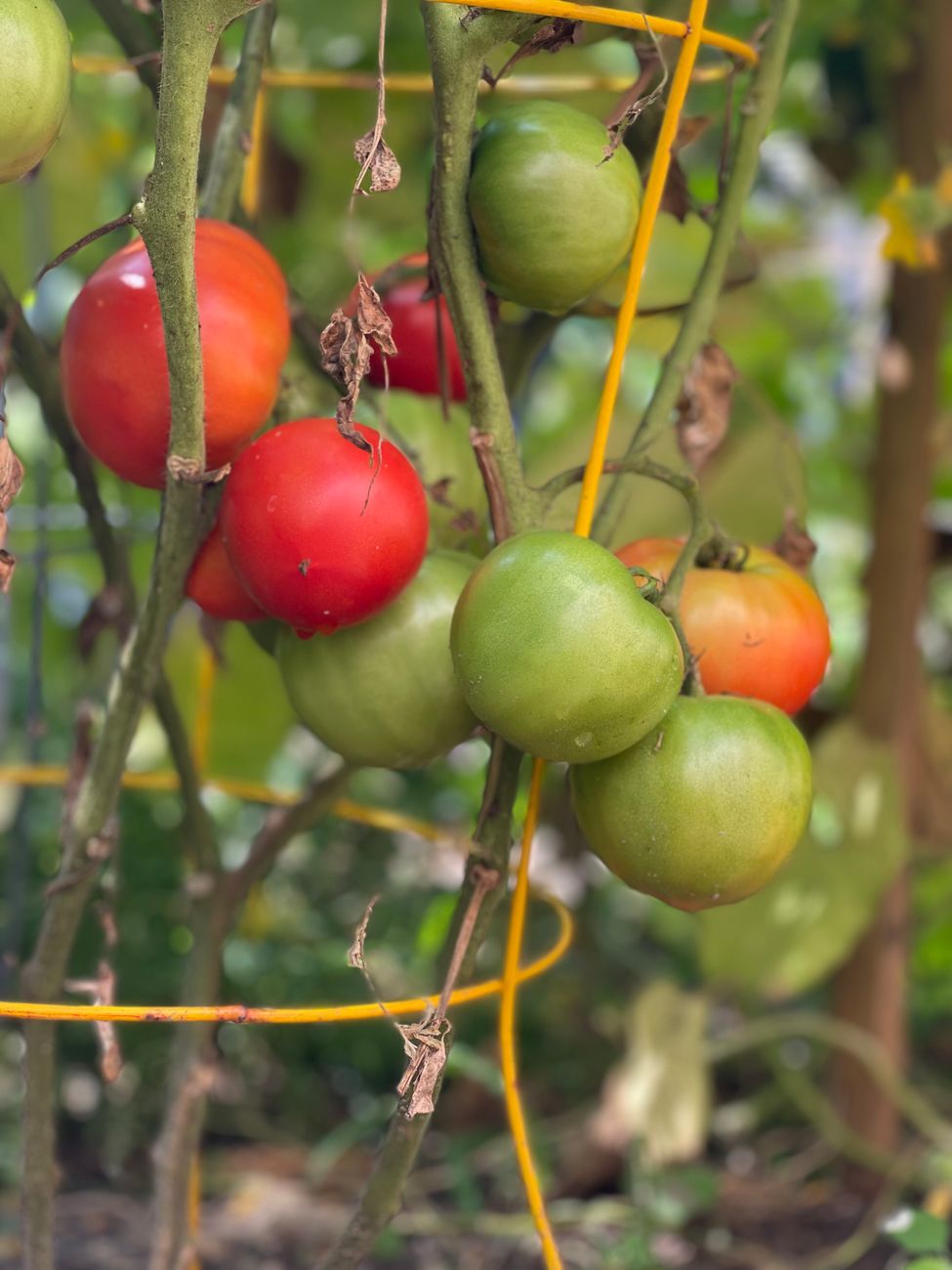
Bolstering the Base: Reinforcing Wobbly Cages from the Ground Up
Okay, so you've spotted the strain. The cage is leaning, and your precious 'San Marzano' are starting to droop. My first instinct, back in my early gardening days, was always to just add another flimsy bamboo stick next to the plant and hope for the best. I quickly learned that this approach is like trying to fix a wobbly table by taping a matchstick to one leg – it's a temporary, inadequate solution. What I've learned from five years of trial and error in my UK garden is that it’s all about anchoring the cage itself, not just propping up the plant. A strong foundation is absolutely crucial.
The standard conical tomato cages you buy in garden centres are often made of relatively thin wire and are designed for determinate varieties or plants with much lighter loads. For our ambitious indeterminate tomatoes, especially those in a greenhouse with a long growing season, they just aren't up to the job on their own.
Here are the reinforcement methods I've used and what I've found works best in my Midlands garden, considering our specific UK conditions and the available materials:
| Reinforcement Method | Pros (UK context & Randy's experience) |
|---|
Beyond the Cage: Implementing Supplemental Support Systems for Peak Loads
Alright, so we've reinforced the base and tied those vigorous stems strategically. You might think that's job done, right? Well, in my UK garden, especially with the truly ambitious indeterminate varieties like 'Sungold' or the hefty 'Marmande' I grow in my greenhouse, even the best-reinforced cage sometimes just isn't quite enough. Our British summers, though often glorious, can also throw some real curveballs – a sudden torrential downpour followed by a blustery afternoon can put incredible stress on a heavily laden plant. I've learned this the hard way, seeing a beautiful 'Costoluto Fiorentino' cage start to lean precariously after a particularly wet August, despite my best efforts.
This is where supplemental support systems come into their own. They work with your cages, taking some of that immense weight and distributing it more effectively. It’s about creating a robust, multi-layered defence against gravity and the elements. Think of it as an extra layer of structural integrity for your tomato behemoths.
Here's a look at some of the best supplemental support options I've found work wonders in my 800 sq ft Midlands garden:
| Support Type | Best For | Pros (UK Context) | Cons (UK Context) | Randy's Verdict |
|---|---|---|---|---|
| These are the sections for your tomato support article, continuing from the previous content: |
Beyond the Cage: Implementing Supplemental Support Systems for Peak Loads
So, you've bolstered the base and strategically tied your tomato stems within the cage. You've done a brilliant job, truly. But here's a secret I learned after a particularly blustery British summer shattered my 'Sungold' dreams: sometimes, even the best cage just isn't enough for those truly ambitious indeterminate varieties. We're talking about plants that want to reach the heavens and produce fruit by the bucketload. In my UK garden, particularly with the heirloom giants I grow in the greenhouse like 'Brandywine' or 'Cherokee Purple', a single cage, no matter how sturdy, can start to buckle under the sheer weight of a peak season harvest, especially after a heavy downpour.
This is where supplemental support systems become your absolute best friend. They don't replace your cage; they work with it, sharing the load and adding crucial stability. It's about building a multi-layered defence against gravity and our wonderfully unpredictable British weather. I've found that integrating these early, rather than scrambling when a plant is already leaning, saves a lot of heartache (and tomatoes!).
Here's a breakdown of the supplemental support methods I've tried and tested in my 800 sq ft Midlands patch:
| Support Type | Best For | Pros (UK Context) | Cons (UK Context) | Randy's Verdict |
|---|