Reviving Your Spring Display: Why Your Daffodils and Tulips Are Fading
There's nothing quite like that first burst of spring colour, is there? After a long, often grey British winter, seeing those vibrant daffodil trumpets and elegant tulip cups push through the soil is pure magic. It’s what keeps us going through the darker months, a promise of warmth and growth to come. In my 800 sq ft backyard here in the UK Midlands, packed with raised beds and a greenhouse, my spring display is something I look forward to immensely. I've been cultivating this little slice of green heaven for over five years now, ever since I swapped my IT desk for a trowel, and those early spring blooms are always a highlight.
But what happens when that magic starts to fade? You know the feeling – you excitedly await your daffodils or tulips, only to find a sparse scattering of blooms, or worse, just a pathetic clump of leaves. It’s disheartening, isn’t it? I’ve been there. I remember one spring, a patch of 'Carlton' daffodils that had performed beautifully for three years suddenly decided to go on strike, giving me barely a handful of flowers. My 'Apeldoorn' tulips followed suit the year after, mostly just a sea of green straps. It felt like a betrayal!
Through plenty of trial and error, and a fair few muddy knees in my UK garden, I've learned that these fading displays aren't just bad luck. Our spring bulbs, those resilient little powerhouses, often just need a bit of a helping hand to keep performing their best in our unique British climate. They're not unlike us after a long winter – a bit tired and in need of a good feed and some space to stretch out! In this guide, I’m going to share everything I’ve learned from my own gardening journey, from diagnosing the common culprits to the step-by-step fixes I’ve used to bring my spring displays back to life. No fancy jargon, just real, honest advice from a fellow UK gardener who’s probably made all the mistakes so you don’t have to!
Diagnosing the Decline: Common Reasons for Fewer Blooms (or Just Leaves)
When you see those lacklustre blooms, or just a bunch of leaves where a magnificent tulip should be, it’s easy to feel a bit stumped. "What went wrong?" I'd ask myself, peering at the sad foliage. The truth is, there are several common culprits, and often it's a combination of factors, especially given our famously unpredictable British weather. I’ve found that a bit of detective work goes a long way.
One of the biggest mistakes I made when I first started was simply assuming bulbs would just keep going year after year without any intervention. I learned that while they're tough, they're not entirely self-sufficient, especially after a few seasons of putting on a spectacular show. Here in the Midlands, with our often heavy clay soil and variable rainfall, I’ve had to really pay attention to what my bulbs are telling me.
Let's break down the usual suspects.
| Symptom: Fewer Blooms / Smaller Flowers | Symptom: Only Leaves / No Flowers | Potential Cause & My UK Garden Experience | Initial Checks in Your Garden (Randy's Advice) |
|---|---|---|---|
| Flowers are small, weak, or sparse. | Lots of healthy leaves, no flowers. | Nutrient Depletion: Bulbs use a huge amount of energy to produce flowers. If the soil isn't replenished, they simply don't have enough in the tank for next year's show. I learned this the hard way with my 'King Alfred' daffodils; after three years, they just faded. | Soil Test (Basic): Is your soil generally poor? Have you fed the bulbs recently? Look for signs of yellowing leaves (after flowering, not before natural dieback). |
| Flowers are sparse, stems are weak. | Dense clumps of leaves, no flowers. | Overcrowding: This is a massive one, especially for daffodils and tulips left undisturbed for years. They multiply rapidly, creating a dense mat of bulbs all competing for limited nutrients, water, and light. I’ve had 'Tête-à-tête' daffodils become a solid mat of green, barely flowering. | Dig a Small Test Hole: Carefully dig around a clump. Are the bulbs packed shoulder-to-shoulder? Can you barely get your trowel in? That's a strong indicator. |
| Blooms are weak, or don't appear. | Leaves look fine, but no flowers. | Insufficient Sunlight: Bulbs need plenty of sun after flowering to photosynthesize and store energy for the next year. If they're shaded by new tree growth or summer perennials, they won't build up enough reserves. This happened to my early 'Kaufmanniana' tulips when a shrub grew too large. | Observe Sun Patterns: Does the area get at least 6 hours of direct sun after the bulbs have flowered? Consider tree/shrub growth. |
| Leaves appear, then yellow prematurely. | Leaves appear, then die back quickly. | Incorrect Planting Depth: If planted too shallow, bulbs are exposed to temperature fluctuations and can dry out. Too deep, and they expend too much energy pushing shoots up, leaving little for flowers. I once planted some 'Purple Prince' tulips a bit too shallow, and they struggled. | Check Depth: Carefully excavate around a bulb. Are they planted at roughly 2-3 times their own height? |
| Sparse or no blooms. | Leaves appear, but look stressed. | Premature Foliage Removal: This is probably the most common mistake, and one I certainly made! Those leaves are vital for photosynthesis, feeding the bulb for next year's flowers. Cutting them back too soon starves the bulb. I used to tidy up my daffodil leaves as soon as the flowers were done, thinking it looked neater. Big mistake! | Review Your Habits: Are you cutting back foliage before it's naturally yellowed and died back? Resist the urge for at least 6-8 weeks after flowering. |
| Leaves look stunted or distorted. | Leaves look stunted or distorted. | Pests or Diseases: While less common for widespread decline, persistent issues could be down to things like Narcissus fly larvae, fungal diseases, or slugs/snails attacking young shoots. | Inspect Bulbs/Foliage: Carefully check bulbs for rot, holes, or damage. Look for specific pest damage on leaves. |
Post-Bloom Power-Up: The Crucial Role of Feeding Tired Bulbs
Once you’ve identified some potential issues, the first, most straightforward fix for many tired bulbs is giving them a good feed. And this isn't just about throwing any old fertiliser at them; it's about timing and type. I've learned that feeding your bulbs after they've finished flowering, but while their foliage is still green and active, is absolutely critical. This is a game-changer that many new gardeners, including my past self, often miss.
Think about it: your daffodils and tulips have just put on a spectacular show, expending a tremendous amount of energy to produce those beautiful blooms. They're now utterly exhausted! Those green leaves are like solar panels, working hard to convert sunlight into sugars, which are then stored in the bulb for next year's performance. If you don't provide the nutrients they need during this crucial replenishment phase, they simply won't have enough reserves to produce a strong display next spring. It's like running a marathon and not having a recovery meal.
In my UK garden, as soon as the flowers on my 'Ice Follies' daffodils or 'Maureen' tulips begin to fade, usually around late April to mid-May here in the Midlands, I spring into action. I use a slow-release granular fertiliser that’s specifically formulated for bulbs or a general all-purpose fertiliser with a good balance of phosphorus and potassium, which are essential for root and flower development. Bone meal is another fantastic organic option that provides a steady, slow release of phosphorus.
I usually sprinkle a handful around the base of each clump, gently scratching it into the topsoil with a hand fork, being careful not to damage the bulbs themselves. Then, I give the area a good watering, especially if it hasn't rained recently (which, let's be honest, is rare for long here in Britain, but it happens!). The slow-release nature of these fertilisers means the nutrients become available to the bulbs gradually over several weeks, perfectly matching their need to build up reserves. This ensures they have a steady supply of energy right up until the foliage naturally yellows and dies back, signalling the bulb is fully charged for its dormancy.
One season, I skipped feeding a patch of 'Queen of Night' tulips, thinking my soil was rich enough. The following spring, the blooms were noticeably smaller and fewer. That lesson stuck with me. Now, this post-bloom power-up is a non-negotiable part of my spring bulb care. It’s a simple step, but it makes an incredible difference to the longevity and vigour of your spring display.
![IMAGE_PLACEHOLDER_N: slow-release bulb fertiliser UK]
Dividing & Replanting: Giving Overcrowded Bulbs Space to Thrive
If you've checked your feeding routine and your bulbs are still struggling, especially if you're seeing dense clumps of leaves with few or no flowers, then overcrowding is almost certainly your next suspect. This is a common issue for many gardeners, myself included, particularly with daffodils and some tulip varieties that have been left undisturbed for several years. I’ve learned that while bulbs love to multiply, there comes a point where too many cooks spoil the broth – or in this case, too many bulbs starve the display.
Imagine a group of kids all trying to drink from one juice box. That’s essentially what happens when bulbs get overcrowded. They start competing fiercely for the limited water, nutrients, and even sunlight in that small patch of soil. The result? None of them get enough, and the energy that would normally go into producing glorious flowers is instead diverted into simply trying to survive. I remember a massive clump of 'Mount Hood' daffodils that had been in my UK garden for about six years. They looked impressive in terms of foliage volume, but the actual flowers were tiny and sparse. It was a clear sign they were crying out for more space.
The best time to divide and replant your bulbs here in the UK is generally late summer to early autumn (August to October), once the foliage has completely died back and yellowed naturally. This is crucial because the bulbs are dormant, making them less prone to shock and damage. Trying to divide them while they're actively growing can severely set them back.
Here's my step-by-step process for giving those overcrowded bulbs a new lease on life:
- Careful Excavation: Using a garden fork, gently dig around the entire clump, starting a good 15-20cm away from the visible foliage or where you know the bulbs are. Lift the entire clump, trying to get underneath as many bulbs as possible to minimise damage.
- Separate and Inspect: Shake off excess soil. You'll likely find a dense mat of bulbs, some large, some tiny offsets. Gently pull them apart. Discard any bulbs that feel soft, mushy, or show signs of disease or pest damage (like holes from Narcissus fly larvae). Keep the firm, healthy bulbs.
- Prepare the Soil: Before replanting, it’s a perfect opportunity to enrich your soil. I always mix in some well-rotted compost or leaf mould, along with a good quality slow-release bulb fertiliser or bone meal, into the planting area. This ensures the newly spaced bulbs have plenty of nutrients. In my Midlands garden, improving drainage with grit is also a good idea, especially with our heavier clay.
- Replant with Space: Dig individual holes for each bulb. As a general rule, plant bulbs at a depth of 2-3 times their own height. So, a 5cm daffodil bulb should go into a hole about 10-15cm deep. Ensure the pointy end faces up! Space them out adequately – for daffodils, I usually aim for about 10-15cm between each bulb, and for tulips, a bit tighter at 8-12cm, depending on the variety. This gives them room to grow and multiply without immediately becoming overcrowded again.
- Water In: After replanting, give them a good soak. This helps settle the soil around the bulbs and kick-starts root development.
This might sound like a bit of work, but trust me, it’s incredibly rewarding. That patch of 'Mount Hood' daffodils I mentioned? After dividing and replanting, they came back with a vengeance the following spring, producing bigger, stronger, and more abundant blooms than I’d seen in years. It’s a testament to the power of giving your plants, even your dormant bulbs, exactly what they need to thrive.
| Feature / Condition | Overcrowded Bulbs (Before Division) | Properly Spaced Bulbs (After Division) |
|---|---|---|
| Appearance (Foliage) | Dense, thick clumps of leaves; leaves may be smaller or less vigorous due to competition. | Robust, healthy foliage; leaves have ample space to grow and capture sunlight. |
| Bloom Production | Fewer flowers, smaller blooms, or only leaves with no flowers. Blooms may be short-lived or weak. | Abundant, larger, and vibrant blooms. Stronger stems support the flowers effectively. |
| Bulb Health | Bulbs are smaller, may be misshapen, or have fewer offsets. Prone to disease due to poor air circulation. | Bulbs are larger, plump, and healthy. Produce vigorous offsets. Less susceptible to fungal issues. |
| Nutrient & Water Access | Intense competition for limited nutrients and water in a small soil volume. | Each bulb has access to sufficient nutrients and water from the surrounding soil, leading to optimal growth. |
| Air Circulation | Poor air circulation within the dense clump, increasing risk of fungal diseases in damp UK conditions. | Good air circulation around individual bulbs and foliage, reducing disease pressure. |
| Long-Term Vigour | Decline in vigour over time, eventually leading to complete cessation of flowering. | Maintains strong vigour year after year, with consistent, reliable flowering for many seasons. |
| Typical Timing for Action | When flowers become sparse or stop, typically every 3-5 years for daffodils, 2-3 for some tulips. | After foliage dies back naturally in late summer/early autumn (e.g., August-October here in the UK Midlands). |
5. Optimising Their Home: Correct Planting Depth, Location, and Soil for Longevity
So, we've talked about what to do once your bulbs are already in the ground and struggling. But what if we could set them up for glorious, long-term success from the get-go? That’s where getting their 'home' just right comes in. I've spent years tweaking and observing in my 800 sq ft Midlands garden, and I can tell you, small details here make a huge difference to how your bulbs perform season after season.
The Goldilocks Zone: Correct Planting Depth
This is one of those things I truly underestimated when I first started gardening five years ago. I'd just dig a hole, pop the bulb in, cover it up. Simple, right? Wrong! I learned the hard way with some beautiful 'Pink Impression' tulips that just kept giving me leaves, or worse, tiny, pathetic blooms. They were planted too shallow.
Why depth matters:
- Anchoring: Deeper planting helps anchor the bulb, especially in windy British weather, preventing them from being pushed up by frost heave.
- Temperature Regulation: It offers better insulation from extreme cold in winter and keeps them cooler in early summer, encouraging dormancy.
- Avoiding "Blind" Bulbs: Planting too shallow can lead to "blind" bulbs – those that produce foliage but no flowers. The bulb thinks it's not deep enough and expends energy trying to bury itself deeper, rather than blooming.
- Naturalisation: For bulbs you want to naturalise (come back year after year), slightly deeper planting can encourage them to settle in better.
My rule of thumb, and what I've found works brilliantly here in the UK, is to plant bulbs at a depth roughly three times their height. So, a 5cm tall daffodil bulb needs about 15cm of soil above its tip. For tulips, which are often a bit smaller, it might be 10-12cm. Always plant with the pointed end facing upwards, obviously!
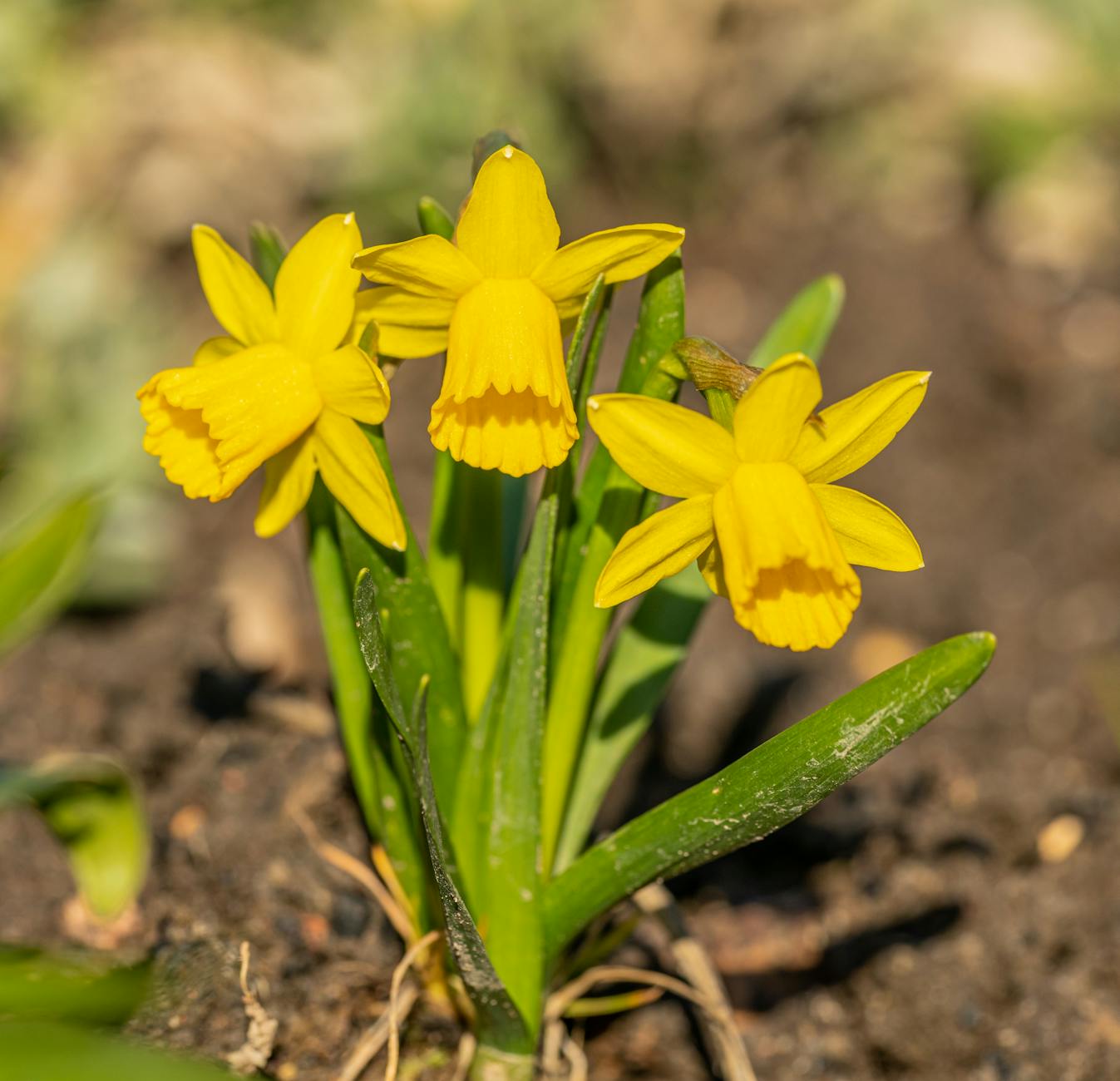
Location, Location, Location: Sun and Shelter
Think about where your bulbs are going to live. These aren't fussy divas, but they do appreciate a bit of thought.
- Sunlight: Most spring bulbs, especially daffodils and tulips, thrive in full sun to partial shade. "Full sun" here in the UK usually means at least 6 hours of direct sunlight a day during their active growth phase (late winter to late spring). In my garden, I've got a patch under a deciduous tree that gets sun in spring before the leaves come out – perfect for early daffodils like 'Tête-à-Tête'.
- Drainage: This is absolutely non-negotiable. Bulbs hate sitting in wet feet. Our Midlands clay soil can be a real challenge for drainage, leading to rot. I learned this when a whole patch of 'Queen of Night' tulips just turned to mush one wet winter. If you have heavy clay, like much of mine, you must amend the soil.
- Wind Protection: While not as critical as drainage, strong winds can batter taller tulip stems and even damage daffodil foliage. A spot with some shelter from prevailing winds (often westerly here in Britain) can help keep your display looking pristine.
Soil: The Foundation of Future Blooms
As I just mentioned, drainage is king. But what else makes a good bulb bed?
- Well-Drained: Add plenty of grit or horticultural sand to heavy clay soils to improve drainage. I usually mix in about a third grit to two-thirds soil when planting in problematic areas.
- Rich in Organic Matter: Incorporate well-rotted garden compost or leaf mould. This improves soil structure, slowly releases nutrients, and helps retain a bit of moisture without becoming waterlogged. My home-made compost is gold dust for this!
- pH: Most spring bulbs are pretty tolerant, but they generally prefer a slightly acidic to neutral pH (around 6.0-7.0). This is fairly typical for most UK garden soils, so unless you know you have extreme soil, you probably won't need to adjust much.
- Avoid Fresh Manure: This is a big no-no. Fresh manure can burn bulbs and encourage rot. Stick to well-rotted compost or a balanced slow-release fertiliser.
6. Beyond the Bloom: Essential Aftercare for Next Year's Spectacular Show
Okay, so your daffodils have put on a magnificent show, your tulips have dazzled, and now they're starting to fade. The temptation to "tidy up" is immense, especially if you're like me and love a neat garden. But this stage, the aftercare, is absolutely crucial for ensuring you get that spectacular display again next year. It's where the magic for future blooms really happens.
The Art of Deadheading: Directing Energy Wisely
Once your bulbs have finished flowering, the first thing to do is deadhead them. For daffodils, I just snap off the faded flower head, leaving the stem. For tulips, I usually snip off the entire flower head, again, leaving the stem.
Why deadhead? It's simple really:
- Prevents Seed Production: If you let the plant go to seed, it diverts precious energy into making seeds rather than storing it back in the bulb for next year's flower. We want big, juicy bulbs, not seed pods!
- Aesthetics: Let's be honest, spent flowers don't look great. Removing them keeps your garden looking tidier.
Just remember, you're only removing the flower head, not the foliage or the flower stem itself at this point. That green stuff is still working hard!
The Golden Rule: Leave the Foliage Alone!
This is, hands down, the most important piece of aftercare advice I can give you, and it’s one I had to drill into myself in my early days. My wife would often ask, "Can't we just cut back those floppy daffodil leaves now? They look a bit messy." And every year, I'd politely (but firmly!) explain why we absolutely cannot.
- Photosynthesis is Key: Those green leaves are the plant's solar panels. They're busy converting sunlight into energy through photosynthesis, creating sugars that are then transported down and stored in the bulb. This stored energy is what fuels next year's flower.
- The 6-Week Rule: You need to let the foliage die back naturally, which usually takes about 6-8 weeks after flowering. The leaves will start to yellow and flop, eventually turning brown and crispy. This is when the bulb has absorbed all the nutrients it can.
- Resist the Urge to Tidy: I know it's hard! Those yellowing leaves can look untidy. Some people try to braid them or tie them in knots. I've done it myself, but honestly, it's not ideal. It can restrict photosynthesis and encourage rot, especially in our often-damp British springs. My best advice is to plant later-flowering perennials or annuals around your bulbs to help mask the dying foliage. In my raised beds, I'll often sow some cosmos or plant out some young rudbeckias that will grow up and hide the yellowing leaves.
Watering and Feeding (Post-Bloom)
- Watering: If we have a particularly dry spring and early summer here in the UK, it’s worth giving your bulbs a good soak after flowering, especially if you want them to naturalise. This helps them absorb nutrients and continue their growth cycle.
- Feeding: If you haven't already, a final feed with a balanced, low-nitrogen fertiliser (like a tomato feed, which I always have handy from my greenhouse tomatoes!) or a slow-release bulb food can give them an extra boost as the foliage dies back. I usually sprinkle a handful of pelleted chicken manure around my established clumps in late spring – it's organic and works wonders for soil health.
7. Preventative Measures: Selecting Healthy Bulbs and Future-Proofing Your Display
Looking ahead is what gardening is all about, isn't it? After all the hard work we put in, we want to ensure our spring display gets better and better, not worse. Over my five years of intensive gardening, I’ve learned that prevention is always better than cure, especially when it comes to bulbs.
The Foundation of Success: Selecting Healthy Bulbs
This is where it all begins. You can do everything else right, but if you start with poor-quality bulbs, you're setting yourself up for disappointment.
- Firm and Plump: A healthy bulb should feel firm and heavy in your hand, like a small onion. Avoid any that feel soft, squishy, or hollow – these are likely rotting or dried out.
- No Mould or Damage: Inspect them carefully. Steer clear of bulbs with any signs of mould, fungus, cuts, or bruises. These can introduce diseases into your soil. I once bought a bargain bag of tulips from a general store, and half of them had soft spots. Never again!
- Size Matters: Generally, larger bulbs produce larger, more vigorous flowers. It's worth spending a little extra for good-sized bulbs from a reputable supplier.
- Reputable Suppliers: This is key for me. I always buy my bulbs from specialist nurseries or garden centres that have good stock turnover. Online, I stick to trusted UK suppliers. I've had terrible luck with those super-cheap supermarket bins – the bulbs are often poorly stored, dried out, or already past their prime. You pay for quality, and with bulbs, it truly shows in the spring display.
Smart Storage (If Not Planting Immediately)
Ideally, you want to plant bulbs as soon as you get them in autumn. But sometimes life gets in the way, or you buy them a bit early.
- Cool, Dry, Dark: Store them in a cool, dry, dark, and well-ventilated place. An unheated shed or garage is usually perfect here in the UK.
- Good Airflow: Don't keep them in sealed plastic bags, as this encourages mould. Paper bags, mesh bags, or even old egg cartons are much better for allowing air circulation.
Crop Rotation and Fresh Starts
If you've had persistent problems with bulbs in a particular spot (like disease or declining vigour despite good care), consider planting new bulbs in a different location. This is a bit like crop rotation for vegetables. It helps prevent a buildup of soil-borne diseases and pests specific to bulbs. I've had to move a patch of daffodils after a few years because they just weren't performing, and a fresh spot really revived them.
Future-Proofing: Choosing the Right Varieties
Finally, think about longevity when choosing your bulbs. Some varieties are simply better at naturalising and coming back year after year in our British climate.
- Daffodils: Many daffodil varieties are fantastic naturalisers. 'Tête-à-Tête' is a personal favourite for its cheerful reliability, and the classic 'Carlton' or 'King Alfred' types are always robust.
- Tulips: While many tulips are best treated as annuals (lifted and replanted each year for best performance), some species tulips and Darwin hybrids are much better at returning, especially if planted deeply. 'Apeldoorn' is a good example of a Darwin hybrid that often comes back well. I've found species tulips like Tulipa sylvestris (often called the Florentine tulip) are brilliant for colonising a sunny spot.
Conclusion: Your Journey to a Brilliant British Spring
So there you have it, fellow gardeners! We've covered a lot of ground today, from diagnosing those sad, leafy daffodils to setting your bulbs up for decades of dazzling displays. It's a journey, not a sprint, and I've learned every single one of these lessons through trial and error, sometimes through outright failure, here in my Midlands garden.
The biggest takeaways? Feed those bulbs after flowering, divide them when they get overcrowded, and for goodness sake, leave that foliage alone until it's completely yellow and crispy! Get their planting depth, location, and soil right from the start, and always, always invest in healthy, firm bulbs from a trusted source.
Gardening is about observation, patience, and a willingness to learn. Don't be disheartened if your spring display isn't perfect this year. Take what you've learned today, apply these fixes, and I promise you'll see a noticeable difference. There's nothing quite like walking out into your garden on a crisp spring morning, cup of tea in hand, and seeing a riot of cheerful daffodils and elegant tulips, knowing you've nurtured them to their vibrant best. That's the real joy of it, isn't it?
I’d love to hear about your own experiences! What varieties thrive in your UK garden? Have you had any major bulb successes or challenges? Share your stories and questions in the comments below – let's keep learning and growing together!