
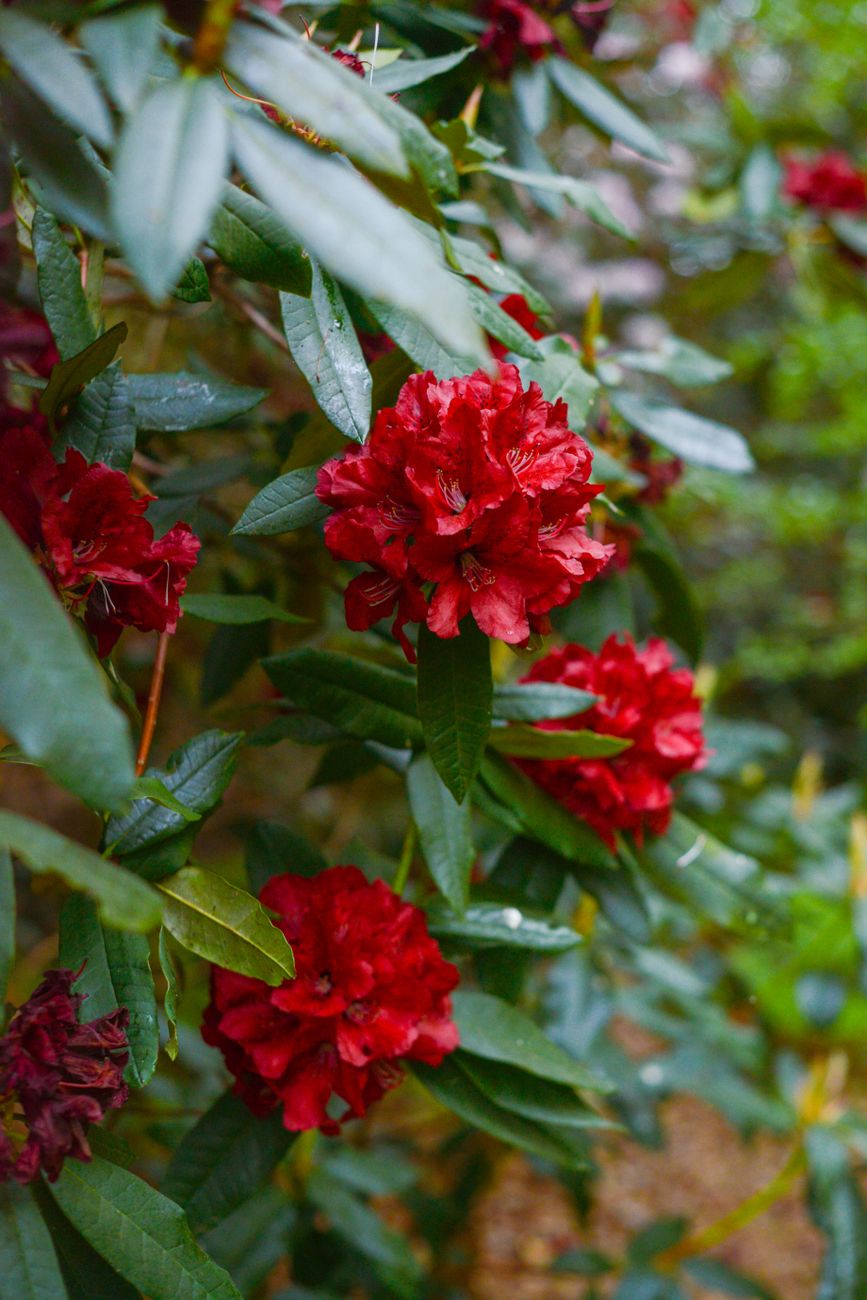
There's nothing quite like the sight of a rhododendron or azalea bursting into bloom. Those vibrant, flamboyant colours against a backdrop of glossy green leaves just scream "gardening triumph" to me. Here in my 800 sq ft Midlands garden, packed as it is with raised beds brimming with veg and a greenhouse dedicated to my beloved heirloom tomatoes, I still carve out space for these acid-loving beauties. But let's be honest, getting them to truly thrive and put on that show-stopping display in our often unpredictable British climate? That can feel like a real challenge.
When I first traded my IT desk for a spade five years ago, I thought gardening was just about sticking a plant in the ground and watering it. Oh, how naive I was! My initial attempts with rhododendrons were, shall we say, less than spectacular. I'd gaze longingly at the magnificent specimens in stately home gardens, then look at my own struggling plants with their yellowing leaves and sparse blooms, wondering what magic I was missing. It became a bit of an obsession, actually. I devoured books, joined online forums, and most importantly, started experimenting right here in my own UK backyard. I've made mistakes, learned from soggy summers and frosty springs, and slowly, piece by painstaking piece, I've started to understand what these wonderful plants truly need to flourish, even when our British weather isn't playing ball.
This isn't about giving up on those established rhodies and azaleas that are looking a bit sad. No, this is about getting them back on track, understanding their language, and giving them exactly what they need to go from surviving to absolutely thriving. We're going to dive deep into targeted soil remediation, specialized feeding, and strategic pruning – all tailored to what I've found works here in the UK, based on my own trials and tribulations.
Bringing Back the Bloom: Why Your Rhododendrons & Azaleas Struggle in the UK
If you're a fellow UK gardener, you'll know that our climate is a bit of a mixed bag. One day it's glorious sunshine, the next it's a torrential downpour, then a sneaky late frost just to keep us on our toes. While rhododendrons and azaleas are hardy plants, many of the showier varieties we love were bred in more consistently acidic and temperate environments. This means they often face an uphill battle in parts of the UK.
One of the biggest culprits I've identified in my own gardening journey, particularly here in the Midlands, is the soil. Many parts of the UK, especially areas with limestone bedrock, have naturally alkaline or neutral soil. Rhododendrons and azaleas, being ericaceous plants, absolutely demand acidic conditions (typically a pH of 4.5 to 5.5). When the pH is too high, they simply can't absorb essential nutrients like iron and magnesium, even if those nutrients are present in the soil. It's like having a fridge full of food but no way to open the door! I learned this the hard way when I first planted a beautiful 'Cunningham's White' rhododendron directly into my garden soil without proper preparation; it slowly turned anaemic and produced hardly any flowers for two seasons.
Beyond pH, drainage is another massive factor. Our often wet British winters and unpredictable summer downpours can lead to waterlogged conditions, especially in heavy clay soils common in some UK regions. Rhododendrons hate 'wet feet'; their shallow root systems are incredibly susceptible to root rot in poorly draining soil. I remember one particularly wet April a few years back, after a mild winter, seeing a few of my azaleas looking really unhappy – droopy, dull leaves. It turned out the spot I'd chosen, despite my best efforts, wasn't draining quite as well as I'd hoped. It taught me a valuable lesson about observing the ground after heavy rain.
Then there's the sheer unpredictability of our British weather. Late spring frosts can devastate tender new growth and emerging flower buds, wiping out your bloom display for the year. Scorching summer sun, though rare, can also stress plants if they're not adequately watered or mulched, especially those planted in more exposed spots. I've had to learn to be much more strategic about siting my plants and providing protection when those unexpected weather events roll around. It's all part of the glorious, frustrating challenge of UK gardening, isn't it?
Reading Your Rhododendron: Identifying Common Problems & Deficiencies
Before we jump into fixing things, we need to become master detectives. Your rhododendron or azalea is constantly trying to tell you what's wrong, you just need to learn its language. I spend a lot of time just observing my plants – it's something I picked up from watching how professional growers spot problems in their nurseries. A quick daily check can reveal a lot.
The leaves are often the first place to look. Are they a healthy, deep green? Or are they yellowing, curling, or spotting? What about the overall growth habit? Is it vigorous and bushy, or sparse and leggy? And, of course, the flowers – are they abundant, vibrant, and perfectly formed, or are they few, pale, and perhaps even deformed?
Here's a breakdown of common symptoms I've encountered in my UK garden and what they usually indicate:
| Symptom | Likely Cause (UK Context) | What I See in My Garden | Randy's Quick Fix (Initial Steps) |
|---|
Fueling Future Blooms: Specialized Feeding Strategies Beyond Basic NPK
So, we've got the soil sorted, or at least started on the right path. But here in my 800 sq ft Midlands garden, I've learned that even perfect soil remediation isn't a one-and-done miracle, especially for hungry rhododendrons and azaleas trying to put on a show in our often-unforgiving British climate. Once you've got that pH in the sweet spot and improved the structure, it's time to think about what nutrients your plants actually need to thrive and, crucially, to flower abundantly.
Basic NPK (Nitrogen, Phosphorus, Potassium) feeds are a good start, but for ericaceous plants, it’s often about more than just the big three. I’ve had rhododendrons, like my 'Roseum Elegans', that still looked a bit lacklustre even after a good ericaceous NPK feed. It was only when I started digging into micronutrients, especially iron, that I saw a real turnaround. Our UK rainfall, particularly in my heavy clay-turned-loam soil, can leach away vital elements, and sometimes the plants just can't access them effectively even if they're technically in the soil.
I've experimented quite a bit with different feeding strategies over my five years of intensive gardening. I quickly realised that a healthy plant isn't just about big leaves; it's about robust growth and, for rhodies and azaleas, those glorious blooms. Here's a breakdown of what I've found works best in my UK garden:
Randy's Rhododendron & Azalea Feeding Guide for UK Climates
| Feeding Method/Product | Randy's Experience/Notes from my UK Garden | Pros for UK Gardeners | Cons for UK Gardeners |
|---|---|---|---|
| Ericaceous Granular Feed (e.g., Chempak, Vitax) | I use this once in early spring (March/April) as growth begins. Sprinkle around the drip line, then water in. My 'Cunningham's White' absolutely loves it. | Provides slow-release nutrients over weeks, good for sustained growth. Less risk of nutrient burn if applied correctly. | Can be slow to show results if plants are severely deficient. Heavy rain can wash away surface granules. |
| Liquid Ericaceous Feed (e.g., Miracle-Gro, Maxicrop) | My go-to for a quick boost or addressing visible deficiencies. I apply every 2-4 weeks during the growing season (April-July). Great for container-grown azaleas, like my 'Geisha Girl'. | Fast-acting, immediately available to plants. Easy to adjust dosage. Excellent for container plants that need regular feeding. | Requires more frequent application. Can be over-applied, leading to nutrient burn if not careful. |
| Chelate Iron (liquid or granular) | Essential if you see yellowing leaves with green veins (chlorosis), especially in my Midlands garden where soil pH can creep up. I apply liquid chelate iron (following instructions carefully!) as a foliar spray or soil drench when I spot symptoms. | Directly addresses iron deficiency, which is common in higher pH soils. Quick visual improvement. | Can be expensive. Over-application can lead to toxicity, so always follow manufacturer's instructions to the letter. |
| Seaweed Extract (liquid) | Not a primary feed, but a fantastic tonic. I use this every 4-6 weeks throughout the growing season. It's brilliant for overall plant health and stress resistance, especially after a tricky winter or during a dry spell. My greenhouse tomatoes get it too! | Boosts general plant vigour, root development, and resilience to environmental stress (like our unpredictable British weather!). Contains a wide range of trace elements. | Not a complete fertiliser on its own; needs to be supplemented with other feeds. The smell can be a bit... earthy! |
I’ve found the best approach is a combination. A good granular feed in spring sets them up, liquid feeds give them a regular top-up, and specific treatments like chelate iron are there for emergencies. And seaweed? That's just my secret sauce for everything in the garden, a real confidence booster for the plants. Remember, always water your plants thoroughly before and after applying any feed, especially granular ones, to help prevent root burn.
The Art of Renewal: Strategic Pruning for Health, Shape, and Abundant Flowers
Pruning established rhododendrons and azaleas can feel a bit daunting, especially when you're looking at a big, old specimen that's perhaps gotten a bit leggy or sparse. Believe me, I was terrified to take secateurs to my inherited 'Madame Masson' rhododendron when I first moved into this house. It was huge, but only flowering at the very top, and looking a bit sad and windswept. My first instinct was to just leave it alone, but I learned the hard way that sometimes, a good prune is exactly what's needed to kickstart new growth and, ultimately, more flowers.
The key to successful pruning is understanding your plant's natural growth habit and, crucially, its flowering cycle. Rhododendrons and azaleas typically form their flower buds for the next year during the summer. This means the golden rule for most varieties is to prune immediately after they finish flowering in late spring or early summer. If you wait too long, you'll be cutting off next year's blooms – a mistake I definitely made in my early days, resulting in a very flower-sparse season!
### Pruning for Health and Shape
For general maintenance, I focus on removing dead, damaged, or diseased wood whenever I see it. This improves air circulation and prevents disease. Beyond that, it's about shaping. If your plant is getting too large for its space (a common issue in my packed 800 sq ft garden!), or looking a bit untidy, you can lightly prune to maintain its desired size and shape. I snip back errant branches to a strong side shoot or just above a leaf node. My dwarf azaleas, like 'Mother's Day', get a gentle trim to keep their compact form after they've finished their fiery spring show.
Deadheading, removing spent flowers, is another vital task. For larger rhododendrons, I carefully snap off the dead flower trusses just below the old flower head, being careful not to damage the new growth buds forming right below it. This redirects the plant's energy from seed production into developing more robust foliage and, crucially, more flower buds for the following year. It makes a huge difference to the vigour of the plant.
### Renovation Pruning for Abundance
Now, for those really struggling, overgrown, or leggy specimens, you might need to consider a more drastic renovation prune. This is what I did with my 'Madame Masson'. It felt brutal, but the results were incredible.
Here's how I approached it:
- Assess the damage: Look at the plant. Where is the healthy growth? Where are the bare stems?
- Staggered approach (my preferred method): If the plant is very old or precious, I recommend cutting back about a third of the largest, oldest stems each year over three years. This reduces the shock to the plant. Cut these main stems back to about 30-60 cm from the ground, or to a strong side branch lower down if one exists.
- Hard prune (for very tough plants): For extremely overgrown or sparse plants, and if you're brave, you can cut all stems back to about 30-60 cm from the ground in one go. This is a shock, and it might take a year or two for the plant to recover and flower again, but it often results in a fantastic flush of new, healthy growth. I only do this with very robust, established varieties.
After a renovation prune, keep the plant well-watered and consider a liquid feed to support the new growth. You'll often see dormant buds along the old stems "break" and sprout new shoots, which will eventually form new flower buds. It's a testament to their resilience!
Ongoing Care & Climate Resilience: Watering, Mulching, and Winter Protection
Revitalising a struggling rhododendron isn't just about a one-time fix; it's about integrating these plants into a consistent care routine that acknowledges the nuances of our UK climate. I’ve learned that consistency is key, especially with our often-unpredictable weather patterns here in the Midlands.
### Watering Wisely
Even after all the soil work, proper watering is paramount, particularly during dry spells. Rhododendrons and azaleas have relatively shallow root systems, making them susceptible to drought stress. In my garden, during a dry UK summer, I make sure to give them a deep watering once or twice a week, checking the soil moisture first with my finger. I always try to use rainwater from my water butts whenever possible, as it's naturally soft and free from the chemicals found in tap water that can sometimes upset these acid-loving plants. For my container-grown azaleas, daily checks are often necessary during hot, windy periods. One mistake I made early on was assuming our 'British summer' would provide enough rain – sometimes it does, sometimes it's bone dry for weeks!
### The Power of Mulch
Mulching is one of my absolute favourite gardening hacks, and it's especially beneficial for rhododendrons and azaleas. A good 5-10 cm layer of ericaceous mulch – think pine bark, pine needles, or even well-rotted leaf mould – applied around the base of the plant (keeping it a few inches away from the stem) does wonders.
- Moisture Retention: It significantly reduces water evaporation from the soil, meaning I water less frequently. This is a lifesaver during those unexpected heatwaves.
- Weed Suppression: Less weeding for me, which is always a bonus!
- Temperature Regulation: It keeps the soil cooler in summer and offers a bit of insulation in winter.
- Nutrient Boost: As the mulch breaks down, it slowly releases organic matter and nutrients, further enriching the soil and helping to maintain that slightly acidic pH.
I top up my mulch layers every spring, and I've seen a noticeable difference in the overall health and vigour of my rhodies since I started doing this consistently.
### Winter Protection in the UK
Our UK winters can be a real mixed bag – mild and damp one year, bitterly cold with biting winds the next. While many rhododendrons are hardy, some of the more tender varieties, or those in exposed spots in my garden, can suffer from winter damage. The biggest culprit isn't always just frost, but cold, drying winds that can cause "windburn," leading to brown, crispy leaves.
For my more exposed rhododendrons, especially in their first few years, I sometimes provide a bit of winter protection. A simple screen of hessian or gardening fleece tied around the plant can make a world of difference, especially against those harsh easterly winds we get here in the Midlands. I generally don't bother unless we're forecast for a particularly severe cold snap or if the plant is showing signs of stress. For container-grown plants, moving them to a sheltered spot against a wall or even into an unheated greenhouse (like my trusty tomato haven!) can prevent the roots from freezing solid. It’s all about giving them a fighting chance against our famously fickle British weather.
Conclusion: Randy's Recipe for Rhododendron Revival
Phew, we’ve covered a fair bit, haven't we? From digging into the dirt and understanding the very foundations of good soil, through targeted feeding that goes beyond the basics, to the art of strategic pruning and the ongoing care that truly makes a difference. My journey from a complete novice to someone who can (mostly!) keep these beautiful plants thriving in my UK garden has been one of constant learning, observation, and yes, a few failures along the way.
The core message I want to leave you with is this: revitalising struggling established rhododendrons and azaleas in our unique UK climate is absolutely achievable. It might seem like a lot to take in, but it boils down to a few key pillars:
- Understand Your Soil: Get that pH right and improve its structure. It's the bedrock of everything else.
- Feed Smart: Go beyond NPK; consider micronutrients and the power of liquid feeds and seaweed.
- Prune with Purpose: Don't be afraid! Pruning after flowering encourages new growth and more blooms.
- Care Consistently: Regular watering, a thick layer of mulch, and thoughtful winter protection build resilience.
My 'Roseum Elegans', which once looked so sad and neglected, is now a showstopper every spring, covered in those beautiful lilac-pink blooms. It's proof that with a bit of patience, observation, and the right techniques adapted for our British conditions, you can bring even the most struggling rhododendron back to life.
Gardening, for me, is all about experimenting and connecting with nature. So, get out there, observe your plants, try these techniques, and don't be disheartened by setbacks. Every yellow leaf or sparse bloom is a learning opportunity. I promise, the joy of seeing your rhododendrons burst into abundant bloom again is one of the most rewarding feelings in the world. Happy gardening, fellow UK green-thumbs!