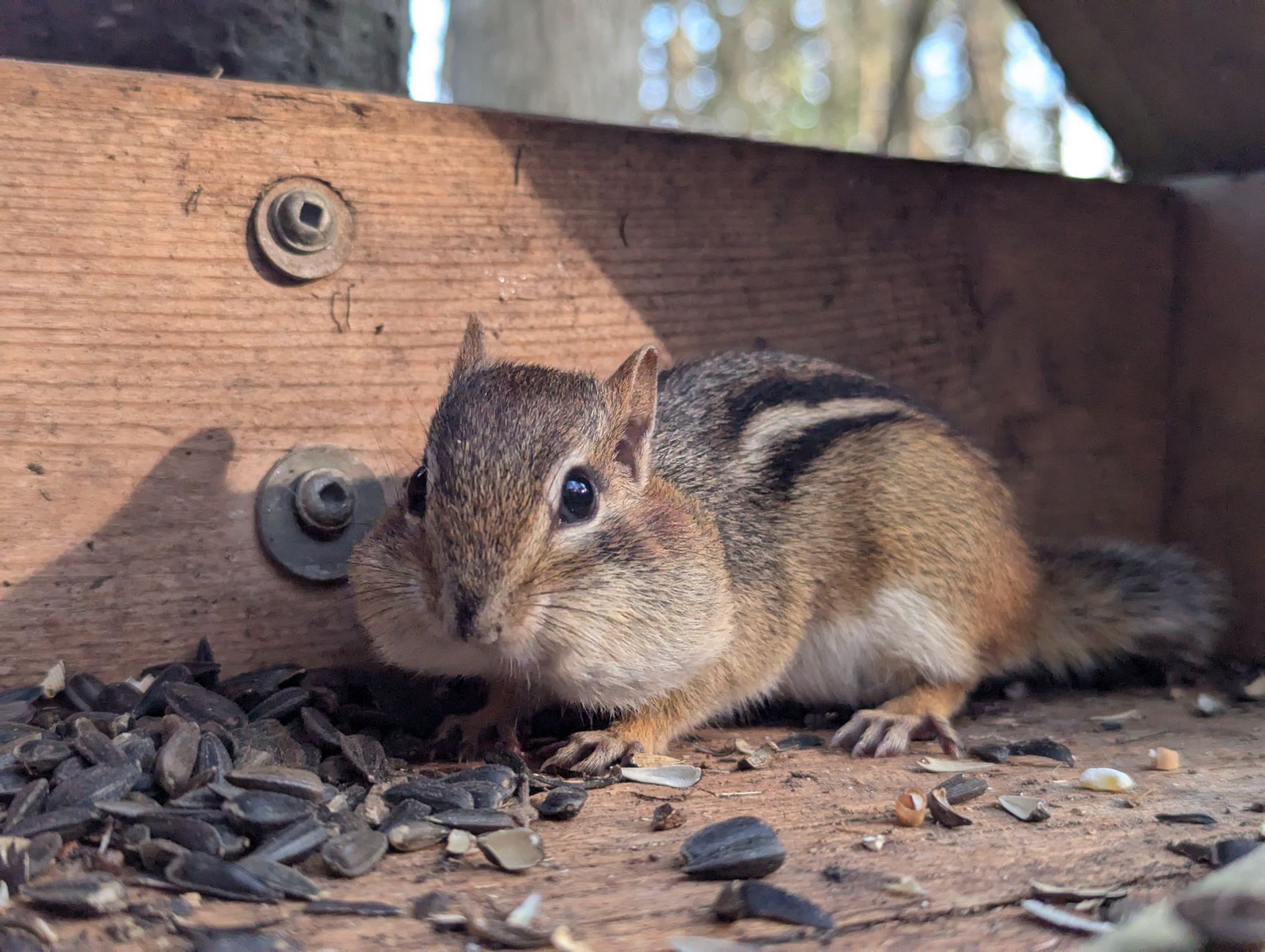
Introduction: Understanding the Chipmunk Challenge in UK Gardens
There's nothing quite like the thrill of a new gardening season, is there? Here in my 800 sq ft Midlands garden, as soon as the last frost threat has (mostly) passed and the days lengthen, I'm buzzing with excitement. My greenhouse is already packed with 'Shirley' tomato seedlings and tender herbs, and I'm dreaming of the vibrant colours of my spring bulbs and the first flush of freshly sown carrots. But as any seasoned gardener in the UK knows, this joy often comes with its own unique set of challenges – and for me, one of the most persistent and frustrating has been the relentless digging of our small, furry garden residents.
I'm talking about the stealthy, often adorable, but utterly destructive chipmunk. Or at least, what I thought was a chipmunk for a long time! When I first transitioned from the world of IT spreadsheets to the glorious chaos of soil and seeds five years ago, I quickly learned that gardening isn't just about planting; it's about constant observation, problem-solving, and a good dose of resilience. I've had my share of battles with slugs, aphids, and even the occasional neighbourhood cat, but the sheer heartbreak of waking up to find my carefully planted heirloom tulip bulbs unearthed, or my newly sown beds of 'Nantes' carrots disturbed, taught me a valuable lesson. It's not enough to plant; you have to protect.
Here in Britain, while chipmunks aren't quite as ubiquitous as our grey squirrel population, they are certainly present in pockets, often descendants of escapees, and can wreak absolute havoc. Over the years, through plenty of trial and error (and yes, a fair few lost crops!), I've developed a multi-pronged, humane strategy to keep these tiny terrors from ruining my spring displays, my precious vegetable starts, and even the ground-level fruits like my beloved 'Cambridge Favourite' strawberries. I'm obsessed with finding practical, real-world solutions that work in our often-unpredictable UK climate, and I can't wait to share what I've learned with you.
Identifying Your Digging Pest: Chipmunks, Squirrels, or Voles?
Before you can effectively tackle any garden pest, you need to know exactly who you're up against. This is one of the first things I learned in my journey from spreadsheets to soil. I remember one spring, I was convinced a particularly brazen grey squirrel was responsible for digging up my 'Tete-a-Tete' daffodils, only to later discover the tell-tale signs of a different culprit. Misidentification can lead to wasted effort, money, and continued frustration, especially with our notoriously changeable British weather making every gardening effort feel precious.
Here in my Midlands garden, I've observed three main suspects when it comes to unwelcome digging:
Chipmunks: These are the smallest of the three, typically about 15-20cm long (including their bushy tail), with distinctive stripes running down their backs and faces. They're quick, agile, and often seen scurrying along fences or walls. In the UK, Eastern Chipmunks are an introduced species, so if you're seeing them, they are likely from an escaped population. They create small, neat holes, about 2-5cm in diameter, often near foundations, under shrubs, or directly in garden beds where they're either burying food or looking for bulbs, seeds, and roots. I've seen them meticulously unearth a row of my 'Autumn King 2' carrot seeds, leaving behind tiny, frustrating craters. Their damage often involves nibbled seeds or bulbs, or small, shallow excavations.
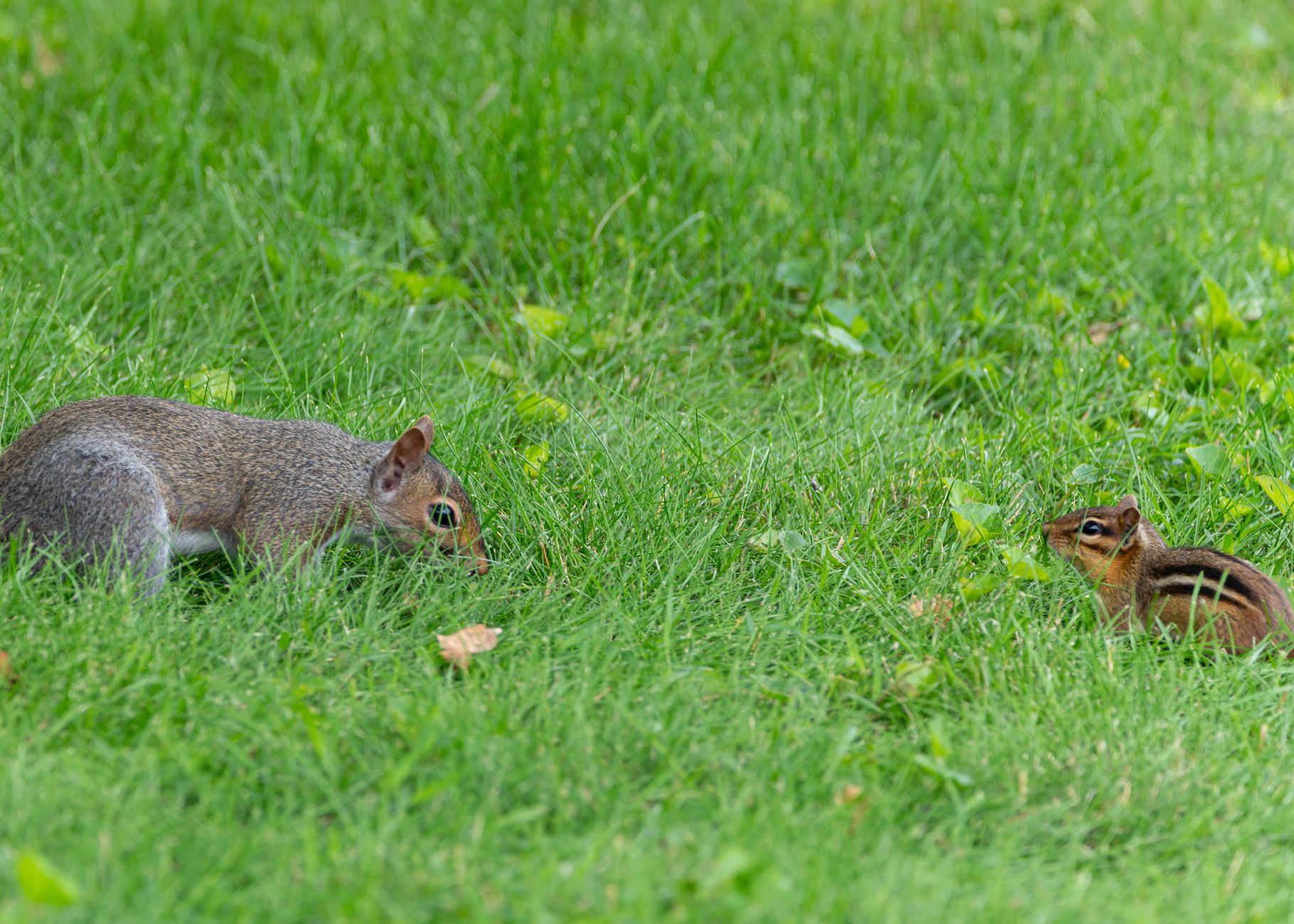
Squirrels (Grey Squirrels): Our common grey squirrels are larger, bushier-tailed, and more uniform in colour than chipmunks. They're less shy and more likely to be seen scampering up trees or raiding bird feeders. Their digging tends to be more haphazard, creating larger, shallower holes (5-10cm wide) as they bury and retrieve nuts or scavenge for fallen fruit. I've often seen them digging around the base of my 'Conference' pear tree, searching for anything dropped. They're notorious for digging up newly planted bulbs, especially tulip and crocus, and will often leave them partially eaten or just moved.
Voles: These are arguably the most insidious, as their damage is often less visible initially. Voles are small, mouse-like rodents with stocky bodies, short tails, small ears, and eyes partially hidden by their fur. They are primarily subterranean, creating extensive networks of tunnels just below the surface, often marked by raised soil ridges or small, golf-ball sized entry holes (3-5cm). Unlike chipmunks and squirrels who primarily hoard or eat surface-level items, voles are notorious for eating roots, tubers, and bulbs from below ground. I once lost an entire bed of 'Charlotte' potatoes to voles, with no obvious surface disturbance until I went to harvest. If you're finding bulbs completely gone or plants wilting mysteriously with no visible stem damage, a vole is a strong suspect.
The key to telling them apart is observing the type of hole, the nature of the damage, and the pest's appearance and behaviour. Pay attention to how neat the digging is, the size of the hole, and whether items are being taken or just nibbled. This crucial detective work will inform your strategy.
Fortifying Your Plantings: Physical Barriers for Bulbs & Seeds
Once you've identified your digging culprit, the next step is to get proactive. This is where my former IT brain kicks in – it's all about defence in depth! In my 800 sq ft garden, especially with limited space in my raised beds and greenhouse, every plant is precious. Physical barriers are, in my experience, the most reliable first line of defence against persistent diggers, especially for valuable spring bulbs and newly sown seeds. I’ve learned this the hard way with lost 'Queen of the Night' tulips and cherished 'Crimson Sweet' watermelon seeds (yes, I try to grow watermelon in my greenhouse, sometimes successfully!).
Here are the physical barrier methods I've tried and found effective here in Britain:
Hardware Cloth or Chicken Wire Cages
For autumn-planted bulbs like tulips, crocuses, and lilies, I swear by hardware cloth or chicken wire. Squirrels and chipmunks can easily smell bulbs from above ground, and a simple planting isn't enough.
- How I use it: When planting bulbs, I dig a wider hole than usual. I then line the bottom and sides of the hole with hardware cloth (1/4 inch or 1/2 inch mesh works best), ensuring it extends a few inches above the bulb level. I plant my bulbs on top of this, then cover them with soil. Crucially, I also place a flat piece of hardware cloth or chicken wire over the top of the planting area, extending it beyond the bulb's perimeter by at least 15-20cm, and secure it with landscape pins or heavy stones. This prevents digging from both above and below. For larger areas, I've created entire bottomless cages for my raised beds, sinking them about 30cm deep.
- Randy's Insight: Make sure the mesh is small enough to prevent paws from reaching through. I once used a mesh that was too wide, and a determined chipmunk still managed to excavate around the edges. Our British weather, especially those strong spring gales, means securing the top mesh properly is non-negotiable, otherwise, it just blows away!
Netting or Row Covers for Seeds & Young Plants
For newly sown seeds in my raised beds, or young vegetable starts like my early brassicas, netting is invaluable.
- How I use it: Immediately after sowing seeds, I cover the entire bed with fine mesh netting or a lightweight horticultural fleece. I drape it over hoops (made from old plumbing pipe or thick wire) to prevent it from resting directly on the plants. The edges are then firmly secured to the ground using bricks, heavy stones, or landscape pins, making sure there are no gaps for critters to squeeze under. This creates a physical barrier that prevents anything from landing on or digging into the seedbed.
- Randy's Insight: This also has the added benefit of protecting against pigeons and other birds, which can be just as destructive to young seedlings. However, remember to lift it for watering and to check on your plants. For my 'Early Purple Sprouting' broccoli, I keep the netting on until they're quite established, especially if I'm seeing chipmunk activity nearby.
Gravel and Sharp Edges
This is more of a deterrent than a complete barrier, but it can make digging less appealing.
- How I use it: Around the base of my 'Cambridge Favourite' strawberry plants, which are often targeted, I've spread a generous layer of sharp gravel or crushed oyster shells. This doesn't stop them completely but makes the digging experience uncomfortable for their paws.
- Randy's Insight: This method is best combined with other strategies. It won't deter a truly determined digger, but it can make them think twice and move on to an easier target. It's also great for drainage around some plants!
Here’s a detailed comparison of physical barriers:
| Barrier Type | Best For | Pros (UK Context) | Cons (UK Context) | Randy's Verdict |
|---|---|---|---|---|
| Hardware Cloth/Wire Mesh Cages | Bulbs, root vegetables (e.g., carrots, potatoes), valuable plants | Highly effective, durable, long-lasting, protects from below and above. | Can be costly, time-consuming to install, can restrict root growth if too small for long-term crops. | My Top Pick for Bulbs! Essential for high-value bulbs. I build a "cage" into the soil. Worth the effort for prized plants. |
| Fine Mesh Netting/Fleece | Newly sown seeds, young seedlings, low-growing fruit | Lightweight, easy to install and remove, protects from birds/insects too, good for UK spring frosts. | Needs securing against wind, can restrict air circulation if too fine, needs regular lifting for access/pollination. | Excellent for Seedlings! My go-to for protecting young veg. Just remember to secure it well against those British breezes. |
| Gravel/Sharp Edges | Surface areas around established plants, fruit | Low cost, provides some drainage, makes digging less appealing. | Not a complete barrier, less effective for determined diggers, can be moved by heavy rain. | A Supplementary Deterrent. Good for adding discomfort, but needs to be combined with stronger methods for real protection. |
Deterring Diggers: Humane Repellents and Unwanted Scents
While physical barriers are my absolute go-to for protecting precious plantings, I'm also a big believer in a multi-pronged approach. Sometimes, you can't cage everything, or you need an extra layer of defence. That's where humane repellents and unwanted scents come in. The goal isn't to harm the animals, but to make your garden (or specific areas of it) less appealing, encouraging them to find their meals elsewhere.
I've experimented with everything under the sun, from homemade concoctions to fancy gadgets, and I've learned that consistency and understanding the UK weather are key. What works on a dry Californian afternoon will probably wash away in a typical British downpour!
Scent-Based Repellents
Many animals, including chipmunks and squirrels, have incredibly sensitive noses. We can use this to our advantage by introducing scents they find unpleasant.
- Garlic and Chilli: I often make a simple spray by blending garlic cloves and chilli peppers with water, then straining it and spraying it around vulnerable areas. I've used this around my 'Sungold' tomato plants in the greenhouse to deter smaller pests.
- Randy's Insight: This needs frequent reapplication, especially after rain. It’s effective for short bursts but isn't a long-term solution. I've found it helps most when dealing with a specific, active raid.
- Peppermint Oil: A few drops of peppermint essential oil on cotton balls placed around garden beds can be a temporary deterrent. I've tried this around my herb beds.
- Randy's Insight: The scent dissipates quickly outdoors, so it needs constant refreshing. Our damp British air doesn't help!
- Coffee Grounds: Many gardeners swear by sprinkling used coffee grounds. I’ve tried this around my 'Early Purple Sprouting' broccoli seedlings.
- Randy's Insight: While coffee grounds are great for soil health, I haven't found them to be a strong deterrent for persistent diggers in my experience. They get washed away quickly, and some animals don't seem bothered.
- Human Hair/Pet Hair: The idea here is that the scent of a predator (or a large human) will scare them away. I've collected hair from my own brush and my neighbour's dog (with permission, of course!).
- Randy's Insight: This is a bit hit-and-miss. I've placed small clumps in mesh bags near newly planted areas. Sometimes it seems to work, other times it's completely ignored. It's more of a subtle deterrent than a strong one.
- Predator Urine (e.g., Fox Urine): Some garden centres sell granular repellents infused with predator urine.
- Randy's Insight: I've only used this sparingly, as it can be quite strong-smelling for humans too! It can be effective, but again, rain is its enemy. Always check if specific predator urine products are legally and ethically sourced in the UK.
Taste-Based Repellents
These make the plant taste unpleasant if a pest tries to nibble.
- Capsaicin-based Sprays: These use chilli pepper extract to create a very hot taste.
- Randy's Insight: These can be effective, but you need to ensure they are safe for your specific plants and won't cause damage. Always test on a small area first. They also need reapplication after rain. I've used them on the leaves of my 'Cherokee Purple' tomatoes in the greenhouse to deter tiny nibblers, but sparingly.
Sound and Motion-Activated Deterrents
These aim to startle the animals.
- Ultrasonic Devices: These emit high-frequency sounds that humans can't hear but are supposed to be irritating to pests.
- Randy's Insight: I tried one of these near my strawberry patch. Honestly, I didn't find it particularly effective for chipmunks or squirrels in my garden. They seemed to adapt to it quickly, or perhaps the range wasn't sufficient for my 800 sq ft space. Our often-windy conditions probably didn't help with sound propagation either.
- Motion-Activated Sprinklers: These attach to a hose and spray water when motion is detected.
- Randy's Insight: This can be very effective for startling animals! I've used one near my ground-level fruit beds. The sudden spray of water is usually enough to send them scattering. The downside is that it can also spray me when I forget it's on, and it uses water, which is something we always need to be mindful of in the UK.
Here’s a detailed comparison of humane repellents:
| Repellent Type | Active Ingredient/Method | Best For | Pros (UK Context) | Cons (UK Context) | Randy's Verdict |
|---|---|---|---|---|---|
| Scent-Based (Homemade) | Garlic, Chilli, Peppermint | Localised application, deterring exploration | Cheap, natural, easy to make. | Very frequent reapplication needed, especially with UK rain; potency varies. | Good for a quick deterrent. I use my garlic/chilli spray for specific, immediate problems, but it's high maintenance. |
| Scent-Based (Commercial) | Predator Urine, specific oils | More potent, slightly longer lasting than homemade | Can be effective for persistent issues, readily available. | Can be strong-smelling for humans, needs reapplication, check UK legality/ethics for some products. | Use with caution. I've found it can work, but consider the smell and cost versus effectiveness in damp conditions. |
| Coffee Grounds | Caffeine, scent | Soil amendment, very mild deterrent | Good for soil, readily available. | Very weak deterrent for determined diggers; washes away instantly in rain. | More of a soil booster. I still use them, but don't rely on them for serious pest control in my Midlands garden. |
| Taste-Based Sprays | Capsaicin (chilli) | Protecting leaves/stems from nibbling | Can be highly effective at deterring eating. | Needs careful application, reapplication after rain, can damage sensitive plants. | Niche use for me. Good for specific plants being eaten, but I test it first and reapply often. Not for widespread digging. |
| Ultrasonic Devices | High-frequency sound | Large areas, general deterrent | Non-invasive, no chemicals. | Effectiveness is debatable; animals can habituate; battery/power dependent; limited range. | Didn't impress me. In my experience, these were not reliable for chipmunks in my 800 sq ft garden. Save your money. |
| Motion-Activated Sprinkler | Sudden water spray | Wide areas, startling pests | Very effective at startling, humane. | Uses water, can spray humans/pets, needs hose connection, can activate unnecessarily. | Surprisingly effective! Great for areas where I need a strong, immediate deterrent, like my strawberry patch. Just don't forget it's on! |
Garden Design for Discouragement: Removing Attractants & Shelter
Beyond the immediate protection of your plants, one of the most effective long-term strategies I’ve discovered here in my 800 sq ft Midlands garden is to make the space less appealing to chipmunks in the first place. It’s all about thinking like a chipmunk – what are they looking for? Food, shelter, and easy access. If your garden provides all three, you’re practically rolling out the red carpet!
I learned this the hard way when I first started out. My shed used to have a pile of old timber offcuts and a neglected corner where garden waste would accumulate before it hit the compost heap. Guess what? Perfect chipmunk five-star hotel! They’d dart out from under there, grab a seed from my newly sown pea trench, and be back in a flash.
Tidy Up Your Act (and Your Garden!)
My first step was a serious tidy-up. I've found that keeping areas around my raised beds and greenhouse free of debris is crucial. This means:
- Clearing brush and woodpiles: If you have any unused timber, logs, or prunings, stack them neatly off the ground or move them further away from your prime planting areas. My old woodpile is now a neat stack at the very back of the garden, a good distance from my veg patch.
- Securing compost bins: Chipmunks, like squirrels, are opportunists. An open compost heap or a bin with gaps can be an easy source of food scraps or even a warm, sheltered spot. I upgraded my old open compost pile to a more robust, enclosed plastic bin, and I make sure the lid is always securely fastened. It’s made a massive difference.
- Managing fallen fruit and nuts: If you have fruit trees or nut bushes, be diligent about clearing up fallen produce. A windfall apple might seem harmless, but it's a gourmet meal for a chipmunk. I’ve got a small apple tree and a couple of hazelnut bushes, and I always make sure to clear the ground underneath them regularly, especially during fruiting season.
Strategic Planting and Lawn Care
I also think about the layout of my plants. While I love a wilder, more biodiverse garden, there’s a balance to be struck. Dense ground covers or overgrown shrubbery close to your vulnerable areas can provide excellent cover for chipmunks. I try to keep the immediate vicinity of my bulb beds and seed rows relatively open, making chipmunks feel more exposed to potential predators (like the local cats – not mine, I hasten to add, but they do seem to keep the rodent population on their toes!).
What works here in Britain, especially with our often damp climate, is ensuring good drainage and airflow. Chipmunks aren't necessarily looking for damp spots, but areas of dense, overgrown vegetation can become damp and also attract other pests they might feed on, or simply provide a perfect, hidden highway to your plants. Keeping grass cut around beds and creating clear paths helps, making them less inclined to venture into the open.
Safeguarding Your Harvest: Protecting Low-Growing Fruits & Vegetables
Now, this is where it gets personal. There's nothing quite as disheartening as nurturing a crop, watching it ripen, and then finding it half-eaten by a tiny bandit just before you get to enjoy it. I’ve shed a tear or two over a pristine strawberry or a perfectly ripe lower-truss tomato. Chipmunks, with their ground-level habits, are particularly fond of anything within easy reach.
The Strawberry Wars
My strawberry patch is a prime target every year. I grow varieties like 'Cambridge Favourite' and 'Marmolada' in one of my raised beds, and they produce wonderfully here in the UK Midlands. But come June, the chipmunks are ready. I used to just lay straw around the plants, which helps keep the fruit clean but does nothing against nimble paws. I’d lose at least a quarter of my harvest, sometimes more, to little nibblers.
My solution? A dedicated fruit cage. It doesn't have to be fancy or expensive. I built a simple frame using some spare timber battens and covered it with fine mesh netting. What's crucial is that the netting is buried a few inches into the soil around the perimeter, or at least secured firmly to the ground. This prevents them from simply digging underneath. It might look a bit industrial, but it has saved countless strawberries from becoming chipmunk breakfast.
Low-Hanging Fruit (Literally!) in the Greenhouse
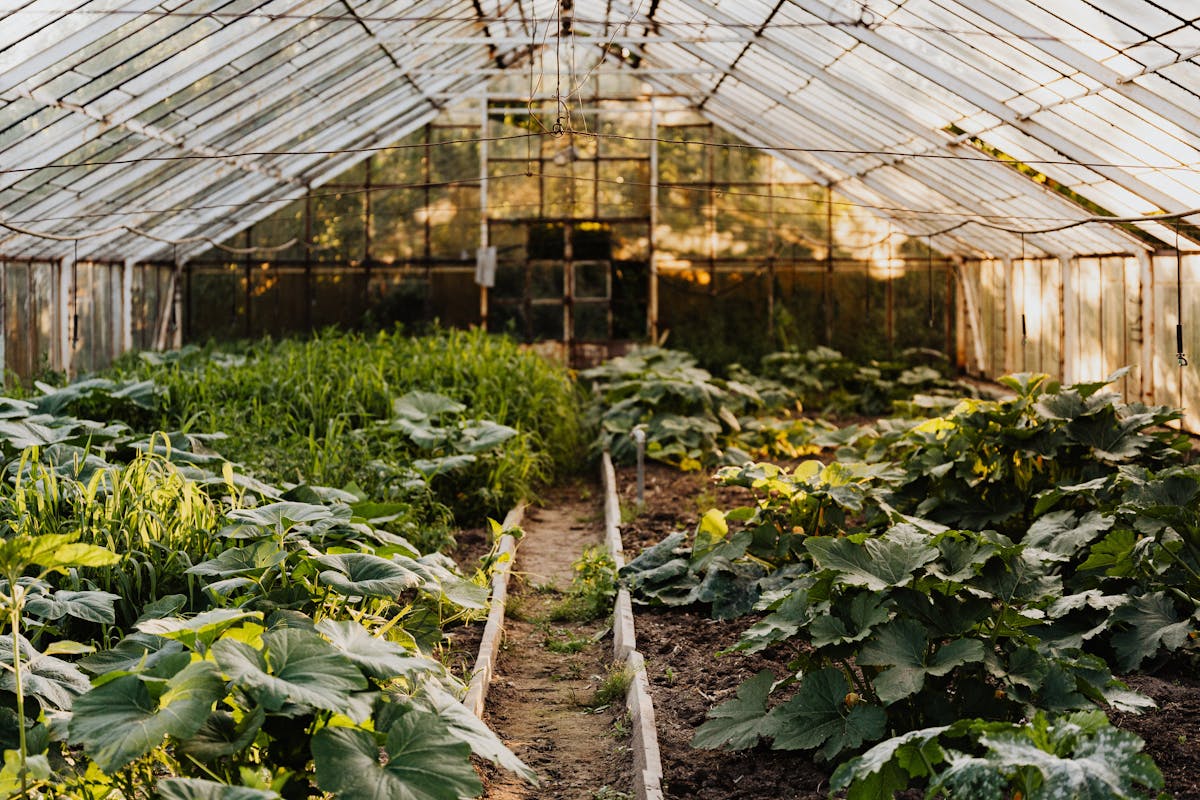
Even in my beloved greenhouse, I've had chipmunk issues. My heirloom tomatoes, like 'Cherokee Purple' and 'Gardener's Delight', grow beautifully, but those lower trusses are vulnerable. I learned that just because it's inside, doesn't mean it's safe if there's an entry point. My greenhouse door often stays open during warm UK summer days for ventilation, and that's all the invitation they need.
For greenhouse protection, I've found fine mesh screens over vents and ensuring a tight seal around the doorframe helps immensely. For the lowest fruits, sometimes a simple ring of chicken wire around the base of the plant, pushed into the soil, can deter them from getting a good angle to chew. It's a bit fiddly, but for those precious early tomatoes, it's worth the effort.
Ground-Level Gourds and Other Goodies
Other ground-level crops, like courgettes, pumpkins, or even cucumbers, can also be at risk, especially when they're small and their skins are tender. While they tend to leave larger, tougher-skinned mature fruits alone, young courgettes can be irresistible. For these, I often use individual cloches or even just an upturned mesh waste bin (secured down, of course!) over the young plants until they are big enough to fend for themselves. This is particularly important during those early summer weeks when the chipmunks are most active and hungry after the long British winter.
Implementing an Integrated Strategy for Long-Term Peace
After five years of intense gardening here in the UK, experimenting with everything from 'Sungold' tomatoes in the greenhouse to 'Charlotte' potatoes in my raised beds, I’ve learned that there’s no single magic bullet for stopping chipmunk digging. These little creatures are persistent, adaptable, and, let’s be honest, quite cute. But that doesn’t mean they get free rein in my carefully cultivated patch!
What does work, I've found, is an integrated strategy. It’s about combining several humane techniques to create an environment where chipmunks simply don’t want to hang out or, at the very least, can’t easily access your prized plants.
My Multi-Pronged Approach: A Summary
- Physical Barriers are King: For bulbs, I swear by chicken wire cages or layers of grit. For seeds, fine mesh netting or cloches. This is your first line of defence and, in my experience, the most reliable. I always make sure these are well-secured – a lesson learned after a particularly windy week here in the Midlands sent my netting flying!
- Deterrents as a Backup: Scent-based repellents, whether commercial ones or homemade concoctions like garlic or chilli, can add another layer of protection. They’re great for making an area less appealing. Just remember, the British weather means you’ll likely need to reapply them regularly, especially after a good downpour.
- Garden Design for Discouragement: Keeping a tidy garden, eliminating easy shelter spots, and managing attractants (like fallen fruit) makes a huge difference in reducing the overall chipmunk presence. It’s less about direct deterrence and more about making your garden a less desirable long-term residence.
- Protecting the Harvest: For low-growing fruits and vegetables, dedicated cages, netting, or individual plant protection are essential. Don't wait until you see the first bite; be proactive, especially with strawberries and lower greenhouse tomatoes.
The Randy Thompson Philosophy
My journey from sitting behind a computer screen to digging in the soil has taught me patience and resilience. It's also taught me that gardening is a constant dance with nature. We're not trying to eradicate every creature; we’re just trying to protect our hard work and enjoy the fruits (and vegetables!) of our labour.
It’s about setting boundaries. We want our gardens to be havens for pollinators, birds, and beneficial insects, but not a free-for-all buffet for every hungry critter. By thoughtfully applying these humane strategies, I've managed to achieve a much more peaceful coexistence in my UK garden.
Don't get disheartened if you have a setback – I certainly have! One year, I forgot to secure the netting around my newly sown carrots properly, and they were all dug up overnight. It happens. The key is to learn from it, adjust your strategy, and keep experimenting. Every season brings new challenges and new triumphs.
So, go forth, fellow UK gardeners! Arm yourselves with chicken wire, a bit of chilli powder, and a good dose of persistence. Your spring bulbs, newly sown seeds, and delicious ground-level fruits will thank you for it. Happy gardening!