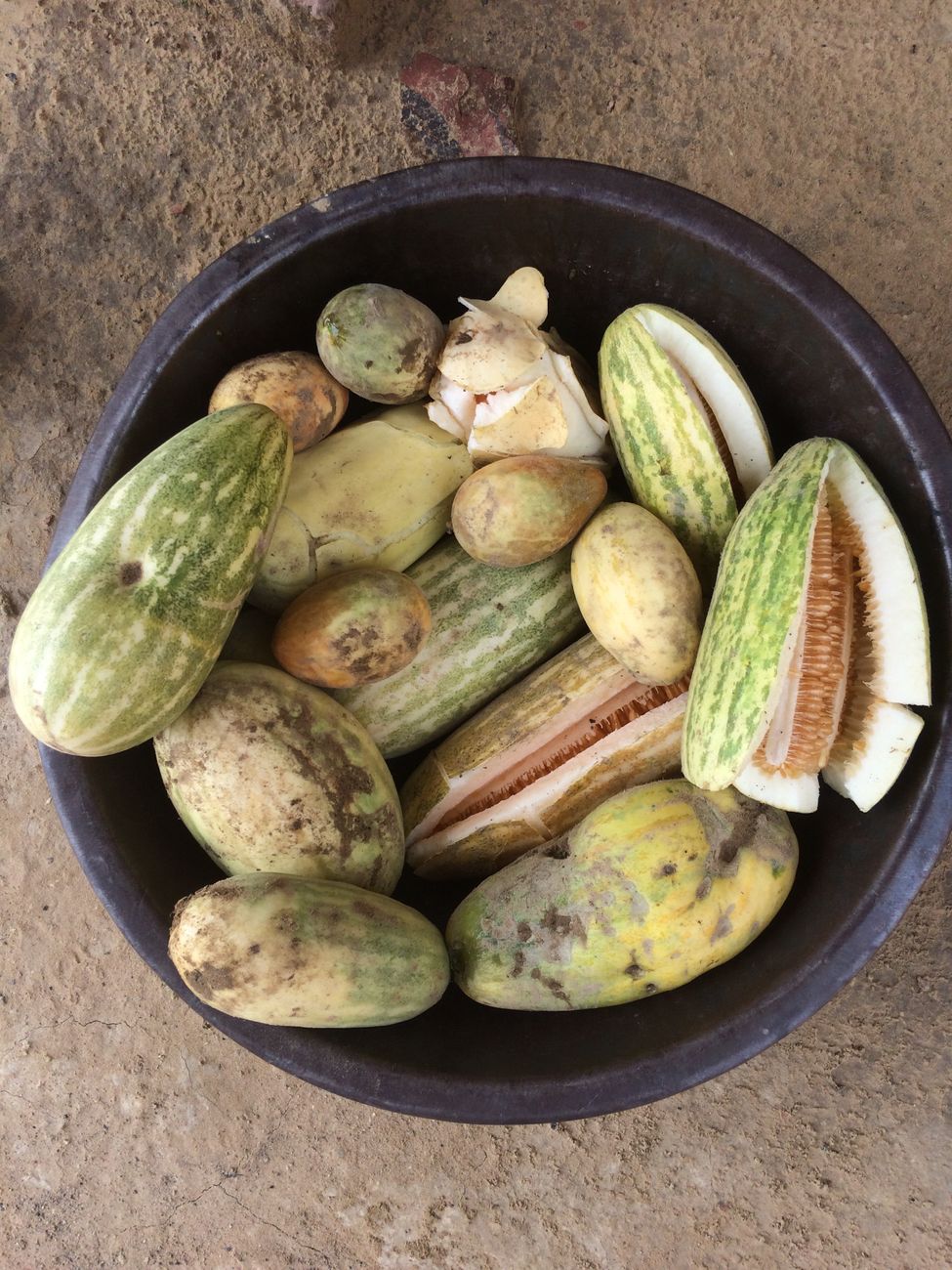
Unlocking Abundance: Why Strategic Vine Management is Your Secret to Bumper Cucumbers & Melons
When I first started gardening in my 800 sq ft Midlands backyard five years ago, I thought growing cucumbers and melons was simply a case of popping a seed in the soil, watering it, and waiting. Oh, how wrong I was! My initial harvests were… well, let's just say 'modest' at best. Tiny, misshapen fruits, plants that rampaged everywhere but produced little, and a lot of wasted energy. It was frustrating, especially when I knew the potential these plants held. I remember one particularly damp British summer where my outdoor cucumbers just sat there, sulking, producing maybe two edible fruits from three plants. It was a real wake-up call that I needed to understand these plants better.
That's when I dove headfirst into the world of strategic vine management – pinching, pruning, and training. It felt a bit like learning a new programming language after years in IT, but instead of lines of code, I was learning the language of the plant. And let me tell you, it's been a game-changer for my UK harvests. Now, whether it's the 'Marketmore 76' cucumbers I grow outdoors in a raised bed, or the 'Minnesota Midget' melons I coax into ripeness in my greenhouse, I consistently get a much bigger, healthier, and more delicious yield. This isn't just about tidiness; it's about directing your plant's precious energy exactly where you want it to go: into those juicy fruits. Especially here in the UK, where our growing season can be a bit shorter and the sunshine less consistent, every ounce of efficiency counts.
Decoding Your Vines: Understanding Male vs. Female Flowers and Growth Habits
Before we get our secateurs out, it's vital to understand the basics of how cucumbers and melons grow. This knowledge is the foundation of effective vine management. Both of these fantastic plants produce separate male and female flowers, and knowing the difference is key to encouraging more fruit.
I’ve spent countless hours in my greenhouse, peering at my 'Burpless Tasty Green' cucumber vines and 'Sweet Granite' melon plants, trying to spot the subtle differences. Male flowers typically appear first and in greater numbers, often in clusters. They’re usually borne on a thin stalk directly from the main stem or a lateral branch. Their sole purpose is to produce pollen. The female flowers, on the other hand, are the ones that will develop into fruit. The easiest way to identify them is by the tiny, immature fruit swelling at the base of the flower, behind the petals. It looks like a miniature cucumber or melon, even before the flower has opened! You'll usually find female flowers appearing later and often singly.
Understanding their growth habits is equally important. Cucumbers, especially vigorous varieties, tend to produce long, rambling vines with lots of lateral (side) shoots. Melons, while also vining, often have a slightly more contained growth, but still benefit hugely from guidance. In my UK garden, especially with our sometimes unpredictable weather, allowing them to just sprawl can lead to poor air circulation, increased disease risk, and most importantly, wasted energy on producing leaves and non-fruiting shoots instead of delicious fruit. This is where we step in as strategic gardeners!

The Art of the Pinch: Boosting Female Flowers and Fruit Set on Cucumbers & Melons
Pinching isn't just a gentle squeeze; it's a strategic removal of the growing tip of a vine or lateral shoot. Think of it as telling your plant, "Right, you've grown enough in that direction, now focus your energy here!" I’ve found this technique to be incredibly effective in my Midlands garden for encouraging more female flowers and ultimately, more fruit.
The general principle behind pinching is to interrupt the plant's apical dominance – its tendency to grow upwards and outwards from the main stem. By removing the growing tip, you force the plant to divert energy into lateral growth, where many cucumber and melon varieties produce their female flowers. For my greenhouse-grown cucumbers, like 'Diva' or 'Passandra', I've seen a dramatic increase in fruit set since I started pinching properly. It’s all about creating a more productive, bushy plant rather than a long, straggly one. The trick is knowing when and what to pinch, as it varies slightly between cucumbers and melons, and even by variety.
Pinching Techniques: Cucumbers vs. Melons (UK Guide)
| Aspect | Cucumbers (Randy's UK Experience) | Melons (Randy's UK Experience) |
|---|---|---|
| Goal | Encourage lateral branching for more female flowers; manage vine length, especially for cordon training. | Promote secondary laterals where female flowers often form; ensure good light penetration and air circulation for ripening. |
| When to Start | Once the main stem has developed 5-7 true leaves (or reached the top of its support if growing vertically). | When the main stem has developed 4-6 true leaves. |
| What to Pinch | Main Stem: For bush varieties, sometimes the main stem after a certain number of fruits. For vining varieties, typically laterals. Lateral Shoots: Pinch out the tip of side shoots after 2 leaves beyond a female flower (if present). | Main Stem: Pinch out the tip of the main stem to encourage strong primary lateral growth. Primary Laterals: Pinch after 3-4 leaves or 1-2 female flowers. Secondary Laterals: Pinch after a female flower and 1-2 leaves. |
| Why it Works (UK Context) | Forces energy into side shoots, which tend to bear more female flowers, crucial for maximising yield in our shorter UK summers. Prevents excessive vegetative growth that shades fruits. | Diverts energy from main stem growth into primary and secondary laterals, where most female flowers (and thus fruits) will form, particularly important for ripening in a UK greenhouse. |
| Randy's Top Tip | Always use clean, sharp snips or your fingernails. I learned the hard way that tearing can invite disease, especially in our damp UK climate. And don't be shy – the plant will recover! | Be patient. For melons, the female flowers often appear on the secondary laterals, so pinching the main stem is key to getting that initial branching going. |
Strategic Pruning for Productivity: Directing Energy for Larger, Healthier Fruits
While pinching focuses on encouraging more female flowers, pruning takes it a step further. This is about shaping the plant, directing its precious resources, and ensuring optimal conditions for fruit development. In my 800 sq ft garden, especially in the greenhouse, space is at a premium, so pruning isn't just about bigger fruit, it's about efficient use of every square inch.
My approach to pruning has evolved significantly over my five years of intensive UK gardening. Initially, I was terrified of cutting anything, fearing I'd harm the plant. Now, I see it as a partnership – I'm helping the plant achieve its full potential. Pruning involves removing entire lateral shoots, spent leaves, or even excess fruits. This ensures that the plant's energy isn't wasted on non-productive growth or supporting too many fruits that won't reach maturity, which is a common problem here in Britain with its shorter growing windows. For my 'Marketmore 76' outdoor cucumbers, this means keeping the vine manageable and open for airflow, while for my 'Minnesota Midget' melons in the greenhouse, it's about ensuring each fruit gets maximum sunlight and nutrients.
Pruning for Productivity: Cucumbers vs. Melons (Randy's UK Strategy)
| Aspect | Cucumbers (Randy's UK Experience) | Melons (Randy's UK Experience) |
|---|---|---|
| Primary Goal | Maximise fruit production on a manageable vine; improve air circulation; prevent disease (especially important for outdoor UK cukes). | Ensure individual fruits grow large and ripen fully; maintain plant vigour; manage plant size in confined spaces like a UK greenhouse. |
| Main Stem Strategy | Cordon Training: Allow a single main stem to grow up a support. Remove all laterals until the plant is about 2ft tall to encourage upward growth. Bush Varieties: Generally less main stem pruning, focus on laterals. | Allow main stem to grow to a manageable height (e.g., 5-6ft in a greenhouse) then 'stop' it by pinching out the tip. This forces energy into primary laterals for fruit production. |
| Lateral Branch Strategy | Vining Varieties: Allow laterals to develop, but prune them. My rule of thumb: remove laterals that don't produce a female flower, or prune fruiting laterals after 1-2 fruits and 2 leaves beyond the last fruit. | Primary Laterals: Allow 1-2 strong primary laterals to develop. Prune weaker ones. Secondary Laterals: These are your main fruit bearers. Prune after 1 fruit and 1-2 leaves beyond the fruit. Aim for 3-5 fruits per plant. |
| Leaf Management | Remove old, yellowing, or diseased leaves, especially at the base of the plant, to improve airflow and reduce pest/disease pressure. Crucial for keeping outdoor cucumbers healthy in damp UK weather. | Remove any leaves shading developing fruits to allow maximum sunlight for ripening. Also remove old or diseased leaves to maintain plant health and vigour. |
| Why it Works (UK Context) | Concentrates the plant's energy into developing fewer, higher-quality fruits rather than many small, underdeveloped ones. Excellent airflow helps combat mildew in our often humid British summers. | Ensures each chosen fruit receives enough energy to reach full size and sweetness before the UK growing season ends. Prevents the plant from trying to ripen too many fruits at once. |
| Randy's Cautionary Tale | Don't be too aggressive too early! I once stripped too many leaves from a 'Crystal Apple' cucumber, and it sulked for weeks. Always leave enough foliage for photosynthesis. | Over-pruning can reduce the plant's ability to photosynthesise and feed the fruits. Under-pruning means too many small, unripe melons. It’s a delicate balance; start slowly and observe your plant. |
Guiding Growth: Effective Training & Support Systems for Vertical Success in UK Gardens
Once you've got your vines pinched and pruned, the next crucial step in my UK garden is giving them the support they need to thrive. Let's be honest, we're not growing in a vast American prairie here; space is at a premium in most British backyards, especially in my 800 sq ft Midlands plot. Going vertical isn't just about aesthetics; it's about maximising every square inch, improving air circulation to ward off fungal diseases (a common battle here in our damp climate!), and keeping those precious fruits off the wet soil.
I've experimented with a fair few support systems over my five years, and I've certainly learned what works and what doesn't in our often-windy and wet British conditions. Flimsy bamboo canes quickly became a lesson learned when a sudden August gust flattened my entire cucumber patch one year! Now, I swear by sturdy, robust solutions.
Training Cucumbers for a Vertical UK Harvest
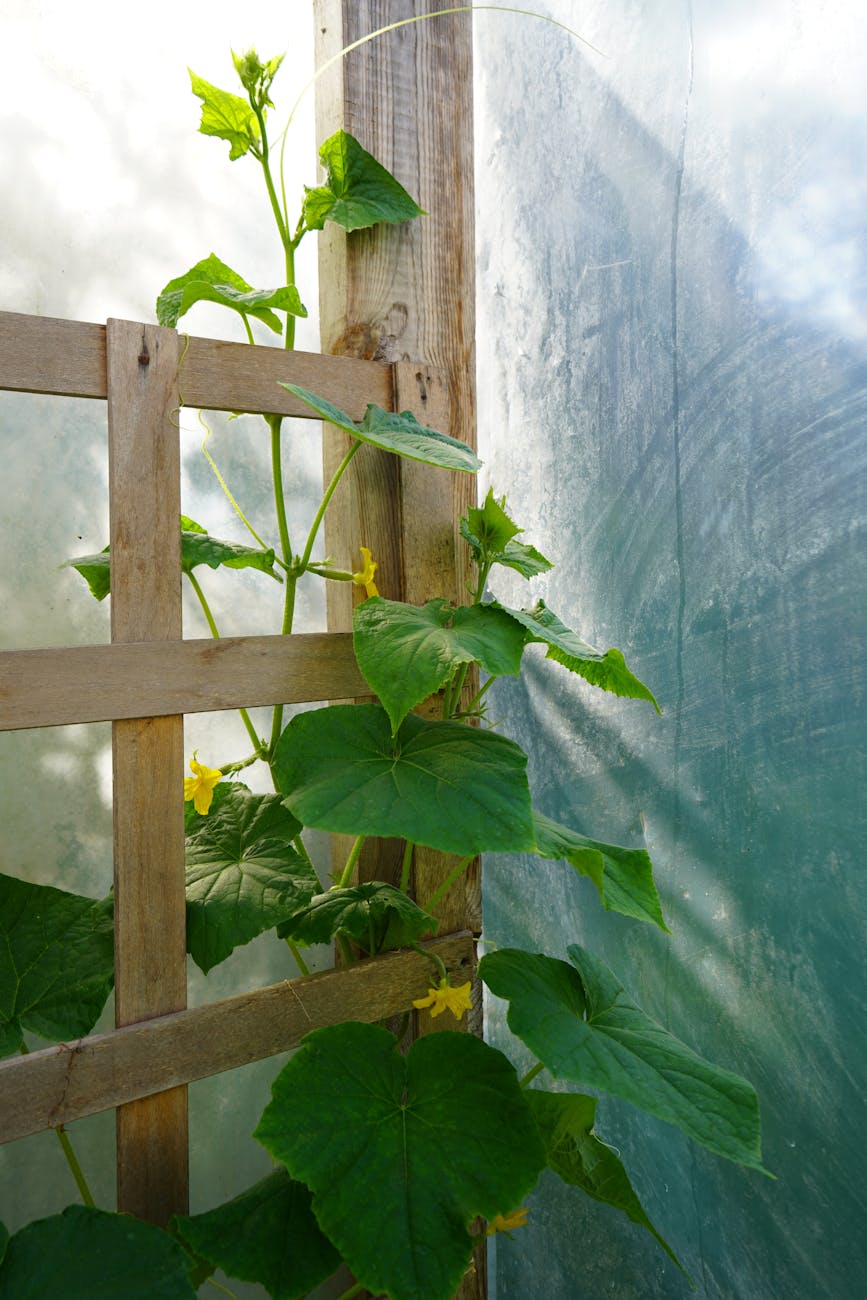
For my outdoor cucumbers like 'Marketmore 76' or 'Burpless Tasty Green', which I grow in raised beds, I use a strong A-frame trellis or a simple cattle panel arch. I find these offer excellent support against the wind and allow for easy access to harvest. I start gently guiding the main stem up the support as soon as it's long enough, usually when it's around 30-45cm tall. I use soft garden ties or old strips of t-shirt fabric to loosely secure the vine every 20-30cm, making sure not to constrict the stem.
The goal here is to get that main stem climbing. Remember those side shoots we talked about pinching? The ones you do leave for fruit will then dangle down, making harvesting a doddle. This vertical growth also helps with air circulation, which is absolutely vital for preventing powdery mildew – a persistent nemesis in my UK garden, especially towards late summer when the humidity creeps up.
Supporting Melons in the British Greenhouse
Melons are a different beast, especially in the UK. I predominantly grow them in my greenhouse, where they benefit from the extra warmth. Varieties like 'Minnesota Midget' or 'Cantaloupe Athena' are my go-to. For these, I use a strong string system, similar to how I train my greenhouse tomatoes. I tie a sturdy piece of horticultural string to an overhead support (I've got a metal frame in my greenhouse roof) and then loosely loop it around the main melon stem as it grows.
Melons can get heavy, even the smaller UK-suitable varieties. Once the fruit starts to size up, usually when it's about the size of a tennis ball, I create little 'slings' for them. I've used old tights, onion nets, or even purpose-made melon cradles. These slings take the weight off the vine, preventing the fruit from snapping off prematurely. I learned this the hard way when a promising 'Cantaloupe Athena' dropped and split last year – a truly heartbreaking sight for a gardener!
My Go-To Support Systems: A Quick Comparison for UK Gardeners
Here's a little table based on what I've found works best in my Midlands garden:
| Support System | Best For | Pros (UK Specific) | Cons (UK Specific) | Randy's Tip for UK |
|---|---|---|---|---|
| A-Frame Trellis | Outdoor Cucumbers | Sturdy against wind, good air circulation, easy harvest | Can take up ground space if not designed well | Use thick timber or metal; anchor firmly in raised beds. |
| Cattle Panel Arch | Outdoor Cucumbers/Melons | Extremely robust, lasts for years, aesthetic | Can be bulky to move, initial setup requires muscle | Great for defining pathways; consider smaller gauge panels. |
| String Training | Greenhouse Cucumbers/Melons | Maximises vertical space, adjustable, cheap | Requires overhead support, fruits need individual cradles | Use strong horticultural twine; check tension regularly. |
| Netting/Mesh | Outdoor Cucumbers | Good for smaller spaces, easy to attach vines | Can be less sturdy in high winds, vines can get tangled | Choose strong, wide-mesh netting; secure tightly at top & bottom. |
Troubleshooting Common Vine Management Mistakes for UK Home Gardeners
Even with the best intentions, we all make mistakes. I certainly have! Gardening, especially here in the UK with our notoriously fickle weather, is a constant learning curve. The key is to learn from those missteps and not let them discourage you. Let me share a few common vine management blunders I've seen (and committed myself!) and how to fix them.
Mistake 1: Hesitating to Pinch or Prune
This was one of my biggest initial errors. When I first started five years ago, I felt guilty cutting off what looked like healthy growth. My early cucumber and melon vines were sprawling, tangled messes. The result? Fewer female flowers, small fruit, and a vine that put all its energy into leaves, not produce.
- Randy's Solution: Be brave! Remind yourself that you're directing the plant's energy. If you're unsure, start small. Pinch off just one or two side shoots to see the difference. You'll quickly gain confidence. I now do my main pruning on a sunny morning, when I can clearly see all the nodes and the plant is less stressed.
Mistake 2: Confusing Male and Female Flowers (Especially on a Dreary UK Day!)
This is surprisingly easy to do, particularly with less common melon varieties or if you're new to vine crops. I recall once excitedly pinching off what I thought was an unproductive side shoot, only to realise later it was a burgeoning female flower with a tiny melon at its base. Oops!
- Randy's Solution: Take your time. Look for that distinct swollen "mini-fruit" behind the female flower. Male flowers will only have a slender stem. If in doubt, wait a day or two for the flower to fully open, or consult a picture of your specific variety. I always take a quick snap on my phone if I'm really unsure.
Mistake 3: Insufficient Support for Heavy Fruit
As I mentioned earlier, I learned this the hard way with a fallen melon. It's easy to underestimate how heavy a mature fruit can become, especially after a good spell of rain. Our British summers can be a mix of sun and heavy downpours, which can quickly add weight to ripening fruit.
- Randy's Solution: Plan your support system before planting. Err on the side of over-engineering it. For melons, have those slings ready. For cucumbers, check your ties regularly and add more if the vine is getting too heavy or long for its current anchors. A little proactive support goes a long way.
Mistake 4: Pruning Too Aggressively on the Main Stem
While pinching side shoots is great, being too heavy-handed with the main stem, especially on melons, can severely limit your harvest. I once got a bit carried away with a vigorous melon vine in the greenhouse and accidentally topped the main stem too early, before it had produced enough female flowers.
- Randy's Solution: Focus pruning on side shoots and older, unproductive leaves first. For the main stem, only pinch it back after it has produced a good number of female flowers and fruits that are setting well, or when it reaches the top of its support. Always remember the "less is more" principle when it comes to the main stem.
Mistake 5: Neglecting Airflow and Powdery Mildew Prevention
In our often-humid UK climate, powdery mildew can strike fast, especially in a busy greenhouse or a sheltered, damp corner of the garden. Overly dense foliage, a result of poor pruning, is a prime breeding ground.
- Randy's Solution: Regular pruning isn't just for fruit production; it's also your best defence against fungal diseases. Remove any yellowing, diseased, or overcrowded leaves. Ensure good spacing between plants. If mildew appears, remove affected leaves immediately and consider an organic fungicide spray. I've found a milk spray (1 part milk to 9 parts water) can be surprisingly effective in my garden for early outbreaks.
Your Path to a Bumper Harvest: Embracing Strategic Vine Care for Peak Yields
So there you have it, fellow UK gardeners. From understanding the subtle dance between male and female flowers to the satisfying snip of the pruners and the careful guidance onto a sturdy trellis, strategic vine management is truly the secret sauce for an abundance of cucumbers and melons in your garden. I’ve poured years of trial, error, and sheer delight from my 800 sq ft Midlands plot into these techniques, and I can honestly say they've transformed my harvests.
We've covered the crucial why behind pinching – redirecting that precious plant energy towards fruit, not endless foliage. We've explored the how of strategic pruning, ensuring your vines are focused, healthy, and producing larger, tastier fruits. And we've delved into the what of robust training systems, giving your plants the support they need to thrive vertically, even in our sometimes-challenging British weather.
It might seem like a lot to take in at first, particularly if you're new to this. I remember feeling overwhelmed when I first transitioned from IT to gardening, trying to decipher all the advice out there. But trust me, once you start, these practices become second nature. You'll begin to read your vines, understand their needs, and anticipate their growth. It's a deeply rewarding connection you build with your plants.
The satisfaction of harvesting a perfectly formed, crisp cucumber for a summer salad, or slicing into a sweet, juicy melon – grown by your own hands, right here in the UK – is truly unparalleled. It’s a taste that simply can't be bought in any supermarket. These techniques aren't about creating a perfect, pristine garden (mine certainly isn't!), but about working with your plants and our unique British climate to maximise their potential.
So, roll up your sleeves, grab your secateurs, and get out into your garden or greenhouse. Start experimenting with these pinching, pruning, and training methods. Don't be afraid to make mistakes – I've made plenty, and each one has been a valuable lesson. Observe your plants, adapt to your specific conditions, and most importantly, enjoy the process. I promise you, with a little strategic care, you'll be well on your way to enjoying your most bumper cucumber and melon harvests yet. Happy growing!