Introduction: Reclaiming Your Small Garden from Zucchini Overgrowth
Ah, the humble zucchini. Or should I say, the not-so-humble zucchini! If you're anything like me, a fellow UK gardener trying to cram as much deliciousness as possible into a modest patch, you've probably had a love-hate relationship with this prolific plant. When I first started gardening in my 800 sq ft Midlands backyard five years ago, fresh from my IT career and brimming with enthusiasm, I pictured neat rows of veg. Then I planted my first zucchini, 'Black Beauty', and watched in bewildered horror as it swallowed a raised bed whole, turning into a leafy, sprawling monster.
I've learned a lot since then, often the hard way, about managing these vigorous growers in our sometimes-unpredictable British climate. The dream of a steady supply of courgettes without sacrificing half your garden to one plant felt impossible at first. But through countless experiments, a few glorious successes, and more than a couple of frustrating failures (especially when the slugs decided my entire crop was a buffet), I've discovered that it is absolutely possible to tame the zucchini beast. This isn't about giving up on homegrown courgettes; it's about making them work for your space, not the other way around.
Understanding the Zucchini's Growth Habit: Why They Become Garden Giants
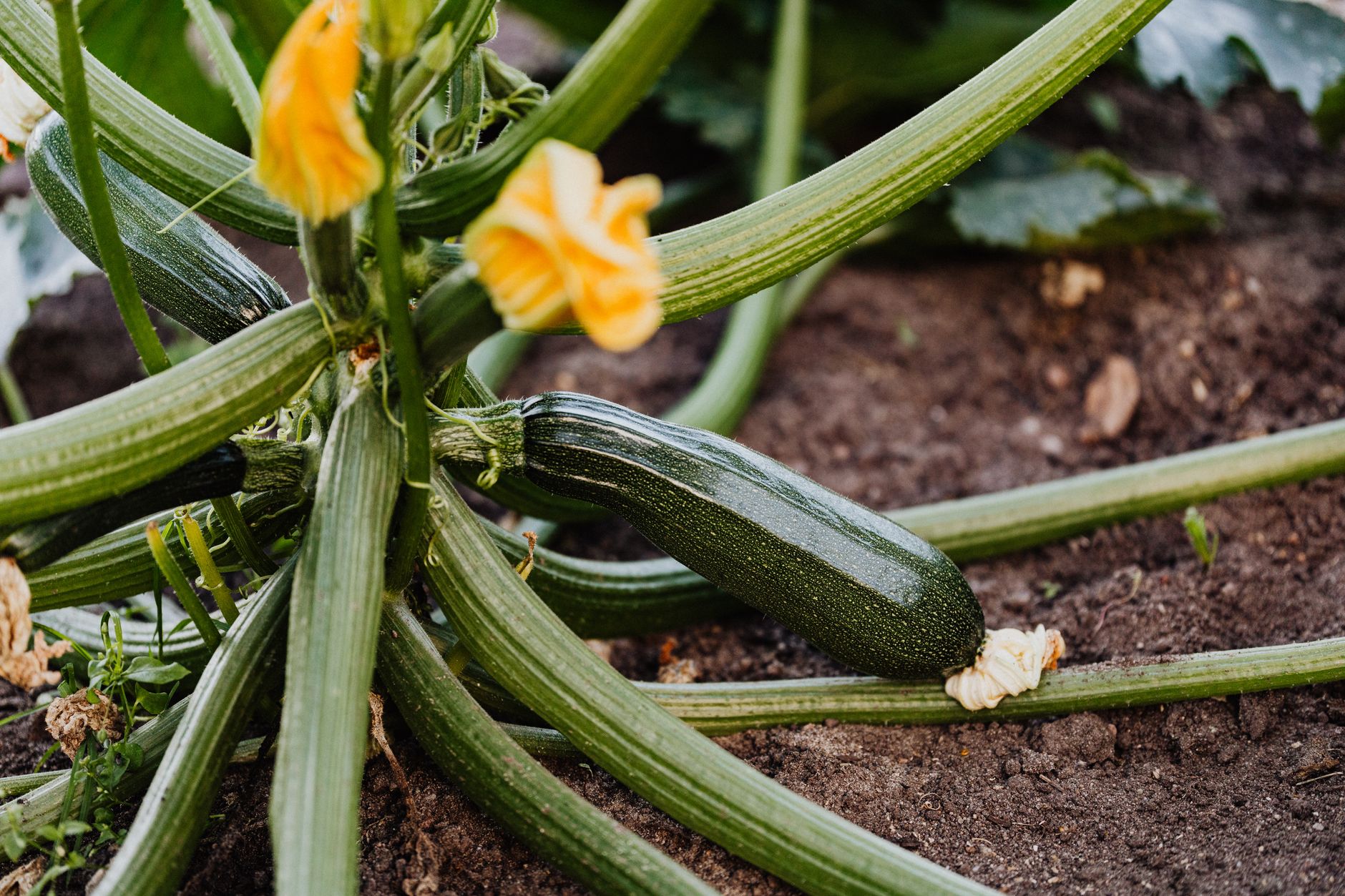
Before we even think about pruning shears or trellis, it's crucial to understand what makes zucchini plants tick. Most common varieties, like the popular 'Defender' or 'Romanesco' I've grown, are what's known as "bush" varieties, but don't let that fool you. "Bush" in zucchini terms often means a sprawling, multi-stemmed plant that can easily reach a metre or more in diameter, especially when given rich soil and our often-damp UK summers. They're technically a type of squash (Cucurbita pepo), and their natural inclination is to spread out, send roots down wherever a node touches the soil, and produce fruit from multiple points along their stems.
I vividly remember one season here in the Midlands when I planted three 'Tromboncino' climbing courgettes, thinking I was being clever. While they did climb, the sheer volume of foliage was staggering, casting shade over my precious carrots and chard. The main issue with most zucchini isn't their height, but their width and dense canopy. This dense growth isn't just a space hog; it also creates a damp, shaded microclimate underneath, which can be a breeding ground for powdery mildew – a real bane in our humid British summers – and makes it incredibly hard to spot those hidden courgettes until they've turned into marrows!
Strategic Pruning: Keeping Your Zucchini Plant Manageably Sized
This is where the real magic happens for small-space gardeners like us. For years, I was hesitant to prune my zucchini, convinced I'd somehow reduce my yield. It felt counter-intuitive, like I was damaging the plant. One wet August, after losing a significant portion of my 'Eight Ball' crop to mildew because of poor air circulation, I bit the bullet and started experimenting. What I've found is that strategic pruning actually improves air flow, reduces disease risk, and can even encourage the plant to put more energy into fruit production rather than just leaf growth.
The goal isn't to strip the plant bare, but to open up its structure. I usually start by removing any old, yellowing, or damaged leaves, especially those close to the base that aren't getting much light. Then, I target the large, non-fruiting leaves that are shading out flowers or baby courgettes, or simply taking up too much room. I also remove any suckers – small shoots that emerge from the main stem junctions – that aren't contributing to fruit production. Just be sure to use sharp, clean secateurs to make a clean cut close to the main stem to avoid tearing.
Here's a quick comparison of a "hands-off" approach versus strategic pruning, based on what I've seen in my own UK garden:
| Feature | Unpruned Zucchini (Typical 'Bush' Variety) | Strategically Pruned Zucchini |
|---|---|---|
| Growth Habit | Sprawling, dense, can reach 1m+ diameter, multiple main stems. | More compact, open, often encouraged to grow with a central leader. |
| Space Use | High footprint, can shade out neighbouring plants, difficult to walk around. | Reduced footprint, allows for interplanting, easier access. |
| Air Circulation | Poor, especially at the base, leading to high humidity. | Improved, reducing risk of fungal diseases like powdery mildew. |
| Disease Risk | Higher risk of powdery mildew and other fungal issues in UK damp climate. | Significantly lower risk due to better air flow and light penetration. |
| Pest Spotting | Difficult to see pests (slugs, squash bugs) hiding in dense foliage. | Easier to inspect plants for pests and remove them. |
| Harvesting | Courgettes often hidden, grow large unnoticed, difficult to reach. | Easier to spot and harvest fruit at the ideal size. |
| Yield | Can be high, but often includes oversized, watery marrows. | Consistent yield of well-formed, tender courgettes. Energy directed to fruit. |
| Maintenance | Low initial effort, high effort later to find fruit and deal with disease. | Moderate ongoing effort (weekly prune), easier overall management. |
Vertical Training & Support: Maximising Space with Upward Growth
Once you've got your pruning strategy down, the next game-changer for small spaces is getting those plants to grow up instead of out. This might sound a bit odd for what's often considered a ground-dwelling plant, but many zucchini varieties adapt incredibly well to vertical training, especially the more vining types. I started experimenting with this a couple of years ago after seeing some inspiring photos online, and it's completely transformed how I grow courgettes in my raised beds.
For this to work well, you'll need sturdy support. Forget flimsy bamboo canes; zucchini plants get heavy, especially when laden with fruit. I use a strong cattle panel trellis, about 1.8m tall, secured firmly into the ground or against a sturdy frame in my greenhouse for my 'Parthenon' F1 variety. You could also use a robust obelisk or even a strong tomato cage (though I find them a bit restrictive for zucchini's thick stems). I plant my zucchini at the base of the trellis and, as it grows, I gently guide the main stem upwards, loosely tying it to the support with soft garden twine.
This vertical approach not only saves valuable ground space, allowing me to underplant with things like lettuce or radishes, but it also significantly improves air circulation around the plant, further reducing the risk of powdery mildew, which is a constant battle here in the damp Midlands. Plus, harvesting is an absolute dream! No more crawling on your hands and knees searching for hidden courgettes; they're all hanging neatly at eye level, practically begging to be picked.
Compact & Bush Varieties: Zucchini Selection for Small UK Gardens
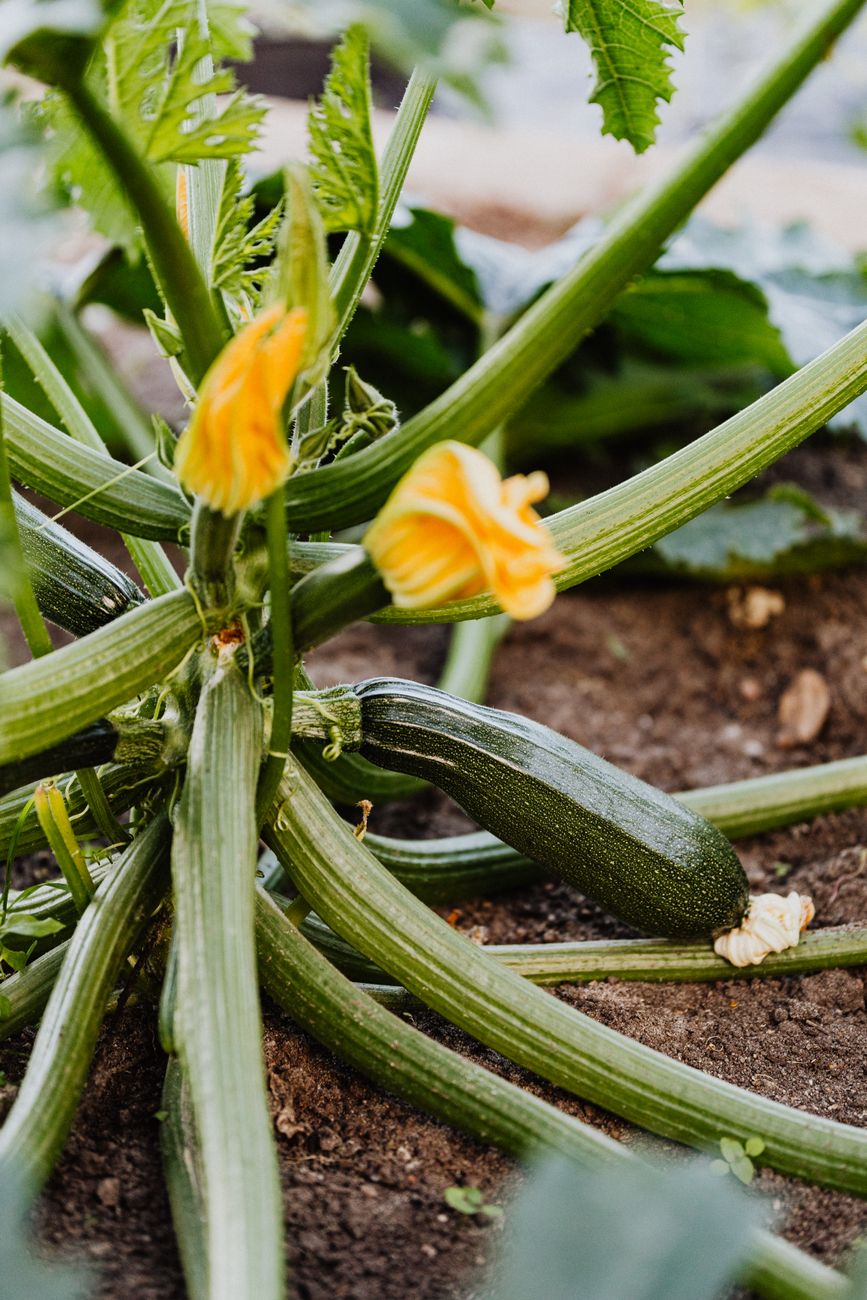
Alright, so we've talked about pruning and training, which are absolute game-changers, but honestly, the biggest impact you can make for a small garden is choosing the right variety from the off. When I first started out, I just grabbed whatever zucchini seeds were cheapest at the garden centre, thinking "a zucchini is a zucchini, right?" Oh, how wrong I was! That first year, my 'Black Beauty' plants tried to take over the entire raised bed, sprawling out like an octopus. I learned that lesson the hard way in my 800 sq ft Midlands garden.
Now, I'm a firm believer in the power of compact and bush varieties. These beauties are bred to have a much more contained growth habit, saving you valuable space and making all that pruning and training even easier. They're perfect for raised beds, large pots, or even growing bags if you're really short on ground. Here in the UK, with our often-unpredictable weather, having a more manageable plant can also mean less risk of disease, as there's better airflow around the leaves.
I’ve experimented with quite a few over the past five years. My current favourites for my small UK garden are definitely 'Defender F1' and 'Patio Star F1'. 'Defender F1' has been a consistent performer, giving me lovely dark green fruits without trying to escape its bed, even during those damp British summers. 'Patio Star F1' is exactly what it says on the tin – incredibly compact, perfect for a large container near the greenhouse. I've even had success with 'Eight Ball', which produces round, softball-sized fruits; it’s a fun one for the kids and takes up surprisingly little room.
To give you a clearer idea, I've put together a little comparison of some of the best varieties I've tried or researched for small UK gardens:
| Variety Name | Growth Habit | Fruit Type | Key Benefits for Small UK Gardens | My Experience (Midlands, UK) |
|---|---|---|---|---|
| Defender F1 | Bush/Compact | Dark Green, Cylindrical | Excellent disease resistance, reliable yield, good for open ground. | My go-to for consistent harvests. Tolerates our variable British weather well. Good flavour. |
| Patio Star F1 | Very Compact Bush | Dark Green, Cylindrical | Bred specifically for containers and small spaces, early fruiting. | Grew this in a large pot last year; surprisingly productive for its size. Perfect for a sunny patio spot. |
| Eight Ball F1 | Bush | Round, Green | Unique shape, compact plant, great for stuffing. | A fun alternative! Takes up less horizontal space than traditional bush types. Kids love harvesting the 'balls'. |
| Romanesco | Bush | Ribbed, Light Green | Superior flavour and texture, heirloom variety. | While slightly larger than 'Patio Star', its flavour makes it worth the effort. Pruning is key to keep it in check here. |
| Gold Rush F1 | Bush | Bright Yellow, Cylindrical | Visually striking, good disease resistance, high yield. | A vibrant addition! I found it to be fairly compact and productive. Adds lovely colour to the harvest basket. |

Remember, even with these compact varieties, a bit of strategic pruning as we discussed earlier will still help maintain good airflow and redirect the plant's energy into fruit production rather than excessive leaf growth. It's all about working with the plant, not against it, especially when space is a premium in our little British plots.
Smart Harvesting & Succession Planting: Enjoying a Steady, Manageable Crop
So you've chosen your compact variety, you've pruned, you've trained, and now your plants are starting to produce! This is where the real fun – and the real challenge – begins: managing the harvest. We've all heard the jokes about neighbours leaving bags of zucchini on doorsteps. My goal in my 800 sq ft garden is to never be that neighbour! I want a steady supply for my own kitchen, not an overwhelming glut.
The key to a manageable zucchini harvest is simple: harvest often and harvest young. Don't wait for those monsters to develop. Seriously, a zucchini can go from a perfect 6-inch (15cm) fruit to a maraca-sized beast overnight, especially during a warm spell here in the UK. I aim to check my plants every other day, sometimes even daily if we've had good sunshine and rain. Picking them young means they're more tender, tastier, and it signals the plant to produce more flowers and more fruit. It’s like a positive feedback loop!
My ideal size for zucchini is around 6-8 inches (15-20cm) long for the cylindrical varieties, or about the size of a tennis ball for 'Eight Ball'. If I miss one and it gets a bit bigger, it's not the end of the world – they're still perfectly edible, just sometimes a bit tougher-skinned and with larger seeds. Those are usually destined for grating into cakes or making big batches of soup.
Now, let's talk about succession planting. This is an absolute must for any small-space gardener in the UK who wants a continuous harvest without being swamped. Zucchini plants are incredibly productive, but their prime fruiting period often lasts a couple of months. If you plant all your zucchini at once in May, you'll likely have a massive glut in July and August, then it'll tail off.
What I do in my Midlands garden is stagger my plantings. I usually start my first batch of zucchini seeds indoors in late April (around now, actually!), transplanting them out after the last frost risk, typically late May here. Then, about 3-4 weeks later, around mid-June, I'll sow another couple of seeds directly into the ground or into a fresh pot. This means that by the time my first plants are starting to tire in late August, my second succession is just hitting its stride, providing fresh fruits right into early autumn, sometimes even October if we get a mild spell. This strategy ensures a steady trickle of manageable zucchini, perfectly sized for my kitchen, rather than a single, overwhelming wave.
One year, I got a bit greedy and planted too many first-succession plants. Despite the pruning and training, I ended up with more than I could handle. I learned that for my 800 sq ft, two compact plants per succession is usually plenty for two people. So, I aim for 2-3 plants in total, spread across two planting times. It’s all about finding that sweet spot for your household's needs.
Conclusion: Master Your Zucchini and Enjoy the Harvest!
So there you have it, my fellow UK gardeners! Taming the zucchini beast in a small garden isn't just a dream; it's absolutely achievable with a bit of planning and consistent effort. I’ve learned this through five years of trial and error in my own 800 sq ft backyard here in the Midlands, battling everything from slugs to soggy summers.
We’ve covered the crucial steps:
- Understanding their growth habit: Knowing why they get so big is the first step to controlling them.
- Strategic pruning: Removing those non-productive leaves and directing energy where it counts. I’ve found this makes a massive difference to airflow and overall plant health in our damp British climate.
- Vertical training: Getting those plants off the ground and up a sturdy support saves precious space and makes harvesting a breeze. My cane-and-twine system has been a revelation!
- Smart variety selection: Opting for compact or bush varieties specifically bred for smaller spaces, like 'Defender F1' or 'Patio Star F1', is probably the most impactful decision you can make.
- Intelligent harvesting and succession planting: Picking frequently and planting in stages ensures a steady, manageable supply of delicious, tender zucchini rather than an overwhelming glut.
My journey from accidental zucchini giant grower to confident zucchini manager has been incredibly rewarding. You really can enjoy fresh, homegrown zucchini throughout the season without sacrificing your entire garden plot to one plant. Don't let past experiences with sprawling monsters put you off. Armed with these techniques, you'll not only save space but also enjoy healthier plants and a more consistent, stress-free harvest.
So, this season, I encourage you to rethink your approach to zucchini. Pick a compact variety, get that pruning knife out, set up some sturdy supports, and commit to regular harvesting. You’ll be amazed at the difference it makes. Your small garden – and your dinner plate – will thank you for it! Happy growing, and here’s to enjoying a perfectly manageable, delicious zucchini season!