Tired of Tough Kohlrabi? Unlock the Secrets to Tender, Crisp Bulbs
There's nothing quite like the crunch of a perfectly grown kohlrabi – that crisp, slightly sweet, almost apple-like flavour that makes it one of my absolute favourite, and often underrated, brassicas. But if you’re anything like I was when I first started out five years ago in my Midlands garden, you might have found yourself staring at small, woody, or tough bulbs that were far from the tender delights you dreamed of. Trust me, I’ve been there. I’ve pulled up kohlrabi that felt more like a petrified golf ball than a culinary treat, and it's disheartening.
When I first transitioned from the digital world of IT to digging in the dirt, I approached gardening with the same analytical, problem-solving mindset. Kohlrabi, with its quirky appearance, quickly became a bit of an obsession. I knew it could be delicious, but getting it right in our often-unpredictable British climate took some serious trial and error. My 800 sq ft backyard, packed with raised beds and a bustling greenhouse, has seen its fair share of kohlrabi experiments – from 'Purple Vienna' to the massive 'Kossak'.
Over the years, after countless hours observing, failing, and finally succeeding, I've pinpointed the three biggest culprits behind disappointing kohlrabi here in the UK: inconsistent moisture, poor spacing, and mistiming the harvest. These aren't just abstract gardening tips; these are hard-won lessons from my own patch of Britain, tailored to what truly works in our climate. Today, I'm going to share the real-world experiences and specific techniques I've learned to ensure your kohlrabi is always tender, crisp, and utterly delicious. Let's get those bulbs growing beautifully!
The Thirsty Truth: Why Consistent Moisture is Key for Succulent Kohlrabi
If there’s one thing I’ve learned about kohlrabi in my UK garden, it’s that it absolutely hates stress, and nothing stresses a plant more than a fluctuating water supply. Kohlrabi needs a steady, consistent drink to swell those delicious bulbs. Think of it like a balloon – if you inflate it slowly and steadily, it gets big and round. If you inflate it, let some air out, and then try to inflate it again, the material gets stretched and compromised. That’s essentially what happens to kohlrabi cells when they don't get consistent moisture.
Last spring, I had a row of 'White Vienna' kohlrabi in one of my raised beds. We had a lovely wet spell, and they were growing beautifully. Then, suddenly, the British weather decided to throw us a curveball – a week of unexpected dry, warm days. I got busy with my heirloom tomatoes in the greenhouse and, I'll admit, I neglected that kohlrabi row for a couple of days. When I finally got back to them, the soil was bone dry. I watered them thoroughly, but the damage was done. Those bulbs ended up tough and stringy, a stark contrast to the ones in an adjacent bed that I’d kept consistently moist with a simple drip line hooked up to my water butt. It was a painful but clear lesson: consistency is king.
When kohlrabi experiences drought stress, even for a short period, it triggers the plant to toughen its cell walls and become woody. It’s a survival mechanism, but it completely ruins the eating quality. Here in the Midlands, we can get everything from persistent drizzle to surprising dry spells, sometimes all in the same week! So, you can’t just rely on the rain. I always aim to keep the soil consistently damp, not waterlogged, from the moment I plant out my seedlings until harvest. This means checking the soil daily, especially in raised beds which can dry out faster. I often use a thick layer of mulch – straw or grass clippings work a treat – to help retain that precious moisture and keep soil temperatures even.
Here's a quick comparison of what you can expect with different watering approaches:
| Feature | Under-watered Kohlrabi | Consistently Watered Kohlrabi |
|---|---|---|
| Texture | Woody, fibrous, tough, stringy | Tender, crisp, succulent, juicy |
| Flavour | Bland, sometimes bitter, can have a strong 'bite' | Sweet, mild, slightly peppery, nutty, refreshing |
| Growth Rate | Stunted, slow, often bolts prematurely | Rapid, steady, healthy bulb development |
| Appearance | Small, irregular shape, dull colour, often cracked | Plump, round, smooth, vibrant colour, no cracking |
| Disease/Pest | More susceptible to stress-related issues, bolting | Stronger, more resilient plants, less prone to bolting |
| UK Experience | Common during unexpected dry spells or neglect | Achievable with regular monitoring and supplementary watering |
Give Them Room to Breathe: Mastering Optimal Spacing for Plump Kohlrabi Bulbs
When I first started gardening, I was so excited to get everything in the ground, I often sowed seeds far too thickly. It felt productive at the time, but it was a rookie mistake that cost me dearly, especially with plants like kohlrabi. I thought, "More plants, more harvest, right?" Wrong. What I ended up with was a crowded mess of small, struggling plants all competing for the same limited resources in my raised beds. Kohlrabi, in particular, really needs its personal space to swell into those lovely, plump bulbs we’re after.
The 'why' behind proper spacing is pretty straightforward: competition. Every kohlrabi plant needs access to adequate light, water, and nutrients from the soil to grow well. If they're too close together, they'll all be fighting for these essentials. This competition stresses the plants, leading to smaller bulbs, slower growth, and often, a tougher texture. Additionally, good air circulation around the plants helps prevent fungal diseases, which can be a real nuisance in our sometimes damp UK climate.
In my UK garden, I’ve found that aiming for about 15-20cm (6-8 inches) between each kohlrabi plant is the sweet spot for most standard varieties like 'Purple Vienna' or 'Superschmelz'. For the larger 'Kossak' variety, I even stretch that out to 25-30cm (10-12 inches) to give them ample room to develop their impressive size. I usually sow seeds a bit thicker than this initially, just to ensure good germination, but then I'm ruthless about thinning. It feels counter-intuitive to pull out perfectly good seedlings, but it's one of the most important steps for a successful kohlrabi crop. I do this thinning in stages, usually when the seedlings have their first true leaves, leaving the strongest, healthiest plants. The thinnings can even be eaten in salads – a lovely bonus!
For my raised beds, which are roughly 1.2m x 2.4m, I can usually fit about 3-4 rows of kohlrabi with proper spacing, giving each plant the elbow room it needs to thrive. It's a balance, of course, between maximising space in a small garden and giving each plant the best chance. But I promise you, a slightly smaller number of well-spaced, plump, tender kohlrabi bulbs is far more satisfying than a dense patch of woody runts.
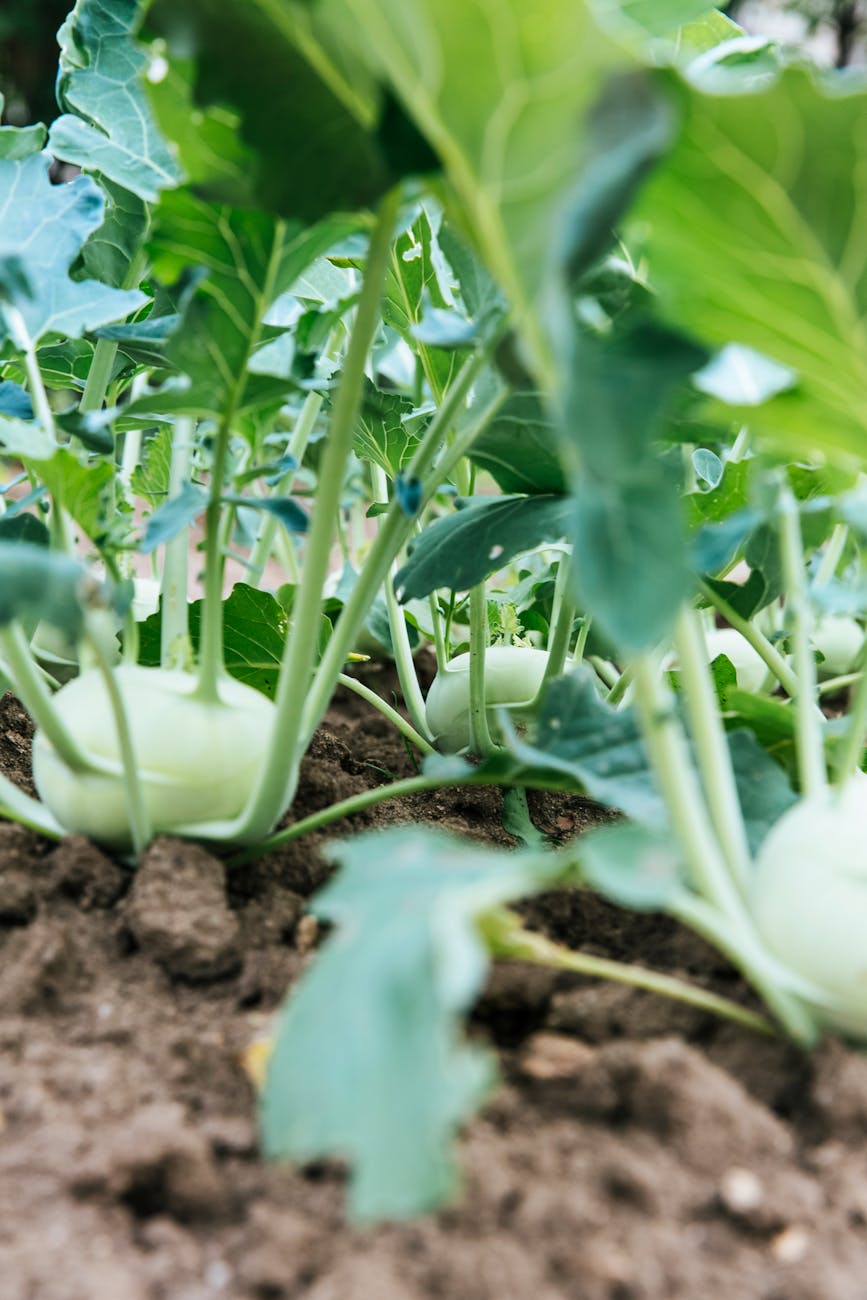
The Golden Window: Harvesting Your Kohlrabi for Peak Tenderness and Flavour
Knowing when to harvest your kohlrabi is just as crucial as how you grow it. This is another lesson I learned the hard way, thinking bigger was always better. I once left a couple of 'Superschmelz' kohlrabi in a bed, hoping they'd become truly massive, only to find them turn into fibrous, almost woody cannonballs. The 'golden window' for kohlrabi harvest is surprisingly precise if you're aiming for that ultimate tender, crisp texture.
In my experience here in the UK, the ideal time to pick kohlrabi is when the bulbs are about the size of a tennis ball, typically 7-10cm (3-4 inches) in diameter. For smaller varieties like 'White Vienna' or 'Purple Vienna', even a slightly smaller size, around 5-7cm, can be perfect. They should look plump, feel firm to the touch, and the colour should be vibrant – either a bright green or a deep purple, depending on the variety you're growing.
Harvesting too early means you miss out on potential yield, but harvesting too late is the real risk for quality. Once the bulbs get much larger than a tennis ball, especially in warmer weather or if moisture has been inconsistent, they start to toughen up and can become woody or pithy in the centre. They can also develop a stronger, sometimes bitter, flavour that isn't as pleasant as the mild sweetness of a young bulb. In our British climate, kohlrabi typically matures in 6-8 weeks from transplanting, so I mark my calendar! I usually sow a succession of kohlrabi every 2-3 weeks in spring and autumn to ensure a continuous supply of young, tender bulbs. This way, I'm never tempted to leave them in the ground too long.
To harvest, I simply use a sharp knife or secateurs to cut the stem just below the bulb, leaving the roots in the ground. You can trim off the leaves, but don't discard them! The leaves are edible and delicious, fantastic steamed or sautéed like collard greens. Getting this timing right has been a game-changer for the quality of my kohlrabi harvests, turning what was once a hit-or-miss crop into a reliable source of tender, crisp goodness right from my Midlands garden.
Beyond the Big Three: Essential Soil, Nutrient, and Pest Tips for UK Kohlrabi
While consistent moisture, optimal spacing, and timely harvesting are truly the bedrock of tender kohlrabi, they’re not the whole story. To really nail it here in the UK, especially with our sometimes-challenging British weather, we need to talk about what’s beneath their feet and what might be munching on their leaves. In my 800 sq ft Midlands garden, I’ve learned that attention to these details can make all the difference between a so-so harvest and a truly spectacular one.
The Foundation: Soil for Succulent Bulbs
Kohlrabi, like its brassica cousins, is a hungry beast, but it’s not too fussy about soil pH – anything from slightly acidic to neutral (6.0-7.0) works well. What it really craves is well-draining, fertile soil rich in organic matter. My raised beds are a lifesaver here. I start each season by digging in a good few barrow loads of homemade compost and well-rotted manure. This improves drainage in our heavy Midlands clay and provides a steady supply of nutrients. I’ve found that a good friable soil, where the roots can easily expand, is crucial for those bulbs to swell nicely. If your soil is too compacted or heavy, your kohlrabi will struggle, and you’ll get those small, tough bulbs we're trying to avoid.
Feeding Your Kohlrabi: A Balanced Diet
Once they’re in the ground, kohlrabi appreciates a consistent, balanced diet. I usually incorporate a general-purpose organic fertiliser into the soil at planting time. I’ve found that a feed with a good balance of nitrogen, phosphorus, and potassium (N-P-K) works best. Too much nitrogen early on can encourage leafy growth at the expense of bulb development, which is something I learned the hard way in my first couple of years. About 3-4 weeks after planting, or when the bulbs start to swell, I give them a boost with a liquid feed, like a comfrey tea I brew myself, or a diluted seaweed extract. This gives them that extra push without overdoing it. Remember, consistency is key – little and often is better than a huge dose all at once.
Battling British Pests: My Organic Approach
Now, let’s talk about the critters. Every UK gardener knows the battle against pests is never-ending, and kohlrabi is no exception. Over my five years of intensive gardening, I’ve developed a few organic strategies that work well for me in my backyard.
| Common UK Kohlrabi Pest | Randy's Organic Solution (Midlands Garden) | When I Use It |
|---|---|---|
| Flea Beetles | Fine mesh netting (Enviromesh), dusting with diatomaceous earth. | From germination, especially in dry spells. |
| Cabbage White Caterpillars | Inspect daily, hand-pick caterpillars, use butterfly netting. | From late spring/early summer, after butterflies appear. |
| Slugs & Snails | Regular hand-picking (evening), beer traps, crushed eggshells around plants. | Continuously, especially after rain or overnight. |
| Aphids | Blast with strong water spray, introduce ladybirds, spray with diluted neem oil soap. | When small colonies appear, before they spread. |
Flea beetles are often the first challenge, especially on young seedlings. They pepper the leaves with tiny holes, which can weaken the plant. I swear by fine mesh netting; it's a non-negotiable for my brassicas here in the UK. I put it over my beds as soon as I sow or plant out and leave it until the plants are well-established. Cabbage white butterflies are another familiar foe. Once they start fluttering around, it's a sign to be vigilant. I still use netting, but I also do a daily patrol, especially on the undersides of leaves, to hand-pick any eggs or caterpillars. It's a bit of a chore, but it really pays off for a healthy harvest. And slugs? Well, what UK gardener doesn't have a love-hate relationship with slugs? My preferred method is evening patrols with a head torch and a bucket of salty water – old-school, but effective!
Kohlrabi Troubleshooting: Identifying and Fixing Common Growth Issues
Even with the best intentions, sometimes things don't go exactly to plan. I've certainly had my share of head-scratching moments in my UK garden, especially when the British weather decides to throw a curveball. Learning to 'read' your plants is a skill that comes with time, but here are some common kohlrabi problems I've encountered and how I usually tackle them.
| Kohlrabi Problem | Likely Cause(s) (UK Context) | Randy's Fixes (Based on My UK Experience) |
|---|---|---|
| Bolting (flowering early) | Stress from temperature fluctuations (common in UK spring), inconsistent watering, prolonged dry spells, overcrowding. | Ensure consistent moisture, shade in heatwaves, proper spacing. Try heat-tolerant varieties like 'Kossak'. |
| Small, underdeveloped bulbs | Insufficient water, poor soil fertility, overcrowding, too much shade. | Improve watering consistency, amend soil with compost, ensure correct spacing (10-12 inches). |
| Woody, fibrous texture | Left too long on the plant (over-mature), inconsistent watering, drought stress, hot weather. | Harvest promptly at golf-ball to tennis-ball size. Maintain consistent moisture. |
| Yellowing lower leaves | Nitrogen deficiency, overwatering (leading to root issues), sometimes natural senescence. | Apply balanced liquid feed. Check soil moisture and drainage. Ensure good air circulation. |
| Cracked bulbs | Sudden flush of water after a dry spell, rapid growth after stress. | Maintain consistent moisture, especially in dry periods. |
One year, I planted a batch of 'Delicacy White' kohlrabi a bit too early in spring, hoping to get a jump on the season. We then had a freak cold snap followed by a sudden heatwave – classic British spring weather! Almost half of them bolted straight to flower without forming decent bulbs. It was a proper pain, but it taught me a valuable lesson: patience and protecting young plants from temperature extremes are vital. Now, I often use cloches or fleece for early sowings to moderate those unpredictable temperature swings.
If I see small, woody bulbs, my first thought always goes back to the 'big three' – moisture and spacing. Did I let them dry out too much? Are they too close together? It’s usually one of those two. I remember one season I was a bit lax with watering during a dry patch and my 'Superschmelz' kohlrabi, usually so reliable, ended up tough and stringy. It was a wasted effort, but a stark reminder that even the toughest plants need consistent care. Yellowing leaves, particularly the lower ones, often signal a nutrient deficiency, usually nitrogen. A quick dose of liquid seaweed feed usually perks them right up, unless it's a sign of overwatering, which can also stress the roots. It's all about observing and adapting to what your plants are telling you.
Enjoying Your Homegrown Harvest: A Season of Tender Kohlrabi Awaits
So there you have it – my tried-and-tested secrets for growing tender, crisp kohlrabi right here in my UK Midlands garden. We’ve journeyed through the absolute necessity of consistent moisture, the critical importance of optimal spacing, and the art of timely harvesting for that peak tenderness. We’ve delved into preparing the right soil, providing a balanced diet, and fending off those pesky UK garden pests that always seem to be lurking. And finally, we’ve tackled some of the most common troubleshooting headaches, because let's face it, gardening always throws up a surprise or two, especially with our wonderfully unpredictable British climate.
Growing kohlrabi has become one of my favourite garden experiments. There’s something incredibly satisfying about pulling up those perfectly formed, alien-looking bulbs. That first bite into a fresh, crisp slice, knowing every drop of water and every bit of care came from your own hands, is just pure garden magic. It’s a versatile vegetable too – fantastic raw in salads, roasted with other root veg, or even lightly steamed.
Don't let past tough or woody experiences put you off. Armed with these insights, gleaned from my own five-plus years of intensive gardening (and a fair few mistakes!), you’re now equipped to cultivate a harvest of truly succulent kohlrabi. Remember, gardening is a continuous learning curve, an ongoing experiment. So, get out there, observe your plants, adapt to our British weather, and enjoy the process. I promise you, the reward of those tender, crisp bulbs is absolutely worth every bit of effort.
Happy growing, fellow UK gardeners!
Randy Thompson
Your fellow enthusiast from the Midlands garden.